Venezuela, two-time youth robotics world champion: talent breaks through despite the crisis
🕒 Published on Zendoric: October 12, 2026 · 00:04
✨ AI-generated · how it's made
Team Venezuela, a youth team from Zulia state, repeats as world champion at the FIRST Global Challenge 2026 and also wins the international unity medal, in an alliance with Uzbekistan, Moldova and El Salvador. A triumph of talent that stands out despite the scarcity of opportunities back home.
📚 Go deeper
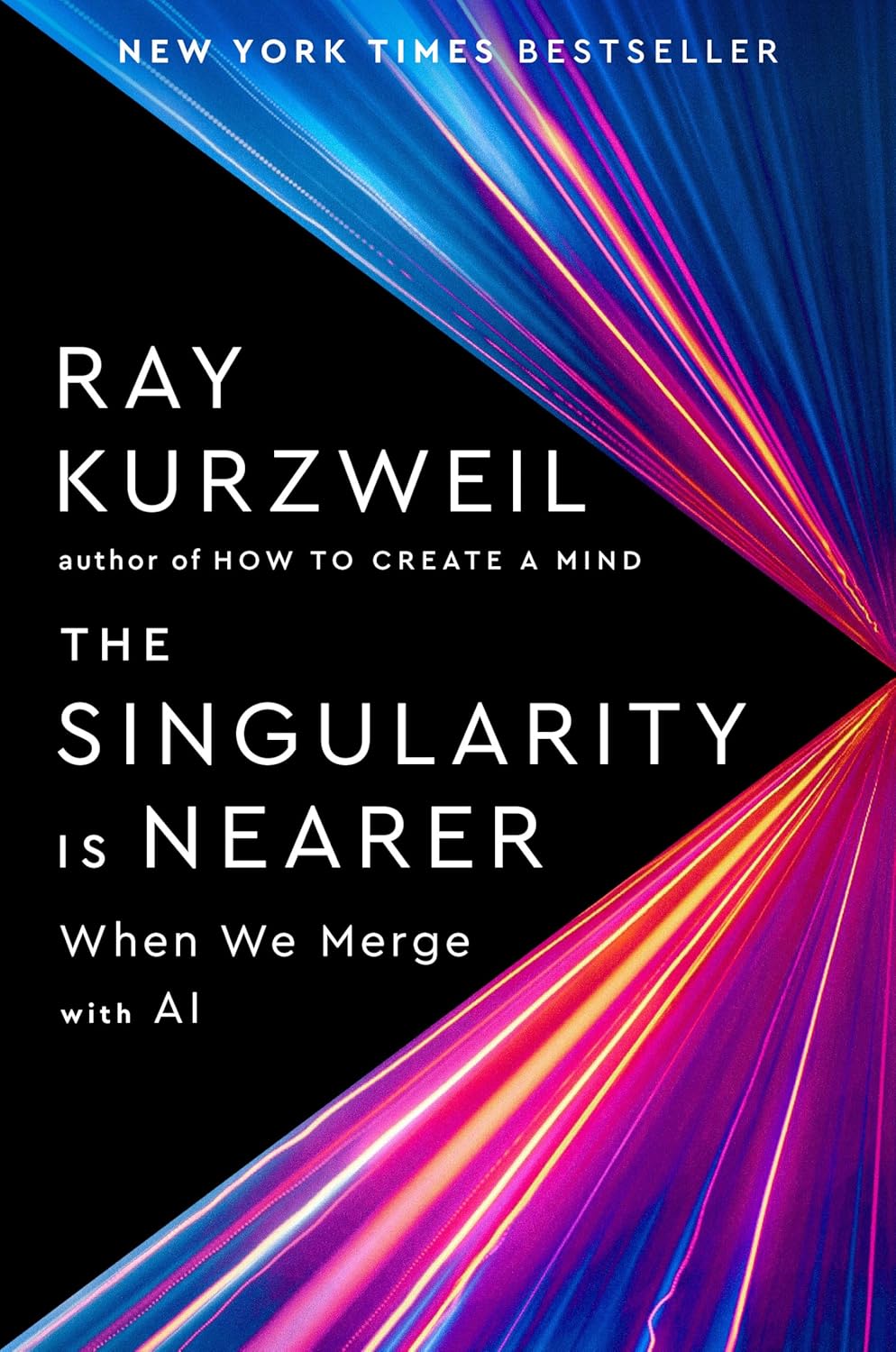
Twenty years after "The Singularity Is Near", Kurzweil revisits his predictions and keeps the date: human-AI merger around 2045.
As an Amazon Associate, Zendoric earns from qualifying purchases; the price does not change for you. · all our recommended books →
By Zendoric · October 11, 2026.
A team of teenagers from Zulia state has made Venezuela a two-time world champion of the FIRST Global Challenge, the international robotics and artificial intelligence tournament for young people that each year brings together teams representing their countries. Team Venezuela led the winning alliance in the final phase alongside Uzbekistan, Moldova and El Salvador —the tournament format requires combining the robotics of several countries in a single alliance during the elimination rounds— and also took the gold medal "Dr. Mae Jemison Award for International Unity", the prize —named in honor of astronaut Mae Jemison, the first African American woman to travel to space— that the jury reserves for the team that best demonstrates cooperation and empathy among nations, according to the source. It is the delegation's second world title, after the Albert Einstein Award for International Excellence it won in 2023.
For context, the achievement comes from a country that has spent more than a decade in a severe economic and social crisis, with one of the highest youth emigration rates in the region. That a team formed in that environment —with less access to labs, parts and funding than its rivals from far more prosperous economies— has again climbed to the top of the podium speaks not only of individual talent: it speaks of local mentors and STEM programs capable of competing with limited resources against teams backed by far larger national budgets.
There is one detail that deserves more attention than the scoreboard. The FIRST Global format requires forming multinational alliances in the decisive rounds: to win, you have to add your robot to those of three other countries that, in all likelihood, no one had spoken to before the tournament. That the international unity medal went precisely to the alliance led by Venezuela together with Uzbekistan, Moldova and El Salvador —four countries with no obvious ties to one another— is a curious counterpoint to the narrative that dominates the adult conversation about AI, almost always told as a geopolitical race: the United States against China, export controls, who reaches the frontier first. At the base of the pyramid, robotics and AI are also trained and contested in terms of cooperation, not just rivalry.
This connects with something we have been arguing about AI's impact on employment: what best resists automation is precisely what a tournament like this one trains —technical judgment applied to concrete problems, in-person teamwork, the ability to integrate new tools quickly. The teenagers soldering parts and tuning algorithms for a competition robot today are, in practice, the talent pool for the AI engineers and integrators the market will keep needing, even in a world where generative AI automates more and more administrative tasks.
The underlying takeaway, the one that connects with the thesis we hold at Zendoric, is that access to these tools is being democratized faster than countries' wealth: with volunteer mentors, reasonably affordable robotics kits and open learning resources, a team from Zulia can stand up to teams from far stronger economies. If robotics and AI keep getting cheaper at the pace of recent years, that abundance of tools —not just of capital— is exactly what, in the long run, allows talent to count for more than the ZIP code of the person who has it.
📚 Go deeper

AI as the latest chapter in the history of information networks, from gossip to the printing press to the algorithm.

DeepMind co-founder on the dilemma of containing technologies that do not want to be contained.
As an Amazon Associate, Zendoric earns from qualifying purchases; the price does not change for you. · all our recommended books →
🔗 Related on Zendoric
- The IIT Bombay–SUNY alliance is no ordinary agreement: it's proof that AI training is now played on a global network · 2026-06-28
- Saudi Arabia reaps six medals at the first Asia-Pacific AI Olympiad: a sign that a young-talent strategy is paying off · 2026-06-29
- Back-to-school 2026 reveals the true state of agentic AI: trusted assistant, not autonomous buyer · 2026-07-18