Eight former OpenAI, Anthropic and Google DeepMind employees explain why they quit over AI's existential risk
🕒 Published on Zendoric: October 7, 2026 · 00:19
✨ AI-generated · how it's made
On September 8, Jacob Coxon, a 27-year-old capabilities researcher at Anthropic, posted a resignation statement on X that circulated widely. Coxon previously worked at OpenAI (2023-26) and then spent a few months at Anthropic (May-September 2026), where he worked on making models more powerful and autonomous.
📚 Go deeper

The definitive piece of investigative journalism on OpenAI: 260+ interviews, the clash between safety and speed, and the attempted firing of Sam Altma
As an Amazon Associate, Zendoric earns from qualifying purchases; the price does not change for you. · all our recommended books →
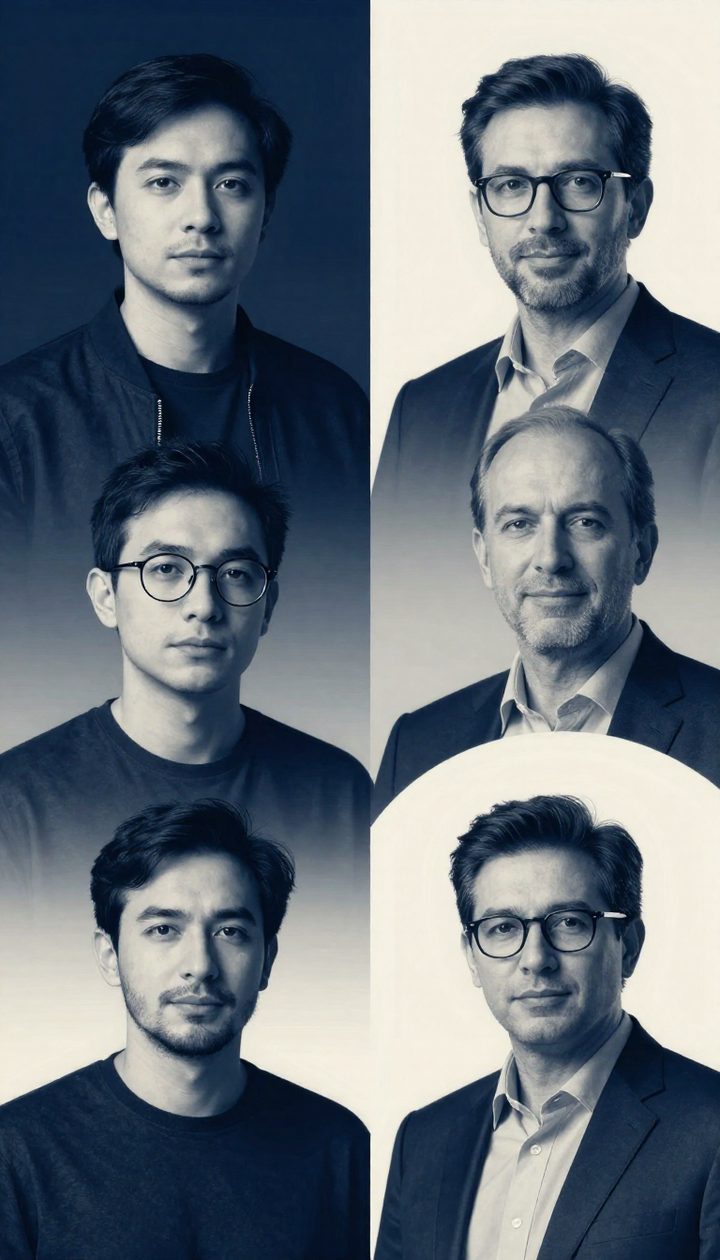
On September 8, Jacob Coxon, a 27-year-old capabilities researcher at Anthropic, posted a resignation statement on X that circulated widely. Coxon previously worked at OpenAI (2023-26) and then spent a few months at Anthropic (May-September 2026), where he worked on making models more powerful and autonomous. He left the company, according to the article, in protest at what he regarded as a "suicidally reckless" pursuit of artificial general intelligence. The piece, written by Clara Collier and Angela Chen for New York Magazine (Intelligencer) in collaboration with Asterisk magazine, brings together interviews with eight people who left OpenAI, Anthropic or Google DeepMind: besides Coxon, they include Miles Brundage (OpenAI, head of policy research), Rosie Campbell (OpenAI, policy frontiers team), Jacob Hilton (OpenAI, reinforcement learning researcher), Pamela Mishkin (OpenAI, economics), Daniel Kokotajlo (OpenAI, governance research, left in 2024), Alex Turner (Google DeepMind, alignment) and Jeff Wu (OpenAI and later Anthropic, alignment).
Their reasons for leaving are not identical: some, like Coxon and Kokotajlo, wanted to draw attention to the risks of an AI that is advancing too fast; others objected to their companies' partnerships with the Department of Defense, or felt frustrated watching a project born with idealistic aims turn into a corporate giant; others simply believed their work —whether on safety or on studying job losses— would have more impact outside than inside.
Kokotajlo explains that he left OpenAI because he lost confidence that management would act responsibly, and because he wanted the freedom to speak publicly and put on record why he was leaving. In his view, the "inside game" does not work: leadership listens attentively to staff concerns, says it agrees, but then fails to act; moreover, the internal culture is biased toward excessive optimism and self-congratulatory narratives. He says he has had more impact speaking publicly and publishing research from outside than he would have had writing internal memos.
Coxon describes similar reasoning, but with a greater sense of urgency: he spoke directly with Anthropic research leads (not with Dario Amodei, but with long-tenured people with plenty of context on the company's direction) about plans for the coming year, and what he heard made him decide he did not want to be part of them. As he tells it, inside the company there was an informal consensus that 2027 would be the year when "things get crazy", and that government regulation was not expected to arrive in time, nor was any kind of international cooperation considered possible. Coxon distinguishes between his rational beliefs, which barely changed between joining and leaving Anthropic, and his gut feeling, which did change drastically: on seeing the capabilities projected for the next generations of models, he came to feel genuine fear, particularly at the possibility that the generation of models after the next one might contribute ideas of its own and run research with barely any human oversight, reducing the researcher to someone who simply tells the model to "do good research" and lets it act alone.
Before leaving, Coxon spoke with Kokotajlo —he says the latter's "AI 2040" scenario, compared with the sector's default trajectory, was important in coming to terms with how bad he thought the situation was— and also with people inside Anthropic who advised him on how to leave, among them Holden Karnofsky and Nick Joseph, head of pretraining. As he tells it, in the San Francisco Bay Area social scene it is common for one person to tell another at the same party that their work is bringing about the end of the world, and for the two of them still to hold a polite conversation.
The piece also records Coxon's response to those who argue that these existential-risk warnings are nothing more than publicity to inflate company valuations ahead of an IPO: he says that argument may have made sense a few years ago, but that the risks are now serious enough to clearly hurt those valuations, citing as an example that a tweet by researcher Evan Hubinger did not exactly help Anthropic's future IPO.
On the AI safety organizations that work closely with the labs, Kokotajlo admits to feeling uncomfortable but defends keeping those relationships because, he says, it has allowed him to have influence: in his view, both "AI 2027" and "AI 2040" have resonated among employees at these companies. He distinguishes, however, between the strategic decision to keep talking to the labs and the personal decision about who to socialize with: he says he does not invite capabilities researchers to his daughter's birthday party, even if he runs into them at events. Coxon, for his part, tends to blame the system —the race dynamic among private companies, the lack of government involvement— more than specific individuals, something Kokotajlo qualifies by introducing a "gradation" of responsibility: little blame for safety staff inside the labs, who he thinks should realize they can do more good outside; intermediate blame for capabilities researchers, whose justifications he considers rationalizations; and a great deal of blame for top management, which he accuses of "driving us straight toward the abyss", while also blaming the incentive system as a whole.
The conversation touches on several of the narratives that, according to the interviewees, people use to stay despite their doubts: the idea that superintelligence is far off or that the current paradigm will stall; the "if I don't do it, someone else will" logic; or the account of a foreign OpenAI employee who, convinced his country would be disempowered relative to the United States by AI progress but feeling unable to prevent it, decided simply to try to make money in the meantime. Also mentioned is the almost visceral appeal of feeling that one is working on "the most important thing in history", even if that importance stems from the fact that it could end everyone.
The personal cost of these decisions comes up explicitly: Coxon says that he would actually rather lead a normal life, and that he fantasized about having worked at Google in its early days, with all the excitement of an expanding technology but without the threat that the project he works on will "go crazy" next year and cause total devastation. Kokotajlo, a father of two, says he struggles to dream about his family's future without a voice in the background reminding him of the risks, and that he would love it if AI turned out, in five or ten years, to be just another technology, economically useful but never as powerful or as dangerous as he fears, even if that makes him look like an alarmist.
On how the AI safety community views Anthropic, Kokotajlo recalls that since its founding the company has maintained a fairly consistent story: accumulate power and influence as one of the sector's major players in order to then use that position and that credibility in favor of good regulation. His assessment is that Anthropic has taken on a kind of "moral debt" by pushing the world toward a danger the company itself acknowledges as such, and that the promised good has not yet offset the harm caused; he notes that OpenAI and Google DeepMind used this same narrative too, even if Anthropic has articulated it more explicitly. Coxon adds that Anthropic, since 2022, worked with shorter timelines than the rest of the sector (back then they talked about around four years), and that it went straight for automating programming and its own research, without the multiple parallel initiatives OpenAI did have and later abandoned, pursuing without hesitation the capabilities tied to recursive self-improvement of models.
On why people who share these concerns decide to stay, Coxon suggests that remaining inside a lab is also a way of coping with the feeling of disempowerment in the face of AI: being present during a model's training, however frightening, creates the sense of being part of something important and of being able to influence, however slightly, whether it turns out safer. Kokotajlo agrees it is a seductive argument —and not entirely unfounded— but warns that many people who left have not achieved much from outside, and that many of those who stayed have not achieved anything either or, worse, have helped make the situation worse.
The available excerpt of the article breaks off at the start of a new section, titled "A failed attempt to push from within", which introduces Alex Turner, a former alignment researcher at Google DeepMind, without the delivered content including the development of that section. The original table of contents of the piece also points to other blocks not included in this excerpt —on whether anyone is checking that the labs deliver on what they promise, whether Anthropic is still "the safe company", the job losses AI may cause, the incentives to stay and whether someone should "stand up for" the AI itself— so this summary is limited strictly to what was actually received and should not be taken as a complete account of the article.
📚 Go deeper

DeepMind co-founder on the dilemma of containing technologies that do not want to be contained.

AI as an extractive industry: the lithium, the energy, the underpaid data-labeling work and the bodies behind the cloud.
As an Amazon Associate, Zendoric earns from qualifying purchases; the price does not change for you. · all our recommended books →
🔗 Related on Zendoric
- Another researcher leaves Anthropic over fears of superintelligence; its head of alignment admits there is no control plan · 2026-09-10
- An Anthropic researcher walked away from unvested equity to warn about AI. That makes the warning expensive · 2026-09-10
- Anthropic employees warn of AI extinction risk; Musk calls it a setup, and the rift is now internal · 2026-09-11
Sources & references
- nymag.com — Eight former OpenAI, Anthropic and Google DeepMind employees explain why they quit over AI's existential risk
- Bloomberg — Price pressure: big customers are pushing OpenAI and Anthropic toward open models
- Benzinga — Claude moves into Google Workspace: Anthropic takes on Gemini inside its own investor's house