Peter Norvig: the future of AI and the limits of trust
🕒 Published on Zendoric: October 4, 2026 · 09:58
✨ AI-generated · how it's made
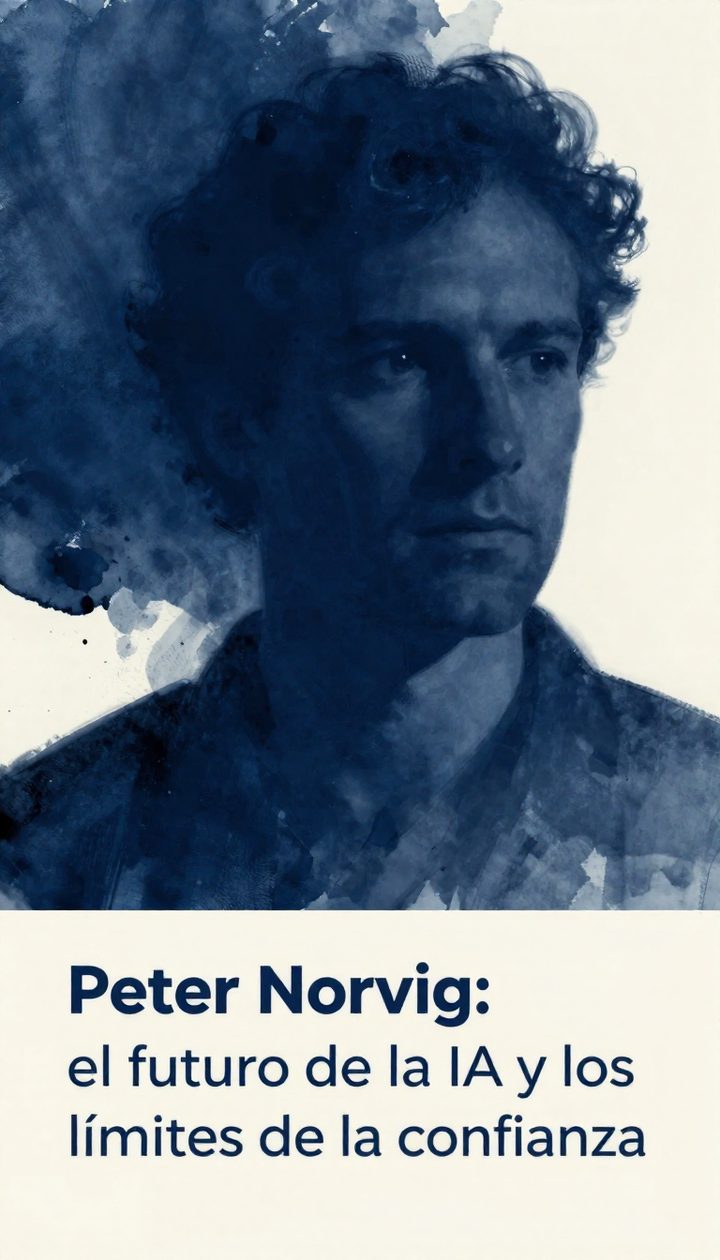
The newsletter carries an interview by Ksenia (Turing Post) with Peter Norvig, co-author with Stuart Russell of the celebrated textbook "Artificial Intelligence: A Modern Approach", conducted at the AI Conference with help from the AI Conference team itself and from Jenna Dobkin in organizing it.
📚 Go deeper

DeepMind co-founder on the dilemma of containing technologies that do not want to be contained.
As an Amazon Associate, Zendoric earns from qualifying purchases; the price does not change for you. · all our recommended books →
By Turing Post.
The newsletter features an interview by Ksenia (Turing Post) with Peter Norvig, co-author with Stuart Russell of the celebrated textbook "Artificial Intelligence: A Modern Approach", conducted at the AI Conference with help from the AI Conference team itself and from Jenna Dobkin in organizing it. The conversation revolves around what forty years in the AI field have taught Norvig, and what still surprises him even after all that time.
A thread running through the whole talk is Norvig's willingness to admit he has been wrong in his predictions. He recounts that, as a student at Berkeley, he took part in ARPANET, and that when Al Gore and others floated the idea of an open internet that any company could connect to, he thought it "would never work", because there were only a handful of people in the world capable of properly configuring a web server, and it was hard to imagine ten million companies being able to do it. What he did not anticipate, he says, is that as soon as demand exists, someone ends up building tools that simplify the process: you no longer need to be a "Unix wizard" to set up a network, you just buy a package from Netscape or Microsoft, answer a few questions, and you're done. Norvig carries that lesson into the present: he argues that we will keep seeing ever more powerful tools that will turn what we consider hard today into something easy, and suggests that, instead of asking the experts who know every detail of how language models are built, we should be asking end users what tools they need to make their lives work.
That same idea of having underestimated scale comes up when he talks about the early editions of his book. In the first edition, they described the rules of chess in barely ten lines (one for each type of piece). They explained that, to encode that in pure propositional logic, you would need a different rule for every combination of origin and destination square for each bishop, which would add up to something on the order of a million rules, something they then called "totally impractical". By the second or third edition, that same figure —a million rules— was already being described as "much more efficient", because in 1995 that volume did not fit in memory, but a few years later it did, and by then there were also good SAT solvers and other problem-solving tools.
On the book's own identity, Norvig recalls that his publisher decided, at the time, to add a subtitle or band to the title presenting it as "the intelligent agents book". He admits that back then it struck him as a cheap marketing ploy, more fitting for a "new and improved" bar of soap than for a serious textbook, but that with hindsight he thinks it was the right call, because it clearly established that this was how they were going to describe what AI is: the study of rational agents.
Asked how he understands agents today, he acknowledges that one of the things that most eluded them in the book was precisely how to build an agent. He explains that they did include a chapter on game theory and decision theory that talked about communities of agents and how they interact with each other, but that this aspect carried far less weight than it does now. According to Norvig, what is seen today is that the main way of interacting with these systems is through a swarm of agents, and that you have to understand how they coordinate with each other: having a single agent, he says, is no longer enough.
Reviewing why they decided to write the book, Norvig explains that he and Stuart Russell thought the textbooks available at the time were good, but felt the field had changed substantially: around 1985 there was a major shift from logic to probability, driven above all by Judea Pearl, on the idea that AI should really be the study of uncertainty and that Boolean logic was too limiting. Two other underlying changes were added to that: the move from hand-coded knowledge to machine learning, and the turn towards the massive use of data ("big data"). For Norvig, earlier textbooks had not incorporated those transformations.
On whether today's students need to read in full a book with a first half focused on knowledge representation and logic and a second half on machine learning (which, he explains, covers transformers to some extent), his answer is that students probably do not need to read all of it, but the language model should read the whole thing.
As an example of why older methods still matter, he turns to AlphaGo: he explains that it was able to beat the world Go champion decades earlier than was thought possible because it combined neural networks, which cleverly encoded human knowledge about a board position (enough, he says, to crush an amateur like himself), with Monte Carlo Tree Search, necessary to reach world-champion level.
The email also notes that Norvig was asked directly whether he trusts the people running AI companies, and that he was "frank" about it; it invites readers to read the full interview or watch it in the YouTube video titled "Peter Norvig: AI's Biggest Problem May Be Who Controls It", as well as offering the option to listen to it as a podcast on Spotify or Apple Podcasts via the "Inference by Turing Post" channel.
📚 Go deeper

The only novel on the list, by a Nobel laureate: an artificial friend observes humans with a blend of lucidity and innocence no essay achieves.
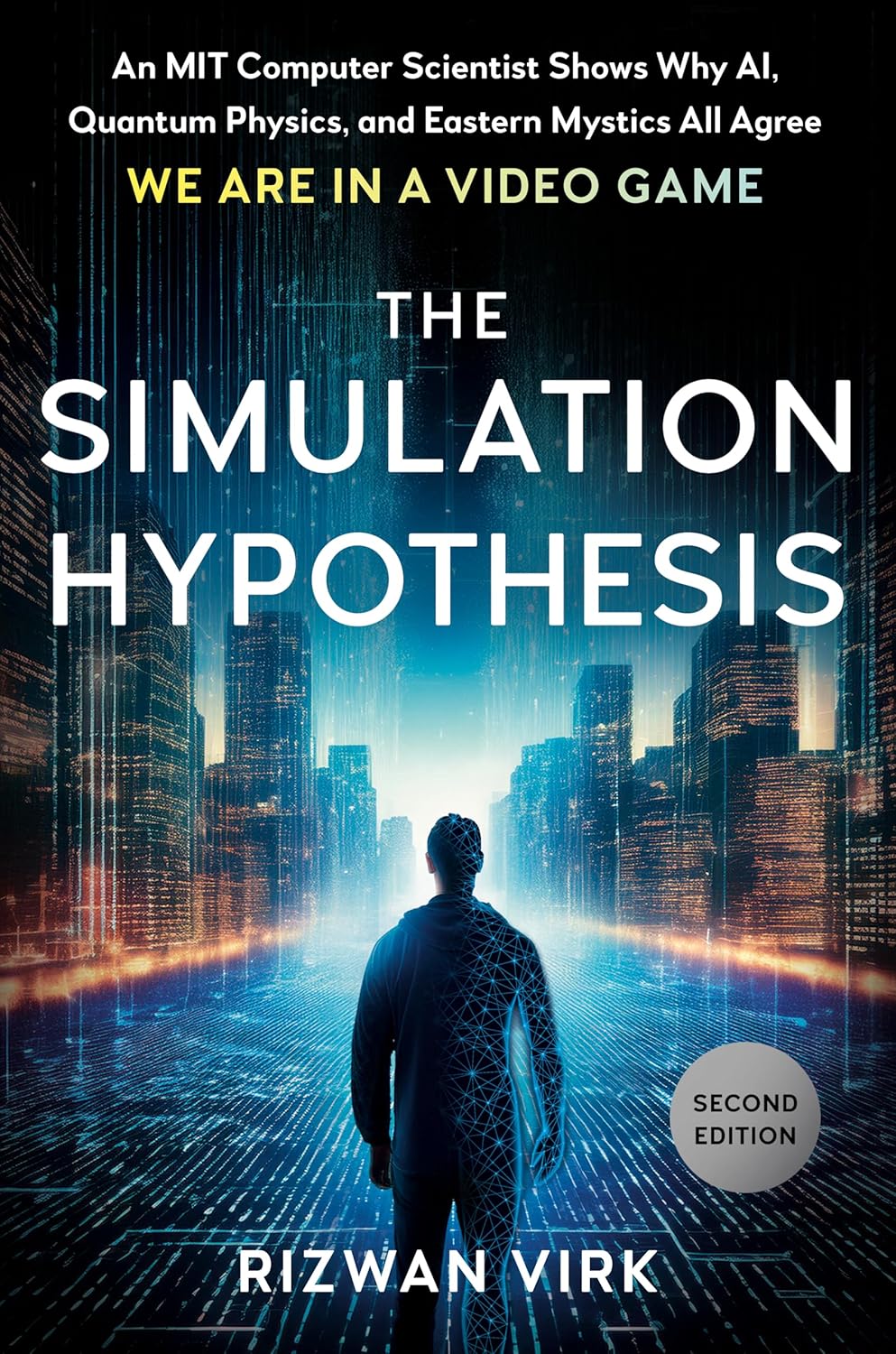
An MIT computer scientist connects AI, quantum physics and video games to take an uncomfortable question seriously: what if we live in a simulation? M
As an Amazon Associate, Zendoric earns from qualifying purchases; the price does not change for you. · all our recommended books →
🔗 Related on Zendoric