Anthropic spends $1.60 for every dollar it earns: a fund manager's warning ahead of its possible IPO

🕒 Published on Zendoric: October 3, 2026 · 02:03
✨ AI-generated · how it's made
Eva Ados, of fund manager ER Shares — which bought SpaceX before its IPO — says she receives offers of Anthropic and OpenAI shares 'every other day' on the private market. She cites spending of $1.60 for every dollar of revenue at Anthropic and compares it to Cisco and Lucent during the dot-com bubble.
📚 Go deeper

The definitive piece of investigative journalism on OpenAI: 260+ interviews, the clash between safety and speed, and the attempted firing of Sam Altma
As an Amazon Associate, Zendoric earns from qualifying purchases; the price does not change for you. · all our recommended books →
By Zendoric · October 2, 2026.
Eva Ados, chief operating officer and chief investment strategist at asset manager ER Shares, has issued a public warning about two of the most sought-after names of the moment: OpenAI and Anthropic. In an interview on Yahoo Finance's Market Domination, Ados said her firm receives offers to buy shares in both companies on the secondary market for private stock "every other day", and that a $1 billion block went up for sale in the days before the interview. Her reading, as she told it: several large institutional investors are unwinding positions, uneasy about the companies' valuations and about competition from China.
ER Shares is no ordinary manager in this field: according to Ados, her firm was among the first to buy SpaceX shares ahead of its eventual stock market debut, through the XOV ETF. That track record underpins her current caution. While acknowledging that OpenAI and Anthropic are developing "potentially revolutionary technology", Ados argues that revolutionary technology does not necessarily mean revolutionary returns for the investor, and advises against buying shares in either company ahead of an IPO at current prices, not even close to the date of an eventual Anthropic listing which, according to the reports cited by the show's own host, could arrive sooner than expected.
The figure underpinning her argument is specific, though it is worth stressing that it comes from the manager herself in an interview and not from publicly audited accounts: according to Ados, Anthropic spends $1.60 on computing infrastructure for every dollar it takes in. That is a cash burn rate which, if confirmed in those terms, is hard to sustain without ever-larger funding rounds. Ados adds a reading of her own —her interpretation, not a verified fact— about the companies' own announcements that they might slow their development for safety reasons: she suspects the real motive could be less noble, namely an inability to fund the gap between the revenue they generate and the long-term infrastructure commitments they have signed.
To give historical weight to her caution, Ados turns to the precedent of the dot-com bubble: she recalls that Cisco and Lucent Technologies were once among the five largest companies by market capitalization in the US market and then collapsed. Her recommendation for anyone wanting exposure to AI without taking on that risk is a classic one: invest in the infrastructure providers —memory, connectivity— that sell to the large language models, rather than in the labs that train them.
Broadly, Ados's thesis is not an isolated oddity within the sector. We have been observing how AI capex is financed less and less with cash generated and more and more with cross-shareholdings, structured debt and infrastructure deals that couple each supplier's valuation to that of the labs it depends on. When a manager operating directly in the secondary market for private shares describes hurried institutional sales and a 1.6-to-1 mismatch between spending and revenue generation, it is describing precisely the mechanism that would prevent an eventual correction from staying contained within a single company.
It is worth separating two planes that Ados herself rightly distinguishes, and which at Zendoric we see as the crux of the story. One is the real capability of Anthropic's and OpenAI's models, which continue to lead almost every quality index we routinely track; nothing in this interview calls that into question. The other is whether the current financial vehicle —private valuations traded almost as if they were already listed, sustained by capex commitments growing faster than revenue— can hold out indefinitely without an IPO, an additional massive round or a correction. These are different questions, and the history of the dot-coms teaches that both can be true at once: the technology survives and transforms the world, but the capital that bet first and most dearly is not always the one that reaps the rewards.
That is the reading that connects with the long-term horizon we defend at Zendoric: nothing in a particular lab's funding problems invalidates the idea that AI will, over time, continue along the path toward more capability and lower cost per unit of intelligence, the ingredient that ultimately sustains the promise of abundance. But in the short term, Ados's warning is timely: investing in the winning technology and investing in the winning stock are sometimes completely different decisions, and the more a company's narrative depends on abundant, cheap external capital, the more vulnerable it becomes the day that capital stops being so.
📚 Go deeper

DeepMind co-founder on the dilemma of containing technologies that do not want to be contained.
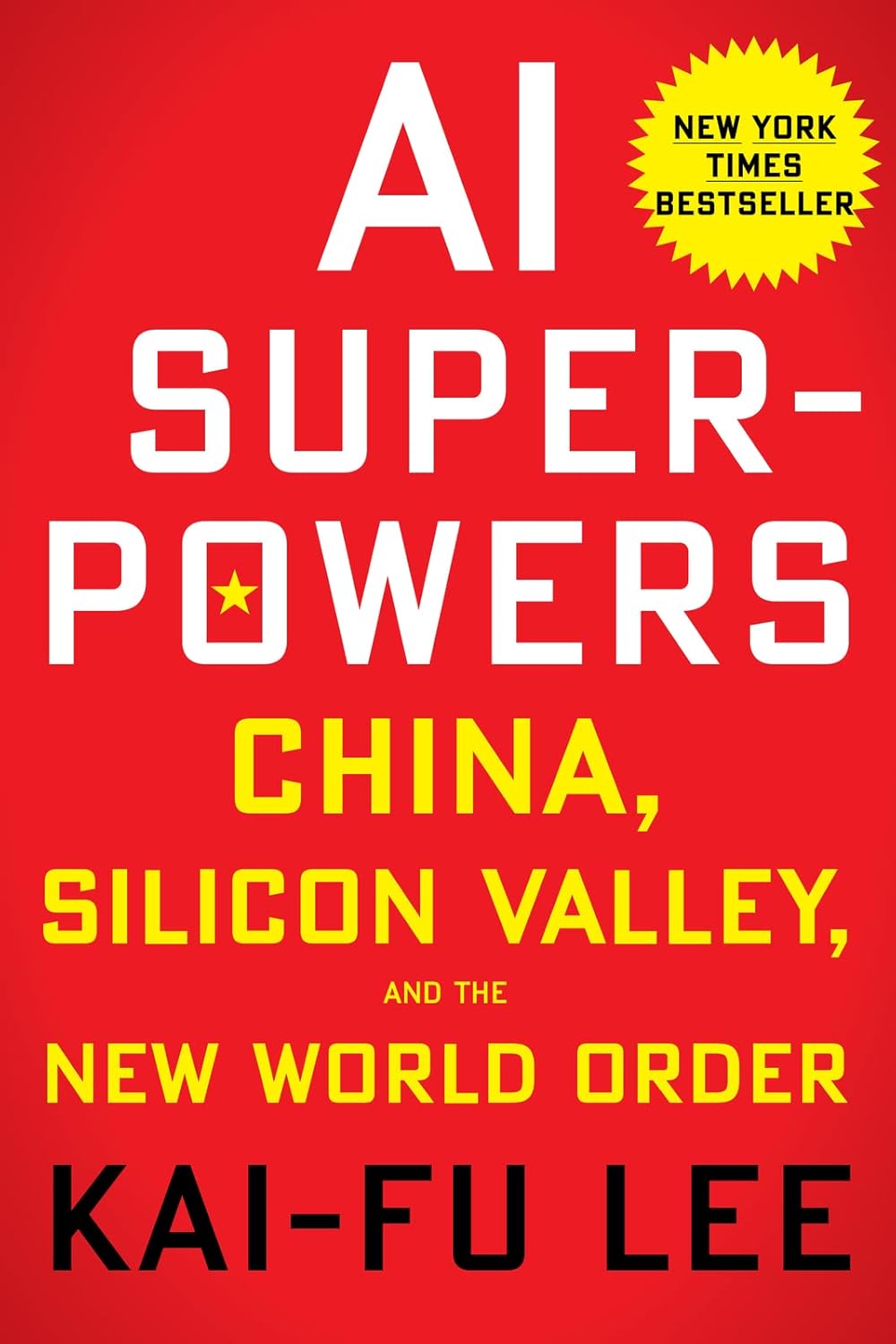
China vs.
As an Amazon Associate, Zendoric earns from qualifying purchases; the price does not change for you. · all our recommended books →
🔗 Related on Zendoric
- OpenAI and Anthropic have already filed the draft of their IPO near $1 trillion, after SpaceX's record · 2026-07-20
- Kraken lets you bet on OpenAI and Anthropic with leverage before there is any stock to buy · 2026-09-07
- The uncomfortable question about AI is not whether it works, but who pays the bill · 2026-06-27