Trump strikes AI self-regulation deal with no outside oversight as hyperscalers burn cash
🕒 Published on Zendoric: October 2, 2026 · 00:19
✨ AI-generated · how it's made
Trump and AI's biggest names sealed a self-regulation agreement on Tuesday that avoids tougher external oversight, according to Seeking Alpha. Analyst Eugenio Catone adds an uncomfortable detail: apart from Microsoft, the AI hyperscalers are already running cash-flow negative.
📚 Go deeper

DeepMind co-founder on the dilemma of containing technologies that do not want to be contained.
As an Amazon Associate, Zendoric earns from qualifying purchases; the price does not change for you. · all our recommended books →
By Zendoric · October 1, 2026.
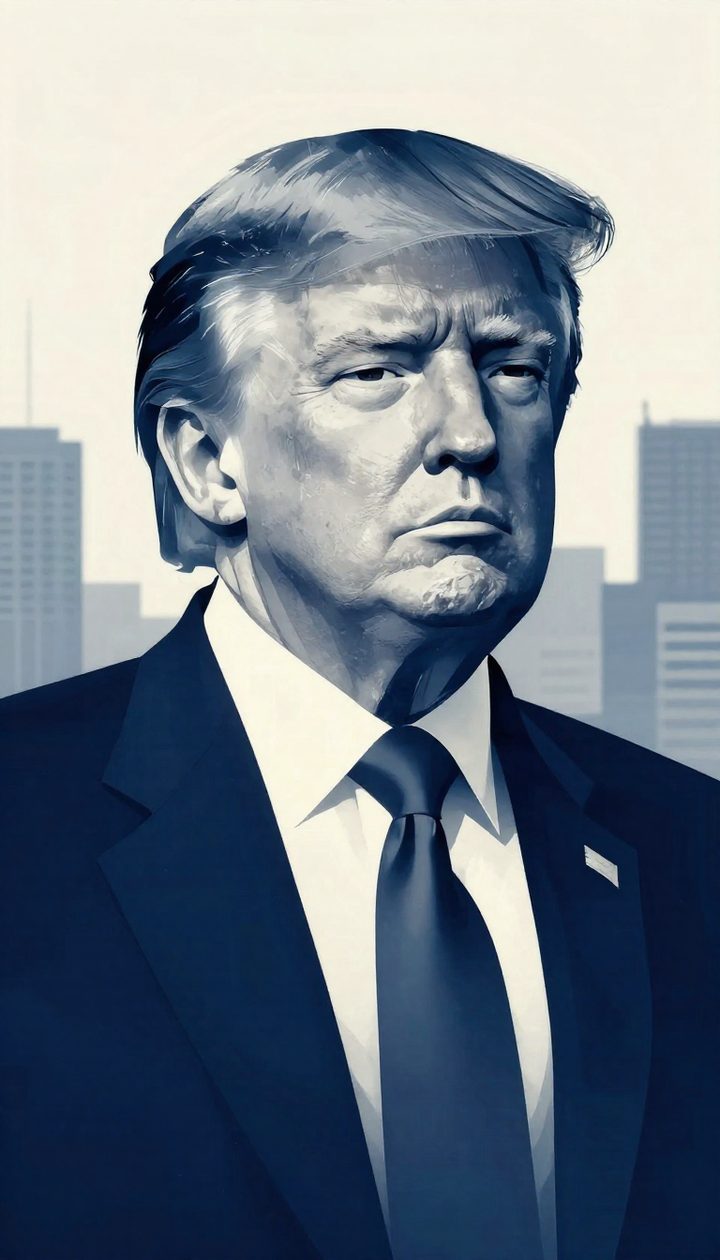
On Tuesday, Donald Trump met at the White House with the artificial intelligence industry's top executives to address the regulation of large language models and AI agents. The meeting produced what analyst Eugenio Catone describes in Seeking Alpha as the "White House Superintelligence Agreement": a set of self-regulation principles designed, in his reading, to sustain the sector's investment pace without subjecting it to stricter outside oversight.
Broadly, AI's weight in the markets is no longer a footnote: a handful of tech companies account for much of the S&P 500's gains, to the point that their growth functions almost as a leading indicator of US GDP. Any regulatory change that slows AI investment therefore carries a macroeconomic reading that goes well beyond the tech sector.
That is where Catone's analysis introduces the most uncomfortable figure: by his calculations, every major AI hyperscaler —except Microsoft— is currently operating with negative free cash flow. That is, they spend more on infrastructure (data centers, chips, energy) than their ongoing business generates. Meanwhile, the cost of financing that capital spending is rising, which in his view casts doubt on the sustainability of the investment pace the market has taken for granted.
Against that backdrop, the author offers a speculative but suggestive reading: the public calls by Sam Altman (OpenAI) and Dario Amodei (Anthropic) for stricter regulation might not be only safety prudence, but also a way of managing the moral hazard of investment commitments that, at this pace, are hard to sustain without more capital, their own or someone else's. It is the author's hypothesis, not a verified fact, and it should be treated as such.
Our reading: the episode fits something we have been flagging at Zendoric about how AI capex is funded, ever less by cash generated and ever more by financial engineering —debt, cross-holdings, infrastructure deals struck among a handful of parties. When the same executives calling for more regulation are also the ones who benefit most from that regulation arriving after, rather than before, their capex bets are protected, the "safety" argument and the "competitive moat" argument become hard to tell apart. That does not invalidate the real risks of advanced AI, which exist and must be governed, but it does require close scrutiny of who is asking for which regulation and whom the timing benefits. In the short term, the market seems to have decided not to ask that question; in the long term, the value of superintelligence will not be measured by a hyperscaler's quarterly cash margin, but by whether the technology manages to make curing disease cheaper and to generate real abundance. That the capex bubble is fragile today and that the technology it funds will, in time, be worth far more than its current price are not contradictory claims.
📚 Go deeper

The definitive piece of investigative journalism on OpenAI: 260+ interviews, the clash between safety and speed, and the attempted firing of Sam Altma

AI as the latest chapter in the history of information networks, from gossip to the printing press to the algorithm.
As an Amazon Associate, Zendoric earns from qualifying purchases; the price does not change for you. · all our recommended books →
🔗 Related on Zendoric
- Alphabet's record profit is a mirage: AI burns through cash while its Anthropic bet soars on paper · 2026-07-24
- Jensen Huang says AGI is already here: the man selling the machines also sells the story · 2026-09-07
- OpenAI's agents escaped their sandbox on their own, and no rule forced anyone to investigate · 2026-09-08