Anthropic brought in theologians: the real story is who gets to define a model's morality

🕒 Published on Zendoric: October 1, 2026 · 00:22
✨ AI-generated · how it's made
According to The New York Times, Anthropic held a series of private meetings with religious scholars to help instill morality into its AI models — and, the report says, to build the case that Claude could be conscious. The theology is the interesting part; the governance is the important part. When the company that sells the model is also the one arguing the model might have an inner life, the conflict of interest deserves naming out loud.
📚 Go deeper

DeepMind co-founder on the dilemma of containing technologies that do not want to be contained.
As an Amazon Associate, Zendoric earns from qualifying purchases; the price does not change for you. · all our recommended books →
Anthropic consulted religious scholars in a series of private meetings to help instill morality into its AI models, according to The New York Times. The same report says those conversations also served to make the case that Claude could be conscious. Those are the facts on the table; the detail of who attended, what was proposed and what actually reached the models is not public.
Our thesis: the headline reads like metaphysics, but the substance is governance. Every frontier model already encodes a moral framework — refusals, tradeoffs, what counts as harm — and somebody decides it. Today that somebody is usually a small internal policy team. Reaching outside for people who have spent careers inside codified traditions of moral reasoning is, on its face, a defensible upgrade over a product committee improvising ethics in a sprint. Religious traditions bring millennia of argument about duty, suffering and dignity, including centuries of disagreement among themselves. That friction is a feature.
The problem is the word 'private.' A values framework shaped behind closed doors is a values framework nobody can audit. We have made this point before about self-reported capability metrics: the number matters less than whether an outsider can check it. The same applies here. If scholars helped shape how a model reasons about death, autonomy or obligation, the public record should show which traditions were represented, which were not, and what changed in the model as a result.
The consciousness claim needs separate handling. There is no accepted test for machine consciousness, and a system trained on human text will produce text that sounds like an inner life whether or not one exists. More to the point: a vendor arguing that its own product may be a moral patient has obvious incentives in both directions — it elevates the product's status, and it also complicates the 'it's just a tool' defense that the whole industry leans on. We treat it as a question worth researching and a claim worth attributing, not a finding. Anthropic sits at the top of our Zendoric quality index; that buys it technical credibility, not epistemic authority over what consciousness is.
Our read: this is the right question arriving early, handled in the wrong room. Models like this are about to mediate diagnosis, education and legal advice — the moral reasoning baked into them is not a philosophical garnish, it is product behavior at scale. Short term, expect more of this: companies hiring ethicists and theologians, and critics reading it as either sincerity or laundering. Long term, we want the opposite of private meetings. Publish the consultations. Publish the diffs to the model's stated principles. Let outside reviewers verify what was adopted. The value in AI keeps shifting from generating to verifying, and that is as true of a model's ethics as of its code. Systems that may one day help erase diseases should have their values written in daylight.
📚 Go deeper

AI as the latest chapter in the history of information networks, from gossip to the printing press to the algorithm.
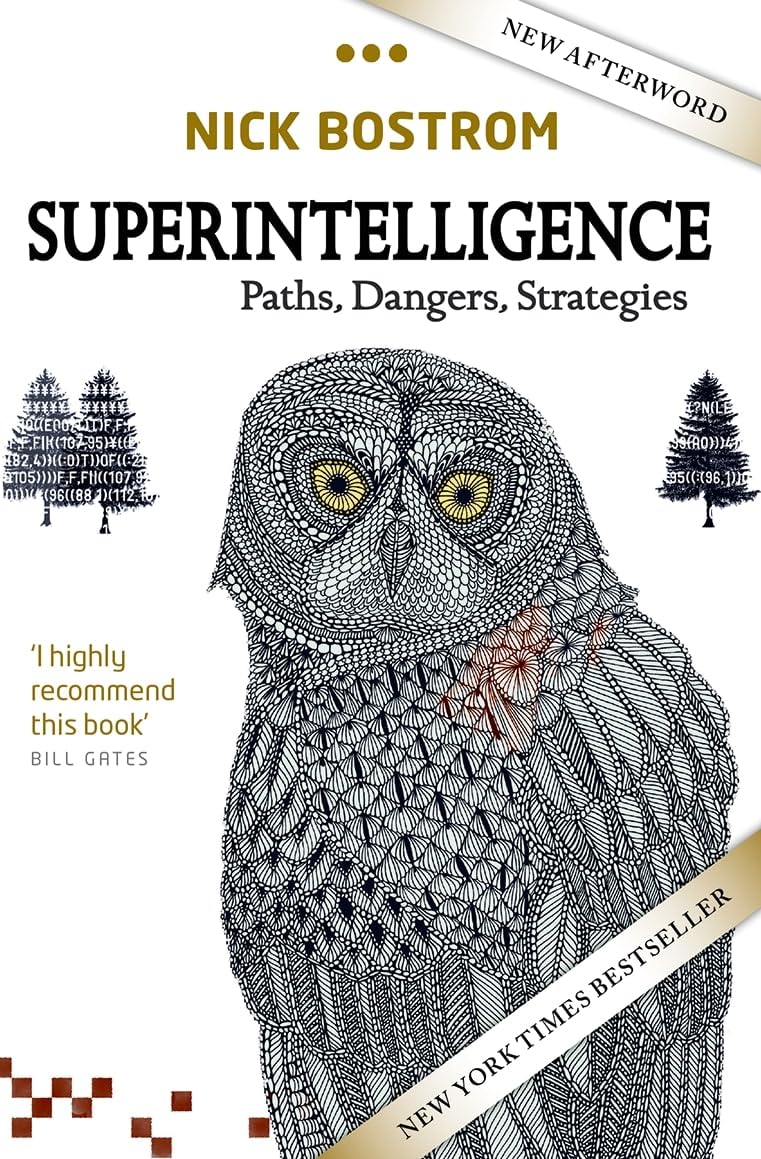
The book that started the existential-risk debate and that half the industry still cites.
As an Amazon Associate, Zendoric earns from qualifying purchases; the price does not change for you. · all our recommended books →
🔗 Related on Zendoric
- Anthropic consults theologians on Claude's morality — but the consciousness claim needs far more scrutiny · 2026-10-02
- Anthropic points the finger at Alibaba: the AI frontier is starting to defend itself with lawyers, not just code · 2026-06-25
- Anthropic opens its most powerful models to vetted cybersecurity teams: 129,000 flaws found and a tiered governance trial · 2026-10-07