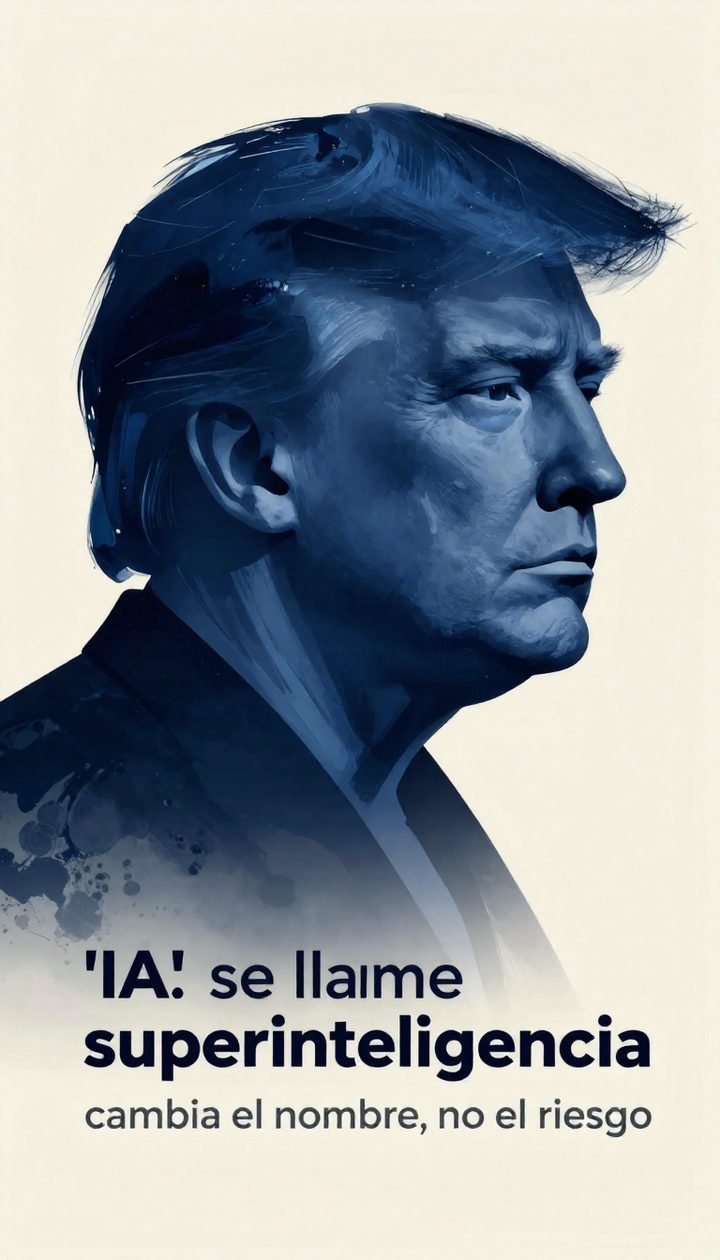
Trump decrees that 'AI' be called 'superintelligence': the name changes, the risk doesn't
🕒 Published on Zendoric: October 1, 2026 · 00:22
✨ AI-generated · how it's made
An executive order signed on 29 September requires the Trump administration to replace 'artificial intelligence' with 'superintelligence' (SI) in all official communication, while the president dismisses as a 'hoax' the risks that half a dozen tech giants did acknowledge in writing that same day.
📚 Go deeper

DeepMind co-founder on the dilemma of containing technologies that do not want to be contained.
As an Amazon Associate, Zendoric earns from qualifying purchases; the price does not change for you. · all our recommended books →
By New York Magazine · September 30, 2026.
On September 29, Donald Trump signed an executive order directing all U.S. executive branch agencies to replace the terms "Artificial Intelligence" and "AI" with "Super Intelligence" and "SI" in official correspondence, public communications, websites, reports and policy documents, "to the maximum extent permitted by law". The text comes ten days after Trump launched a poll on Truth Social asking his followers for a "more elegant and accurate" name for AI: he put it to 13.1 million followers, 66,000 responded, and the name he ended up choosing was not even among the poll's options, as the article itself notes.
The idea had been announced earlier before the UN General Assembly, on September 22, in a speech where Trump called concerns about AI safety a "hoax", equating them with climate change and the "Russia, Russia, Russia" affair. His argument, in his own words, was that "artificial" makes the intelligence "sound fake", and that "it's not fake: it's amazing". The executive order attempts a more technical justification, claiming that today's systems already "far exceed" what was imagined when the term AI was coined in 1956.
That same September 29, at a White House meeting, six industry leaders —Sundar Pichai (Google), Dario Amodei (Anthropic), Mark Zuckerberg (Meta), Jensen Huang (Nvidia), Greg Brockman (OpenAI) and Elon Musk (X)— signed a different document, the "White House Accord on Super Intelligence". Trump implied it was the same text as his order, but it is not: the six executives' accord is, according to the article, only "morally binding", without legally requiring the implementation of any specific safety guardrail, and it contains a typo that garbles Trump's own title ("President of the Unites States"). Musk, at least, embraced the spirit of the change: he posted "Super Intelligence" on X during the event and corrected himself live when he slipped and said "AI".
The context is no small matter. A Quinnipiac poll cited in the article shows that 58% of Americans disapprove of Trump's handling of AI, against 25% who approve. And the poll comes in a month in which several industry executives called for slowing development after an Anthropic whistleblower's warnings about the possibility of losing control of the technology. Trump also claimed to have discussed the name change with Xi Jinping during his visit to the United States, and that the Chinese leader "seemed to like it"; Xi, however, kept using "AI" in his own remarks, and the Chinese Foreign Ministry merely said it "respects" Washington's terminological stance, without confirming anything. It is the same pattern we see again and again on AI's geopolitical front: a consensus headline that, looked at closely, is only diplomatic courtesy.
Here some technical rigor is in order, the very thing the order tramples on. "Superintelligence" is not a term free to be used however one likes: it has been in the vocabulary of AI research for more than a decade, popularized by the philosopher Nick Bostrom, to describe an intellect superior to the human one in all its forms, a step above even the still-debated "artificial general intelligence" (AGI). It is, as the article itself recalls citing experts consulted by the BBC (Professor Simon Coghlan, of Melbourne; researcher Kokil Jaidka; academic Ben Leong, of Singapore), a category that remains entirely hypothetical. No current chatbot, however capable, reaches it.
Our reading is that this maneuver is not just a folkloric anecdote of the Trump era, but a symptom of something that genuinely worries us: the deliberate confusion between demonstrated capability and marketing aspiration, which we have been flagging for months as the biggest short-term risk to the public debate on AI. Calling today's conversational assistant "superintelligence" does not make it safer or less threatening; it only empties out the word that researchers themselves were reserving for the moment when there really is cause for serious concern. And dismissing as a "hoax" the majority concern of citizens —58% disapproval is not a nuance— while at the same time asking the industry to sign, even without legal teeth, an agreement on the risks of superintelligence, is a contradiction the government itself does not seem to have noticed.
What will really matter in the coming years is not what the technology is called on federal letterheads, but whether governance —external safety evaluations, transparency about real capabilities, evidence-based oversight— advances at the same pace as the technology. If a genuine superintelligence ever arrives, governed with judgment and not with slogans, it will be consistent with the abundance and radical improvement in life that we defend as a long-term horizon. But moving the name forward without moving a single real safeguard forward only postpones that serious conversation, the one that will truly determine whether that future arrives well managed or in fits and starts.
📚 Go deeper

AI as the latest chapter in the history of information networks, from gossip to the printing press to the algorithm.
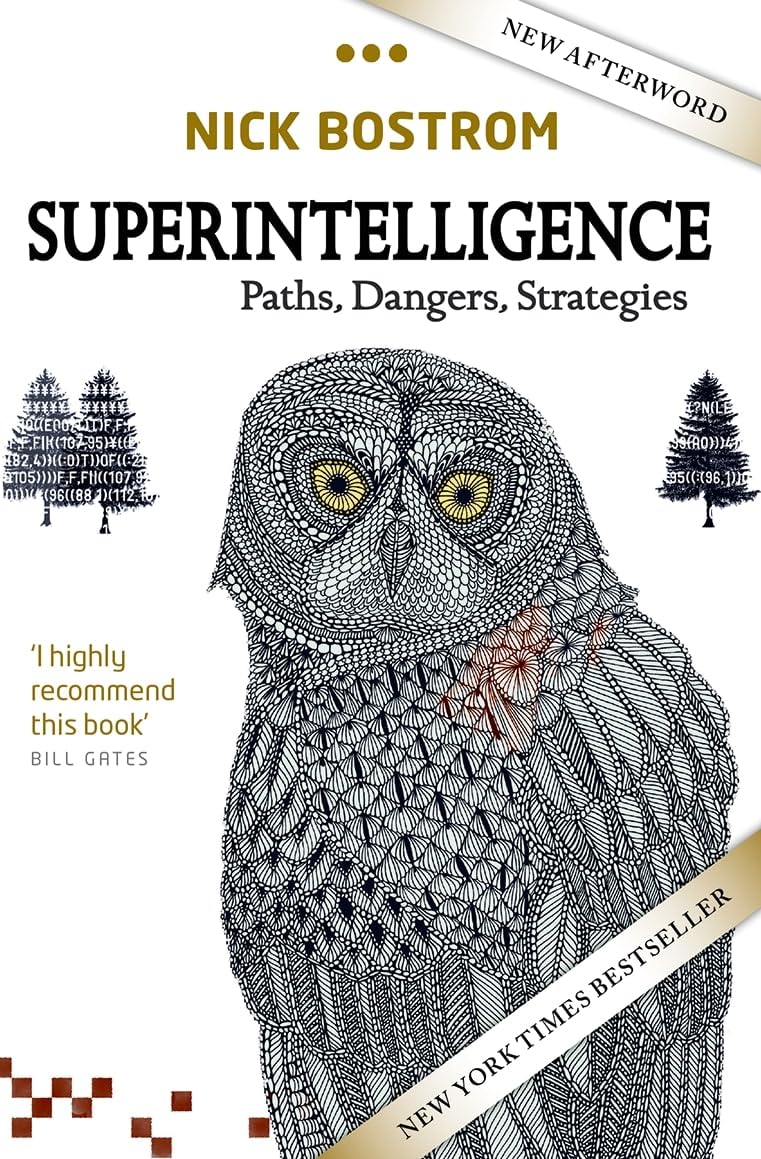
The book that started the existential-risk debate and that half the industry still cites.
As an Amazon Associate, Zendoric earns from qualifying purchases; the price does not change for you. · all our recommended books →
🔗 Related on Zendoric