China is "ten years ahead" in applied AI, but its model rests on total surveillance

🕒 Published on Zendoric: September 29, 2026 · 08:25
✨ AI-generated · how it's made
Paying for a soft drink with your face, patrol cars without officers and street stations for renting batteries: analyst Fausto Pretelín describes from Beijing a modernization that seems to belong to another decade. The trade-off, by his own account, is a network of cameras that identifies and tracks every person at all times.
📚 Go deeper

Semiconductors as the oil of the 21st century: history, espionage, and why an island of 23 million people underpins the entire AI economy.
As an Amazon Associate, Zendoric earns from qualifying purchases; the price does not change for you. · all our recommended books →
By MVS Noticias · September 28, 2026.
Fausto Pretelín, an international analyst at MVS Noticias, has just returned from a trip to China, and his account, given in an interview with Pamela Cerdeira, captures in a handful of scenes what macro statistics do not always convey. In Beijing, he says, electric cars dominate the streets, with more than a hundred Chinese brands on the road; the phone has replaced the wallet to the point that there are stations for renting portable batteries when the charge runs out; and something as everyday as buying a soft drink is paid for with facial recognition, with no card or phone involved. The other side is a network of cameras that, as he describes it, identifies faces and tracks movements constantly, to the point that he has seen police patrol cars with no officers on board, only cameras trained to detect anomalies. His line sums up the impression: "At first glance you'd think they're 13 hours ahead. They're 10 years ahead."
It is worth putting this in perspective: it is the account of a single traveler, not a study with verifiable figures on deployment, camera coverage or system accuracy. There is no benchmark to compare here, as there is when measuring the quality of a language model. It is qualitative testimony, and it should be read as such: valuable for understanding an impression, not for drawing quantitative conclusions about who is ahead of whom in the AI race.
That said, the observation points to something real that we have verified in other areas: China is not competing only in the lab. In language models, the gap with the United States has narrowed noticeably, especially in the open-source arena (GLM, Qwen, DeepSeek and Kimi are already close to the Western leaders on several indices). What Pretelín describes is the other half of the equation: the speed at which that same AI is being deployed in everyday life and in the state security apparatus. And there the contrast with Western democracies is not only technological, it is one of legal and political friction. A one-party system can roll out a facial-recognition camera network on a national scale without the litigation, the parliamentary debate or the judicial resistance that would slow an equivalent project in Europe or the United States. That speed does not prove superior AI; it proves a different kind of governance, with fewer checks and balances.
That is precisely the part that should not be sugar-coated. The sense of safety Pretelín describes —little concern about theft, patrol cars that keep watch on their own— is real and probably true in the short term. But the same infrastructure that detects a robbery can be used to detect a protest, an inconvenient journalist or an unauthorized gathering. "They photograph you and photograph you all the time. The question is what it's used for," the analyst himself says, and he is right: the problem is not the camera or the model behind it, it is who decides what counts as an anomaly and what is done with that information. In a system with no separation of powers and no free press to scrutinize it, that question goes without a satisfactory answer.
There is also a paradox that Pretelín himself points out and that deserves underlining: this surveillance rollout coexists with what he calls "total capitalism," a hypercompetitive consumer market with more than a hundred Chinese electric-car brands fighting for customers. It is not contradictory, it is the Chinese model: a dynamic market inside a tight perimeter of political control. As sector context, this hybrid —market efficiency plus AI-enabled state surveillance— is also what China has begun to export to other countries through digital and security infrastructure, which turns the underlying question into something that goes beyond its borders: which model of AI deployment becomes the norm first in the rest of the world.
Our reading, with the caution a testimonial source demands: the technology that lets you pay with your face, or lets a patrol car detect an anomaly without an officer on board, is at bottom the same family of computer vision and predictive models that in another context could monitor vital signs in a nursing home, detect a fall before it becomes serious or anticipate an epidemic outbreak across an entire city. The hardware and the model do not decide whether the outcome is control or care; that is decided by the legal and institutional framework surrounding their deployment. The lesson of this trip is not that China is "ten years ahead" in a sense we should envy without qualification, but that it has resolved in its own way —with real costs to privacy and dissent— the question of adoption speed that the West is still debating. In the long run, the path to abundance we defend at Zendoric does not run through copying that authoritarian shortcut, but through achieving a comparable deployment speed without giving up the checks that keep the same camera that cares from also watching without limit.
📚 Go deeper
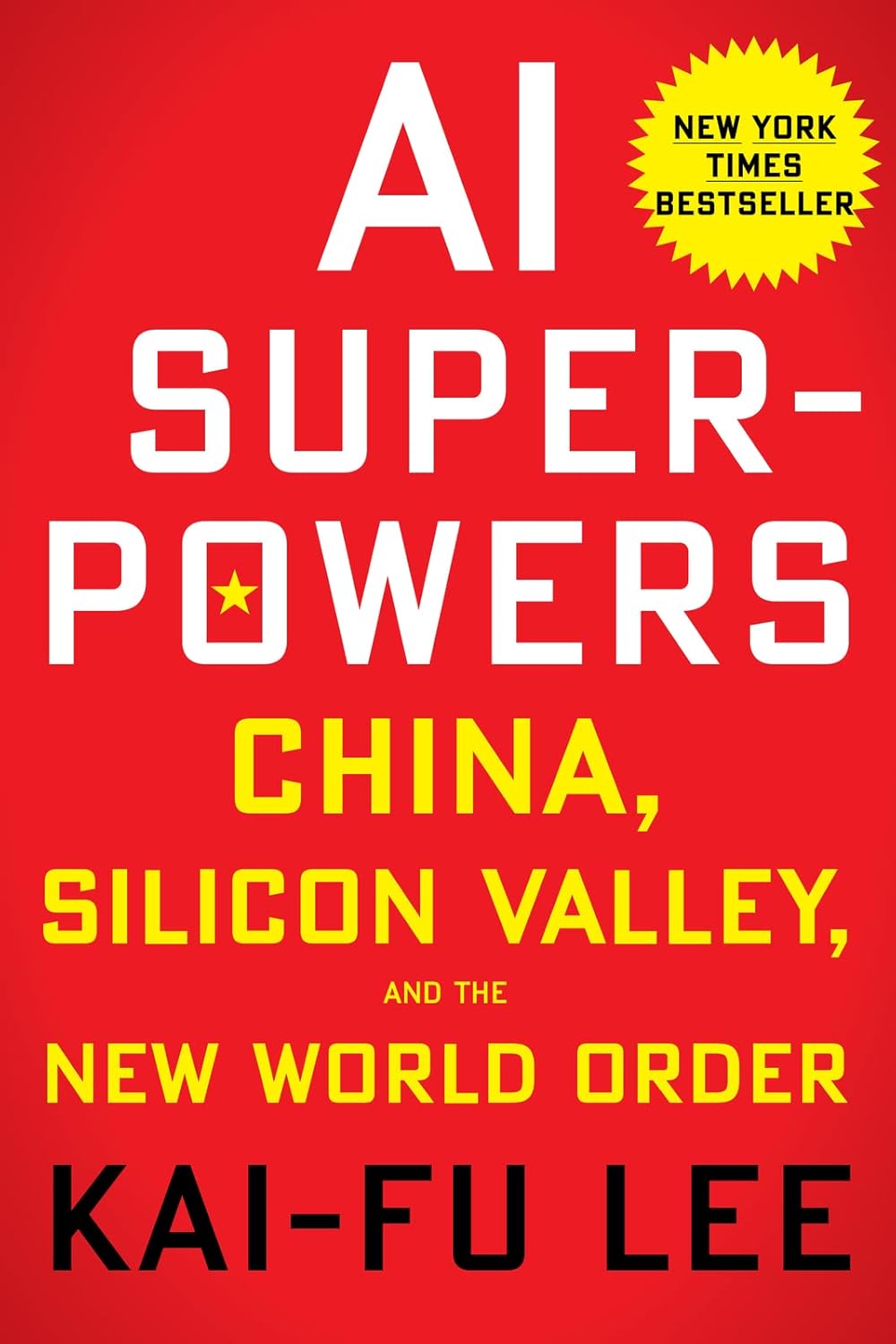
China vs.

AI as an extractive industry: the lithium, the energy, the underpaid data-labeling work and the bodies behind the cloud.
As an Amazon Associate, Zendoric earns from qualifying purchases; the price does not change for you. · all our recommended books →
🔗 Related on Zendoric
- 700 million cameras and an unresolved dilemma: how AI turns Chinese surveillance into an uncomfortable mirror for the rest of the world · 2026-06-28
- Kerala deploys 625 AI cameras for traffic: the price of safety is total surveillance · 2026-07-06
- Another Chinese model, the same question: how much capex does it take to stay the leader? · 2026-07-18