A reported $108m voice-cloning fraud at Intesa Sanpaolo is the AI risk that is already here

🕒 Published on Zendoric: September 29, 2026 · 08:25
✨ AI-generated · how it's made
Italy's largest bank reportedly lost $108 million to a scam using AI-generated voice. Details are thin, but the pattern is not: synthetic audio attacks the one control banks never fully digitised — the trusted human voice on the line.
📚 Go deeper

How opaque algorithms decide who gets credit, a job or parole — and why they tend to punish the same people.
As an Amazon Associate, Zendoric earns from qualifying purchases; the price does not change for you. · all our recommended books →
Italy's Intesa Sanpaolo lost $108 million to an AI voice scam, according to the report circulating on this incident. Beyond the headline figure and the method — AI-generated voice used to impersonate someone the bank trusted — the publicly available detail is limited. We will not speculate about who was impersonated, how the transfer was authorised or whether funds were recovered, because that information is not in the material available to us.
What is worth saying is why this attack class keeps working. Banks have spent two decades hardening the digital perimeter: multi-factor authentication, transaction monitoring, device fingerprinting. The voice channel was never hardened to the same degree, because the voice itself was the authentication — you recognised the CFO, or the client, or the correspondent bank officer. Cheap, high-fidelity voice synthesis removes that assumption without touching a single line of the bank's code. The exploit is not in the systems; it is in the procedure that says a senior person's confirmed instruction is sufficient.
Our reading: this is the near-term face of AI risk, and it is unglamorous. Not a rogue superintelligence — a fraud playbook that used to require a skilled impersonator and now requires a few seconds of public audio, which means it scales. The defence is equally unglamorous and already known: out-of-band verification for large transfers, callback procedures to numbers on file rather than numbers offered by the caller, dual authorisation with mandatory delay, and staff training that treats urgency itself as the red flag. Banks that treat voice as an identity factor are running on an assumption that expired. The honest short-term reading is that fraud losses across the sector will get worse before controls catch up, and figures in this range will not stay exceptional. The honest long-term one is that this is a solvable operational problem — organisations fixed cheque fraud and card-present fraud with process, not prophecy — and solving it is a prerequisite for trusting AI with anything that matters.
📚 Go deeper

Algorithms in justice, medicine, cars and art, explained with British humor and mathematical honesty.
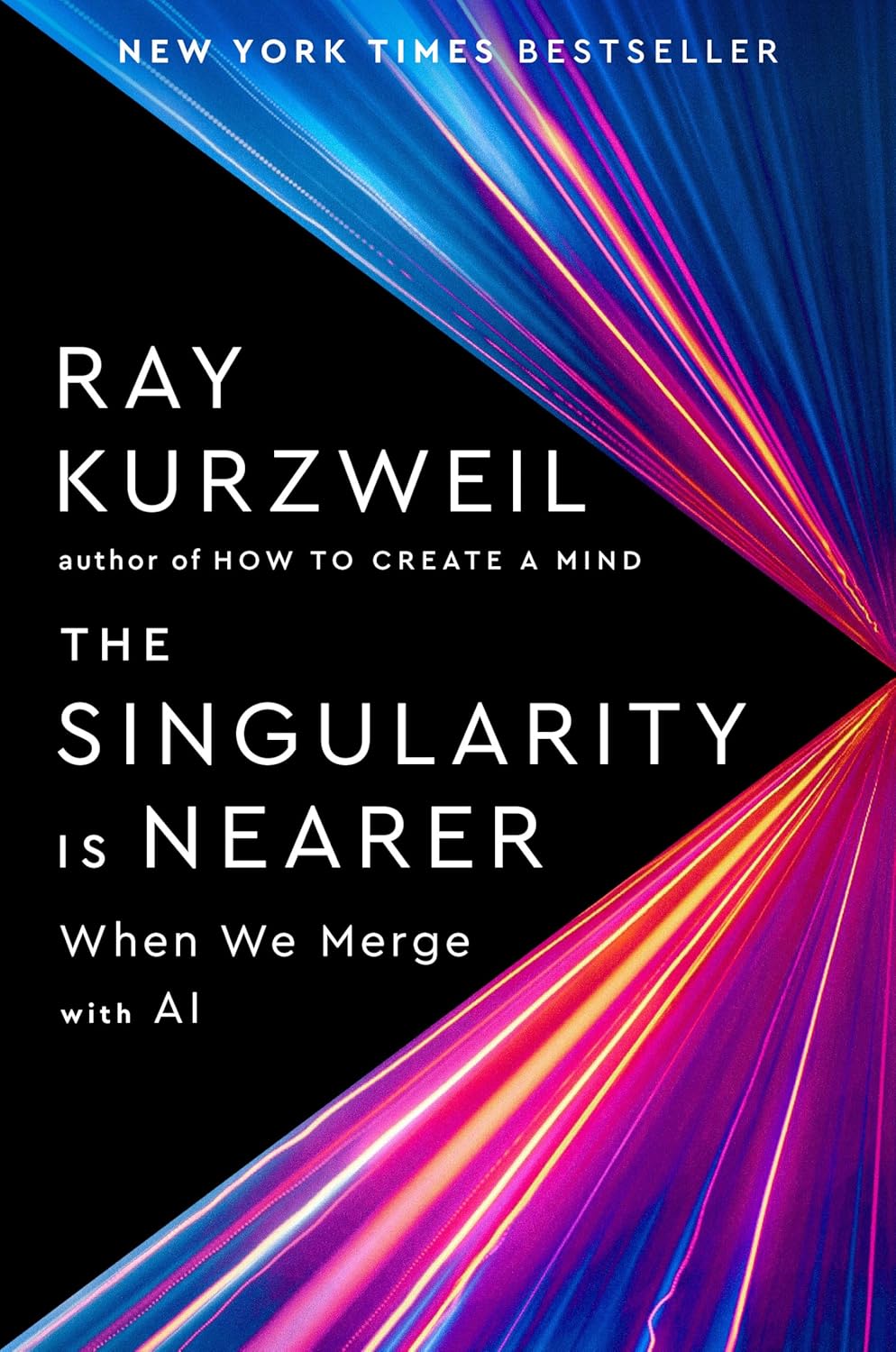
Twenty years after "The Singularity Is Near", Kurzweil revisits his predictions and keeps the date: human-AI merger around 2045.
As an Amazon Associate, Zendoric earns from qualifying purchases; the price does not change for you. · all our recommended books →
🔗 Related on Zendoric
- A $108M voice clone isn't a deepfake story — it's a story about banks still trusting voices · 2026-09-27
- Three seconds of audio is enough: AI voice fraud is winning because every defense arrives after the money is gone · 2026-08-31
- AI voice cloning, fake recruiters and roofing fraud: the triple alert that is already routine in the US · 2026-09-02