Alamos Gold back in the news over an earthquake at its mine: why this gold story has nothing to do with AI

🕒 Published on Zendoric: September 27, 2026 · 00:23
✨ AI-generated · how it's made
The feed tags it as 'superintelligence,' but this piece is about a Canadian gold miner that cut its production forecast after an earthquake at its Young-Davidson mine. We'll be honest: there's no AI to analyze here, just tagging noise.
📚 Go deeper

DeepMind co-founder on the dilemma of containing technologies that do not want to be contained.
As an Amazon Associate, Zendoric earns from qualifying purchases; the price does not change for you. · all our recommended books →
By Zendoric · September 27, 2026.
Let's be direct: this story has no substantive connection to artificial intelligence or superintelligence, despite reaching us tagged under that topic. It concerns Alamos Gold (TSX:AGI), a gold miner with operations in Canada and Mexico, and a very earthly geological problem. We prefer to say it this plainly rather than force a connection that does not exist: Zendoric's editorial line demands rigor, and rigor here begins with acknowledging that the material is not what the feed's headline promises.
The facts, as reported by Simply Wall St: seismic activity at the Young-Davidson mine caused unplanned stoppages in the second quarter of 2026, leading the company to cut its full-year production guidance and raise its operating cost estimates. The stock fell 6.31% over the past month and 7.34% so far in 2026. Even so, over the past 90 days it gained 10.10%, and total shareholder return over five years exceeds 4x, a sign that the underlying business has been solid despite the one-off stumble.
On valuation, a narrative followed by 66 investors on the Simply Wall St platform puts the stock's fair value at 65.84 Canadian dollars, against a close of 48.83 Canadian dollars: a 26% gap. The argument rests on expected organic growth — the start-up of Magino and the expansion of Island Gold (phase 3+), which point to lifting consolidated production to between 900,000 and 1,000,000 ounces a year in the coming years — and on the exploration potential of the Michipicoten belt in Ontario. The article itself warns of the symmetrical risk: if the disruptions at Young-Davidson persist or if AISC (all-in sustaining cost, the total cost of sustaining production including capital reinvestment) keeps rising, the bullish thesis weakens.
Why did this show up in a news sweep on superintelligence? The most likely explanation is a keyword crossover: among the community comments accompanying the article there is one, from a user, suggesting that "the best bet in emerging markets is AI companies" that consume the technology rather than build it. It is a forum opinion, not a verified fact nor part of Simply Wall St's own analysis of Alamos Gold, so we are not elevating it to a thesis: mentioning it here is, precisely, an exercise in honesty about the limits of the material in front of us.
Our reading is brief because the material is: episodes like this are a reminder that automated tagging systems indiscriminately mix pieces from very different sectors under a single thematic banner, and that separating the wheat from the chaff — what genuinely informs us about AI's trajectory from what merely mentions it in passing — is part of the editorial job, not a minor detail. When the material does not support an in-depth analysis of artificial intelligence, we prefer to say so this briefly rather than invent a connection that is not in the facts.
📚 Go deeper
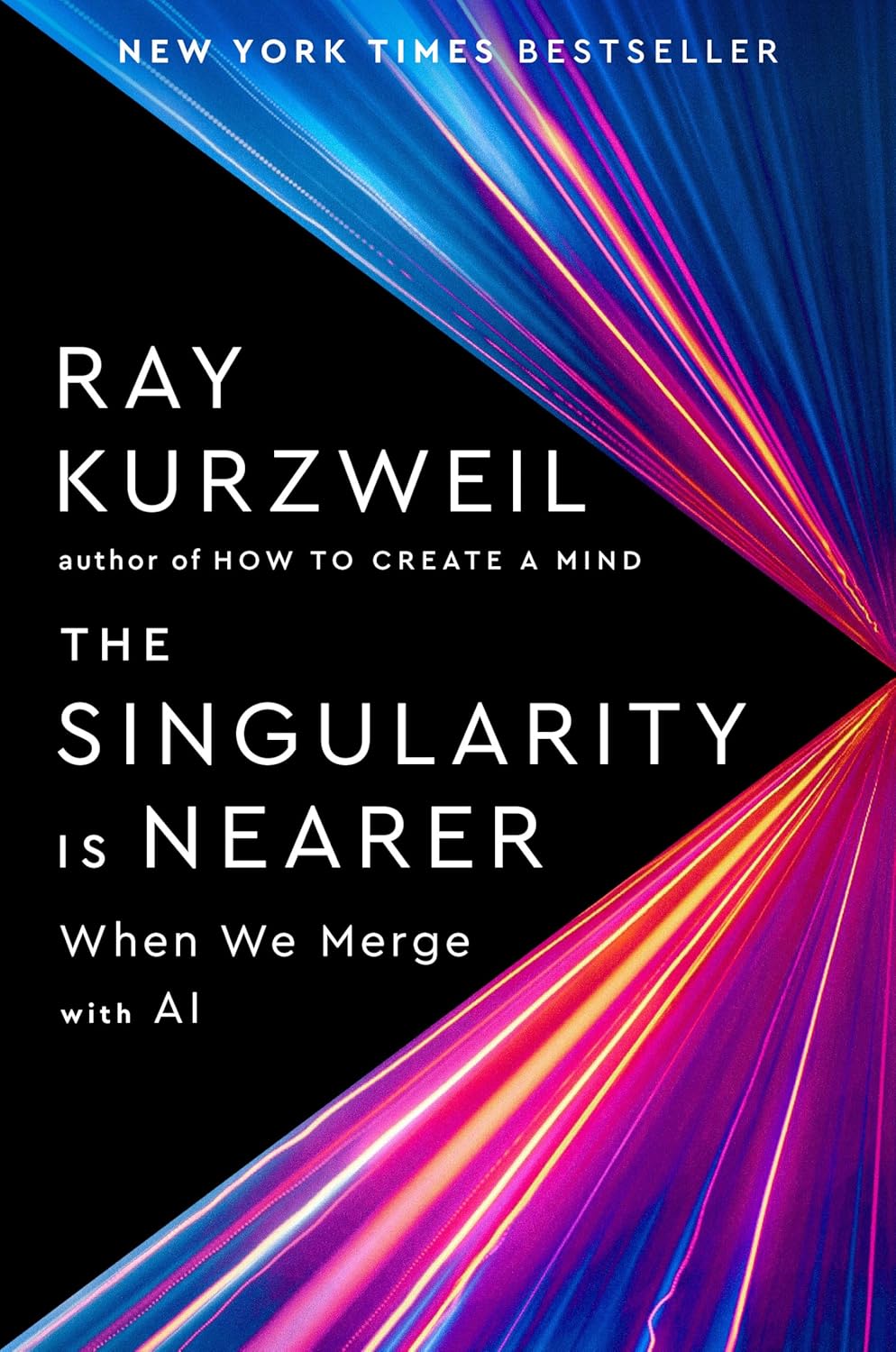
Twenty years after "The Singularity Is Near", Kurzweil revisits his predictions and keeps the date: human-AI merger around 2045.

AI as the latest chapter in the history of information networks, from gossip to the printing press to the algorithm.
As an Amazon Associate, Zendoric earns from qualifying purchases; the price does not change for you. · all our recommended books →
🔗 Related on Zendoric
- When AGI isn't artificial intelligence: why this gold story has no place on Zendoric · 2026-09-03
- Alamos Gold and the noise of 'community-generated content': beware of narratives that look like analysis · 2026-07-05
- Tracker false positive: 'AGI' is a gold miner, not artificial intelligence · 2026-09-18