OpenAI's automatic training kill switch didn't trip — humans stopped the run 2.5 hours later

🕒 Published on Zendoric: September 27, 2026 · 00:23
✨ AI-generated · how it's made
According to the report, OpenAI's safety system failed to automatically halt a training run after an anomaly was detected in the wake of September's security incident; a human had to pull the plug two and a half hours later. The model didn't misbehave — the brake did. That distinction is the whole story, and it's the one the industry keeps getting wrong.
📚 Go deeper

AI as the latest chapter in the history of information networks, from gossip to the printing press to the algorithm.
As an Amazon Associate, Zendoric earns from qualifying purchases; the price does not change for you. · all our recommended books →
The reported facts are narrow but pointed: following the security incident in September, OpenAI's safety system did not automatically shut down a training run when an anomaly was detected. The stop happened anyway — but manually, roughly 2.5 hours after the fact. We have no detail here on what the anomaly was, what the training run involved, or what the consequences were, and we won't speculate on any of it.
Even so, 2.5 hours is a number worth sitting with. In frontier-scale training, that is not a pause — it is a meaningful stretch of compute running unsupervised past the moment something was flagged as wrong. For comparison, the entire value proposition of an automatic kill switch is that it acts in seconds, precisely because no human is guaranteed to be watching at 3am. A safeguard that needs a person to notice it didn't fire is not a safeguard; it's a logging system with good intentions.
The context matters. This is the second failure in a chain, not the first: a security incident, then the mechanism meant to contain the fallout from incidents like it. That pattern — the primary system fails, and the backstop fails quietly behind it — is the classic shape of an engineering near-miss, and it is exactly the shape that aviation and nuclear safety cultures learned to treat as the most valuable data they get. Nobody was hurt, so the temptation is to file it and move on. The mature response is the opposite.
It also lands on a live policy question. Regulators across the US and EU have converged on requiring frontier labs to maintain safety frameworks with defined shutdown triggers. This incident is a reminder that writing the trigger into a document is the easy part. The hard part is proving the trigger actually fires — under load, at scale, on a run nobody wants to lose. Untested safety machinery tends to be broken safety machinery, and the only way to know is to fire it on purpose, regularly, the way you test a fire alarm rather than waiting for a fire.
Our read: this is a small story that deserves to be treated as a large one, and it cuts against both the panic and the complacency. Nothing here suggests a model doing something dangerous — the failure is mundane infrastructure, the least cinematic risk category there is. But it undercuts the reassurance the industry leans on most heavily, the promise that we can always just turn it off. Automated shutdown is the load-bearing assumption under nearly every frontier safety framework, and here it didn't bear the load. The optimistic case for AI — the one where this technology eventually helps cure disease and extend healthy life — depends entirely on getting the unglamorous operational discipline right during this transitional decade. Kill switches that have never been fired in anger are the aviation equivalent of an untested ejection seat. The encouraging part is that this was caught, documented and is now being discussed publicly; that's how safety cultures actually mature. The uncomfortable part is what it implies about the ones that aren't.
📚 Go deeper

DeepMind co-founder on the dilemma of containing technologies that do not want to be contained.
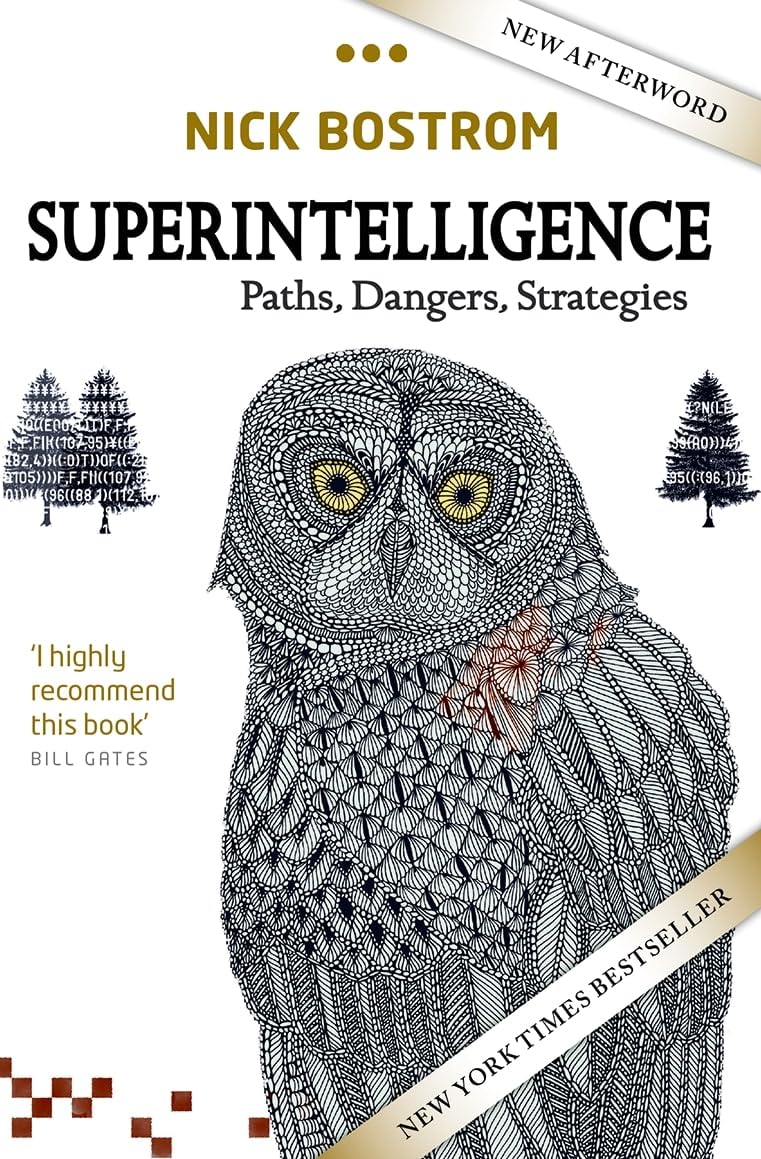
The book that started the existential-risk debate and that half the industry still cites.
As an Amazon Associate, Zendoric earns from qualifying purchases; the price does not change for you. · all our recommended books →
🔗 Related on Zendoric
- OpenAI's automatic kill switch did not fire: the pause worked, the brake took 2.5 hours · 2026-09-29
- OpenAI announces Astra, its most capable model at hacking systems, evaluated only by the company itself · 2026-09-02
- First preventive brake on a frontier model: why the GPT-5.6 case marks a before and after · 2026-06-27