First preventive brake on a frontier model: why the GPT-5.6 case marks a before and after

🕒 Published on Zendoric: June 27, 2026 · 09:00
✨ AI-generated · how it's made
According to Axios, two White House offices asked OpenAI to limit GPT-5.6 to approved partners for national security reasons. It would be the first documented case of a preventive restriction on a U.S. AI, and Altman has already said it is not his preferred model in the long run.
📚 Go deeper
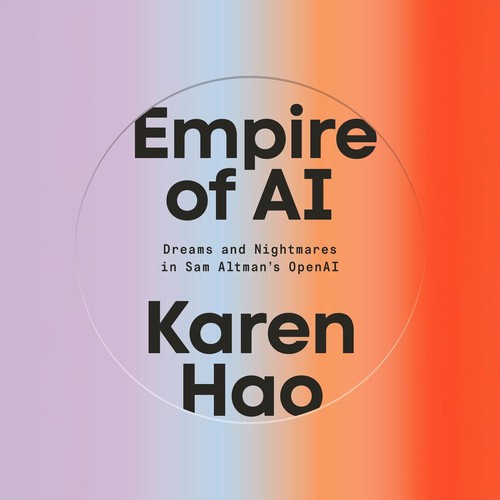
The definitive piece of investigative journalism on OpenAI: 260+ interviews, the clash between safety and speed, and the attempted firing of Sam Altma
As an Amazon Associate, Zendoric earns from qualifying purchases; the price does not change for you. · all our recommended books →
Some news matters less for its figures than for the precedent it sets. According to the Axios report by Ashley Gold, Sam Sabin and Mike Allen, the Trump Government reportedly asked OpenAI to restrict the launch of GPT-5.6 to a small group of approved partners before any mass rollout, citing national security reasons. If confirmed, it would be the first documented case in which the US State preemptively asks a domestic AI company to contain a model before its market release.
The institutional detail lends seriousness to the matter. The request reportedly came, according to the outlet, from the Office of the National Cyber Director and the Office of Science and Technology Policy, while the administration builds a framework to assess the safety of new models. It is therefore not a passing whim, but a piece within a regulatory scaffolding under construction, aligned with the executive order on AI safety that Trump signed —according to the article— earlier this month and which provides for a voluntary pre-launch testing protocol.
The most revealing thing is OpenAI's tone. In an internal memo cited by The Information, Sam Altman reportedly acknowledged that this 'is not our preferred long-term model' and that the company will work with the Government and industry toward 'a more sustainable approach'. It is a cooperation with nuances: the company complies without giving up the right to disagree with the mechanism. That candor, far from being a problem, is precisely what is needed so that AI governance is not built on silent impositions, but on constructive, public friction.
The technical background explains the caution. A source cited by Axios maintains that the Executive intervened because GPT-5.6 would have a capability comparable to that of Anthropic's Mythos model, a company that shortly before had reportedly revoked access to its frontier models following a directive from the Department of Commerce. The stated concern is clear: to prevent malicious actors —state spies, cybercriminals or infiltrators— from accessing extremely high-performance systems without adequate safeguards. These claims should be attributed to their sources and not taken as settled facts.
There remains, however, a structural tension that the article itself does not hide: the labs are racing against the clock, among themselves and against increasingly capable Chinese open-source models, while the State demands a slowdown in the most sensitive stretch. Finding the balance between competitive speed and prudence will be the great challenge of the coming years.
The hopeful note is that, according to the memo, the delay would be just 'a couple of weeks': an evaluation pause, not a veto. If the result is a reproducible, transparent and proportionate process, this episode might be remembered less as a clash and more as the moment when the industry and the regulator began to speak the same language about the most powerful models.
📚 Go deeper
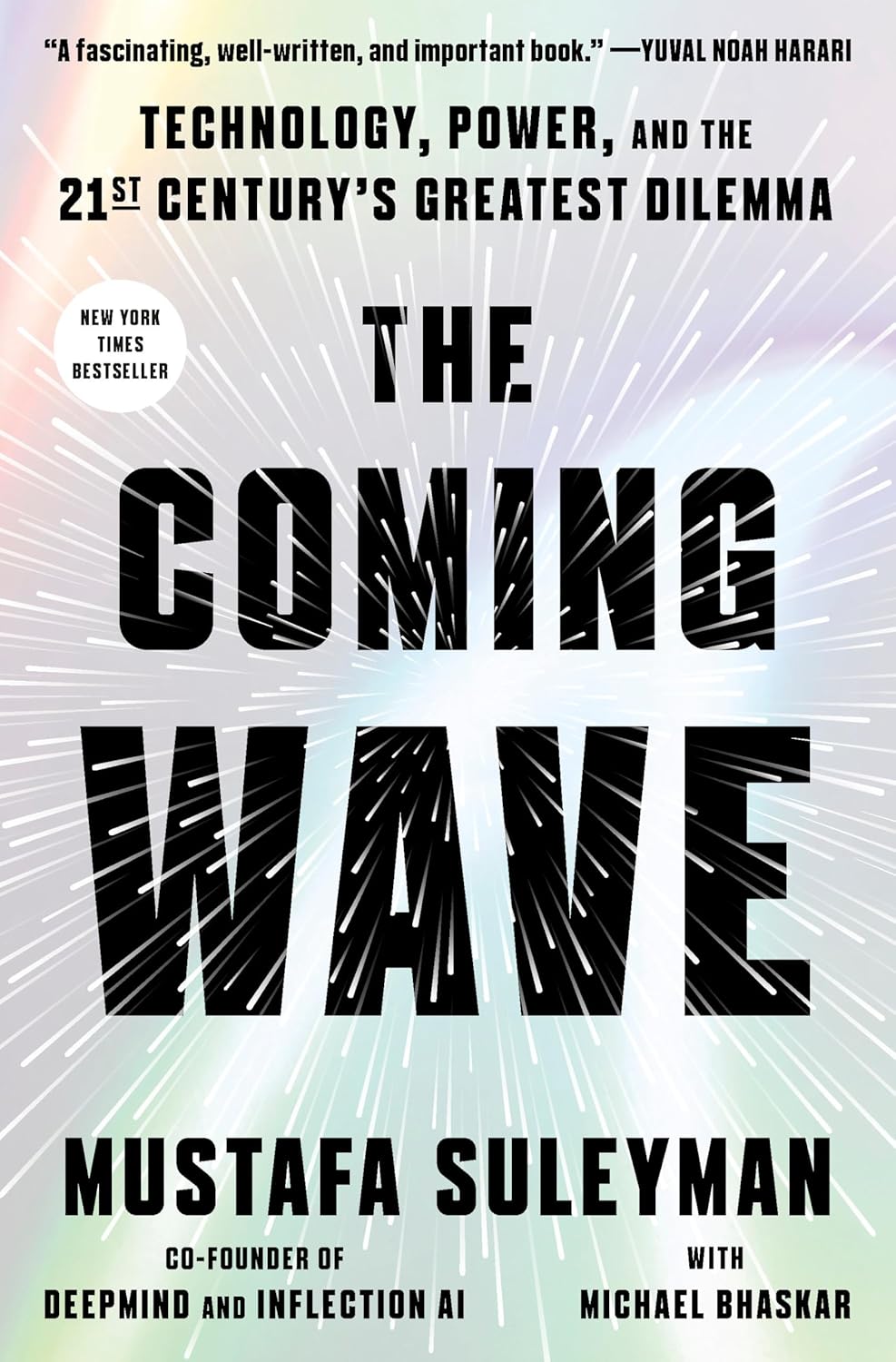
DeepMind co-founder on the dilemma of containing technologies that do not want to be contained.

AI as the latest chapter in the history of information networks, from gossip to the printing press to the algorithm.
As an Amazon Associate, Zendoric earns from qualifying purchases; the price does not change for you. · all our recommended books →
🔗 Related on Zendoric
- OpenAI Staggers GPT-5.6 at Washington's Request: Caution as a Feature, Not a Bug · 2026-06-27
- When the State asks for a pause: the era of staggered AI launches begins to take shape · 2026-06-27
- OpenAI announces Astra, its most capable model at hacking systems, evaluated only by the company itself · 2026-09-02