US and China open a 'hotline' for AI incidents and seal the term imposed by Trump: 'superintelligence'

🕒 Published on Zendoric: September 27, 2026 · 00:23
✨ AI-generated · how it's made
Washington and Beijing are creating a communication channel for AI incidents and have set November for the next round of their 'Superintelligence Dialogue,' following Xi Jinping's visit to the US. The deal comes with concessions on coal, tariffs and rare earths: crisis management, not a substantive treaty.
📚 Go deeper

AI as the latest chapter in the history of information networks, from gossip to the printing press to the algorithm.
As an Amazon Associate, Zendoric earns from qualifying purchases; the price does not change for you. · all our recommended books →
By Deutsche Welle · September 26, 2026.
The United States and China have agreed to open a bilateral communication channel to manage artificial intelligence-related incidents, according to a White House statement released on Friday, September 25, following Chinese President Xi Jinping's state visit to Washington. The text also sets November 2026 as the date for the next meeting of the 'U.S.-China Dialogue on Superintelligence', the bilateral mechanism both governments have been using to discuss the technology's risks and benefits.
The most striking detail is not diplomatic but semantic: both countries agreed to call artificial intelligence 'superintelligence', the term with which Donald Trump rebranded AI in his speech before the UN General Assembly. That Beijing has accepted it as official nomenclature in the announced agreements turns a political-speech label into diplomatic vocabulary, and that is not trivial: the language two governments use to name a technology ends up shaping what gets regulated and what does not.
The AI agreement did not come alone. Washington and Beijing also launched the bilateral Trade Council and Investment Council —set up during Trump's trip to Beijing in May 2026— and China committed to importing at least 10 million metric tons of U.S. coal in 2027 and as many again in 2028. Both governments also reached a consensus to apply more favorable tariffs to $30 billion in non-sensitive goods in each direction —from U.S. agricultural products and cosmetics to Chinese home appliances and toys— and agreed to 'keep working' on Chinese exports of rare earths and critical minerals. Tellingly, the statement makes no mention of Taiwan: Xi pushed for an explicit rejection of the island's independence, while Trump keeps a defensive weapons package for Taipei blocked and, according to the source, uses it as a bargaining chip. Other outlets, such as PBS, place the announcement of the AI channel within a meeting that also included broader trade and military talks.
The incident channel is best read with the right categories in mind: it is not an arms control treaty or a moratorium, it is crisis-management infrastructure. Broadly speaking, the closest precedent are the hotlines Washington and Moscow established during the Cold War to keep a technical misunderstanding —a false alert, a system failure— from escalating into nuclear confrontation. Applied to AI, the stated goal is similar: that a model failure or a security incident is not read as a deliberate hostile act. It is a modest but real step forward, and it fits our view that the governance that truly matters is built with verifiable technical mechanisms, not with statements of intent.
That is precisely where the announcement cracks. Trump has ignored warnings from the industry's own leaders to regulate AI more firmly, fearing that China will overtake the United States; on social media he has argued that the technology should be 'left just as it is'. Xi, by contrast, has insisted that AI must 'remain under human control and benefit the people'. Formalizing an incident channel with Beijing while deregulating at home is not necessarily a contradiction —managing external risk and competing internally can coexist— but it makes clear that bilateral dialogue is no substitute for a domestic safety policy: it is a release valve for when something has already failed, not a mechanism to keep it from failing.
The episode also fits the pattern we have been pointing to in the technological rivalry between the two powers: much of what is presented as cooperation or competition in AI is, in reality, a bargaining chip within a far broader negotiation that includes coal, tariffs, rare earths and weapons for Taiwan. That does not invalidate the incident channel —any mechanism that reduces the odds of an accidental escalation is welcome— but it should not be confused with an AI safety agreement with teeth. In the long run, the kind of cooperation that truly brings humanity closer to a world of less disease and more abundance runs through verifiable agreements on what counts as an incident, how information is shared and who audits compliance. This week's news is, at best, the first rung of that ladder.
📚 Go deeper

DeepMind co-founder on the dilemma of containing technologies that do not want to be contained.
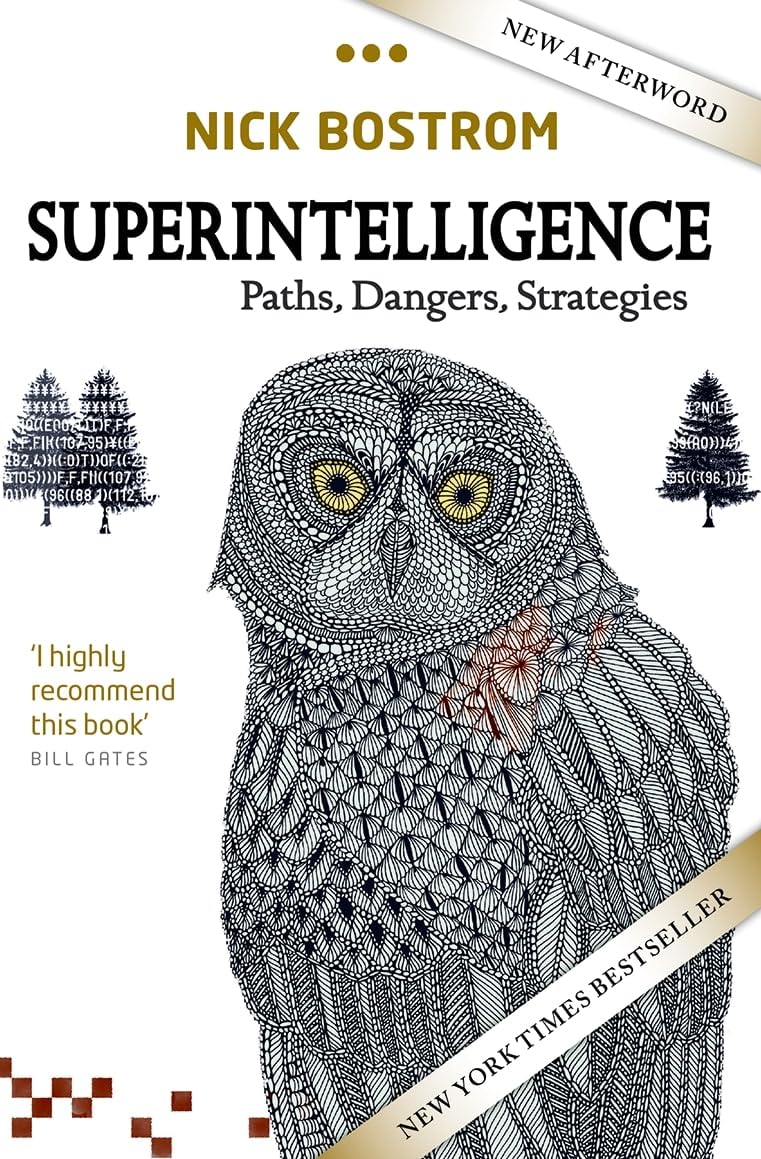
The book that started the existential-risk debate and that half the industry still cites.
As an Amazon Associate, Zendoric earns from qualifying purchases; the price does not change for you. · all our recommended books →
🔗 Related on Zendoric