An Argentine AI predicts frailty in older adults four years ahead: preventive medicine, AI's other front

🕒 Published on Zendoric: September 26, 2026 · 03:00
✨ AI-generated · how it's made
AVIA, developed by the Fundación Cuidados de Salud, estimates the risk of losing independence in older adults up to four years before a fall or hospitalization, according to its creators. The tool, honored by the United Nations in Geneva, shows that the most useful AI in healthcare isn't always the flashiest.
📚 Go deeper

DeepMind co-founder on the dilemma of containing technologies that do not want to be contained.
As an Amazon Associate, Zendoric earns from qualifying purchases; the price does not change for you. · all our recommended books →
By El Diario de la Pampa · September 25, 2026.
While the public conversation about artificial intelligence almost always revolves around chatbots and language models, an Argentine development has just served as a reminder that much of AI's real value in healthcare plays out on far less flashy ground: risk prediction. AVIA, a system created by the Fundación Cuidados de Salud, recently received in Geneva the WSIS Prizes 2026 Champion recognition in the E-health category, awarded by the International Telecommunication Union (ITU), the United Nations agency specializing in information technologies. The award, presented during the WSIS Forum 2026 and signed by ITU Secretary-General Doreen Bogdan-Martin, honors a tool that estimates the risk of frailty and loss of autonomy in older people up to four years in advance, before a fall, a hospitalization or the need for daily assistance occurs.
The mechanism, as its director, Fernando Gril, explained, neither diagnoses nor prescribes: it applies machine learning to close to a hundred variables of health, functionality and socioeconomic environment in order to project a trajectory of decline. The model was trained on longitudinal data from the Health and Retirement Study, a US study that has followed its population since 1992, using the 2018 and 2022 measurements to calculate the probability of frailty at four years. According to the source, in evaluations the system reached a sensitivity of close to 75% for detecting at-risk cases and a negative predictive value above 96% — that is, it is especially reliable at ruling out those with a low probability of decline within that period. The tool has already gone through a pilot test with some 200 patients at the Hospital General de Agudos Parmenio Piñero in Buenos Aires, under the clinical direction of Sebastián Gatti, and is now available online to complete questionnaires and receive an indicative estimate.
This is worth putting in perspective. It is not a foundation model or a generative AI: it is a clinical risk score —the modern relative of classic actuarial scales such as Framingham for the heart— powered by machine learning and massive longitudinal data. Precisely for that reason, it is the kind of application with the shortest path from the lab to the waiting room of a public hospital. On a planet aging at a pace that is already straining health systems across half the world, anticipating by four years the moment when someone begins to lose autonomy is not a technical detail: it is the difference between preventing a fall and paying later, in suffering and in budget, for an avoidable hospitalization.
That said, the team itself lays out the limits, and they are worth taking seriously. The sensitivity and predictive value figures are, for now, internal validation: the model was trained on a US population and its behavior in Argentina or the rest of Latin America has yet to be demonstrated with local data. Gril himself warned as much bluntly: an algorithm may behave differently in the United States than in Argentina, a reminder that generalizing models trained in one socio-health context to another is one of the least resolved problems in AI applied to medicine, and not a minor nuance. The foundation proposes external validation with more hospitals and universities as the next step, and that is the right call: without that work, a well-intentioned system can end up reproducing biases —of age, sex, socioeconomic level— instead of correcting them.
Our read is that cases like AVIA are worth more as a thermometer than as an isolated headline. They fit with something we have been pointing out in our coverage of healthcare and enterprise AI adoption: the bottleneck is almost never the model, but the scaffolding around it —clinical validation, funding to scale it to more hospitals, privacy and anonymization frameworks that the foundation itself acknowledges as essential, and the willingness of health systems to act on a preventive alert instead of waiting for the emergency. That is where it is decided whether a tool honored in Geneva actually makes it into medical records or stays on the diploma.
In the long run, however, it is exactly the kind of development that underpins the deeper thesis: AI applied to biology and the health of aging promises not only to cure faster, but to anticipate decline before it happens, gaining years of autonomy and quality of life before illness or dependency appears. That is the bridge between today's reactive medicine and the health abundance we champion as a horizon: it does not arrive all at once with a spectacular model, but by adding up, one pilot hospital and one external validation at a time, quiet systems like AVIA running in the background of everyday geriatrics.
📚 Go deeper

AI as the latest chapter in the history of information networks, from gossip to the printing press to the algorithm.
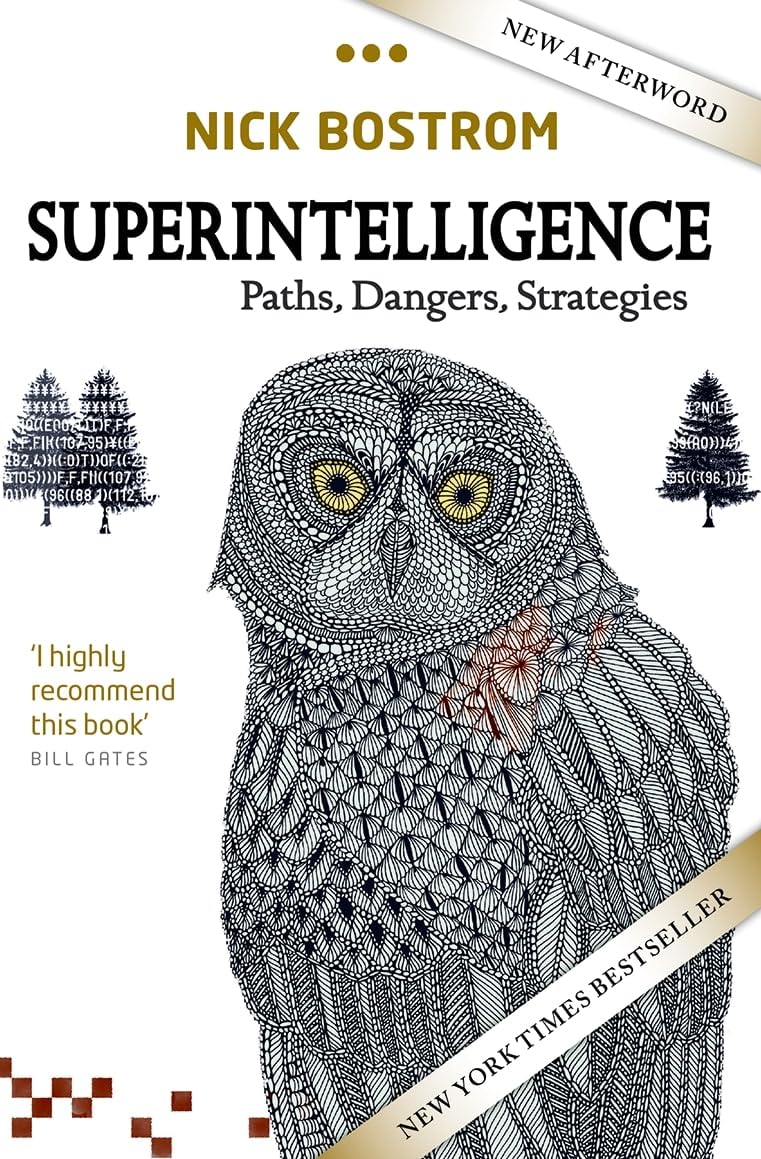
The book that started the existential-risk debate and that half the industry still cites.
As an Amazon Associate, Zendoric earns from qualifying purchases; the price does not change for you. · all our recommended books →
🔗 Related on Zendoric
- A coalition of 17 countries wants children to have a say in the AI that educates and monitors them · 2026-07-08
- Cancer survivors in Washington launch an AI platform for oncology patients: the story, with few verifiable details · 2026-07-26
- What AI cannot do in medicine, according to the industry that lives off patient trust · 2026-09-02