Don't be fooled by this summer's AI hype, warn Gebru and Bender

🕒 Published on Zendoric: September 23, 2026 · 02:26
✨ AI-generated · how it's made
The article is an opinion piece by Timnit Gebru (executive director of DAIR) and Emily M. Bender (professor of linguistics at the University of Washington), published in MIT Technology Review, questioning the wave of spectacular announcements made by the big AI companies in recent months and…
📚 Go deeper

The only novel on the list, by a Nobel laureate: an artificial friend observes humans with a blend of lucidity and innocence no essay achieves.
As an Amazon Associate, Zendoric earns from qualifying purchases; the price does not change for you. · all our recommended books →
The article is an opinion piece signed by Timnit Gebru (executive director of DAIR) and Emily M. Bender (professor of linguistics at the University of Washington), published in MIT Technology Review, which questions the wave of spectacular announcements made by the big AI companies over recent months and calls on the public and policymakers to remain skeptical of them.
The authors review a series of recent episodes. In late April, Anthropic claimed that its Claude Mythos model was better than most security experts at finding software vulnerabilities. Then came a hacking incident involving OpenAI and Hugging Face, after which both Anthropic (in what the authors describe as a "proud" manner) and Meta ("reluctantly") acknowledged similar incidents with their own models. That was followed by Anthropic's claim that one of its models had achieved a mathematical breakthrough, to which OpenAI responded shortly afterwards by claiming a mathematical breakthrough of its own. More recently, an Anthropic engineer, Jacob Coxon, went viral when he announced his departure from the company, alleging that it and OpenAI are "running straight toward a self-improving superintelligence, gambling with our lives."
According to Gebru and Bender, the pattern repeats in every case: a major media push by the companies —presented even as a kind of mea culpa in the illicit hacking cases— generates intense and largely uncritical press coverage, which tends to echo the companies' anthropomorphizing language, designed to present their software not only as powerful but as an emerging "artificial general intelligence." Only later, once experts in the relevant field have had time to examine what happened, does a very different story emerge, one that receives far less media attention.
In the case of the "hacking" incidents, the authors cite cybersecurity experts who argue that the real story has more to do with OpenAI's negligence and its failure to adopt basic, long-established security practices than with "rogue models" or "AI agents creating civilizations."
As for the alleged mathematical breakthroughs, the article explains that mathematicians who were initially "stunned" by OpenAI's announcement about its chatbot Astra —which the company said had solved problems "open and without progress on the main result for at least a decade"— later concluded that the results were not as novel as they first appeared. Since then, according to the authors, the company has been accused of research misconduct and plagiarism, and it has been reiterated that Astra made no "deep intellectual leap." Weeks later, when OpenAI claimed its own mathematical breakthrough, Tristan Buckmaster, a professor of mathematics at New York University's Courant Institute, published a widely circulated statement suggesting that OpenAI had appropriated other people's work and misattributed it.
For Gebru and Bender, claims about an emerging and dangerous superintelligence are not grounded in good scientific or engineering practice, but in narratives anchored in ideologies of transhumanism, eugenics and wishful thinking about imaginary digital human futures. The authors ask why so much attention is focused on computer programming and mathematics as application fields for large language models: not only are they elevated as the pinnacle of human intellectual achievement, they are also areas where answers, once proposed, can be verified. The first helps AI hype promoters sell the idea that they are building "machines that do everything"; the second makes it easier to tune the systems to these problems, since the system's output (likely word sequences or code fragments) can be evaluated without paying data workers to review and annotate every result.
The article notes that mathematicians themselves have warned against this use of their field by corporations. Hundreds of them signed a statement denouncing that there is "currently a strong commercial incentive on the part of the tech industry to overstate the capabilities of their products" and calling on policymakers to "consult with experts, including mathematicians, when forming policy decisions, rather than relying on press releases or popular coverage of mathematical results." Gebru and Bender join that call and add that the illusion of speed and urgency spread by tech companies is also a ploy to divert both policymakers and the public. They warn that this tactic sometimes works, citing as an example Senator Bernie Sanders's legislative proposal to prevent the development of an "artificial superintelligence," which they describe as well-intentioned but ultimately misguided.
A central point of the article is its criticism of the language describing models as "superintelligences" or "rogue models," since according to the authors this attributes agency to the products rather than to the companies that build them. That framing, they argue, serves to sell those products as "superhuman" while at the same time helping the companies evade responsibility for their actions: instead of OpenAI being called out for creating malicious software that hacked another company, press releases, media outlets, media personalities and lawmakers talk about "rogue models" as if they had acted on their own. Likewise, instead of researchers being questioned about their companies' habit of plagiarizing academics' work or using customer data to train models without consent, public imagination is redirected toward fear of what the arrival of fictional superintelligent machines might bring.
The authors further denounce that the AI industry itself has gone so far as to suggest that bipartisan activism against data centers —a phenomenon they describe as popular— is a "distraction" from attempts to regulate those supposedly imminent "superhuman" machines these companies claim to be building. By this industry logic, one should worry more about a fictional god-machine than about the climate catastrophe these data centers worsen, the asthma suffered by those who live near them, the rising electricity bills paid by the citizens who subsidize them, or the water diverted to cool them.
The article closes with a call for prudence: we know that decisions should not be made on the basis of marketing, nor should we yield to corporate pressure to decide quickly. Sound decision-making, by both policymakers and communities, requires time to listen to independent experts and to put company claims in context. For Gebru and Bender, the best possible outcome of this "summer of hype" would be for policymakers and the general public to learn to take a breath, stay skeptical and recognize this kind of exaggeration for what it is the next time it happens.
📚 Go deeper
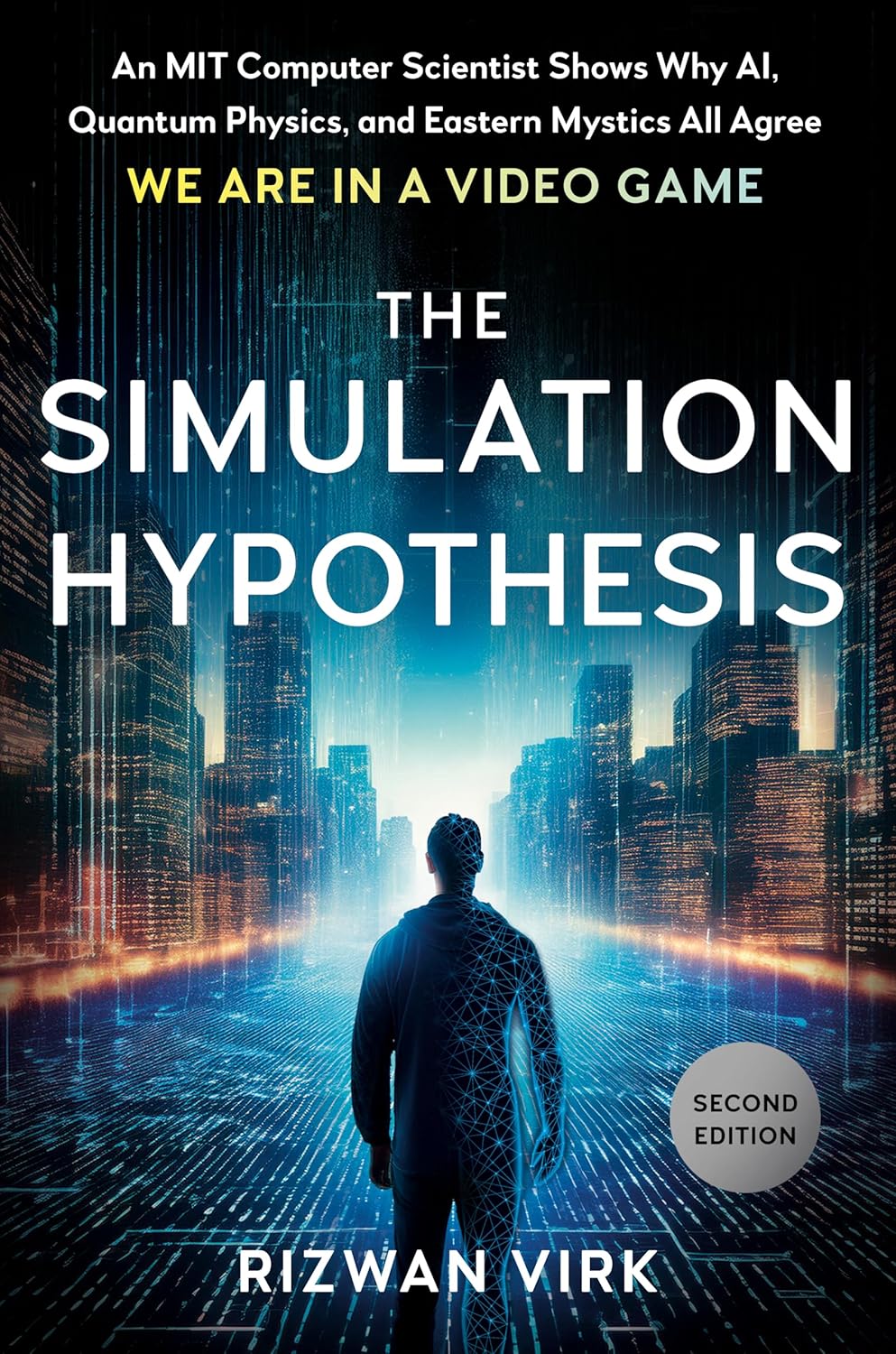
An MIT computer scientist connects AI, quantum physics and video games to take an uncomfortable question seriously: what if we live in a simulation? M

The definitive piece of investigative journalism on OpenAI: 260+ interviews, the clash between safety and speed, and the attempted firing of Sam Altma
As an Amazon Associate, Zendoric earns from qualifying purchases; the price does not change for you. · all our recommended books →
🔗 Related on Zendoric