U.S. bishops lobby Capitol Hill for the child safety bill on AI, and Congress leaves without voting on it
🕒 Published on Zendoric: September 22, 2026 · 07:23
✨ AI-generated · how it's made
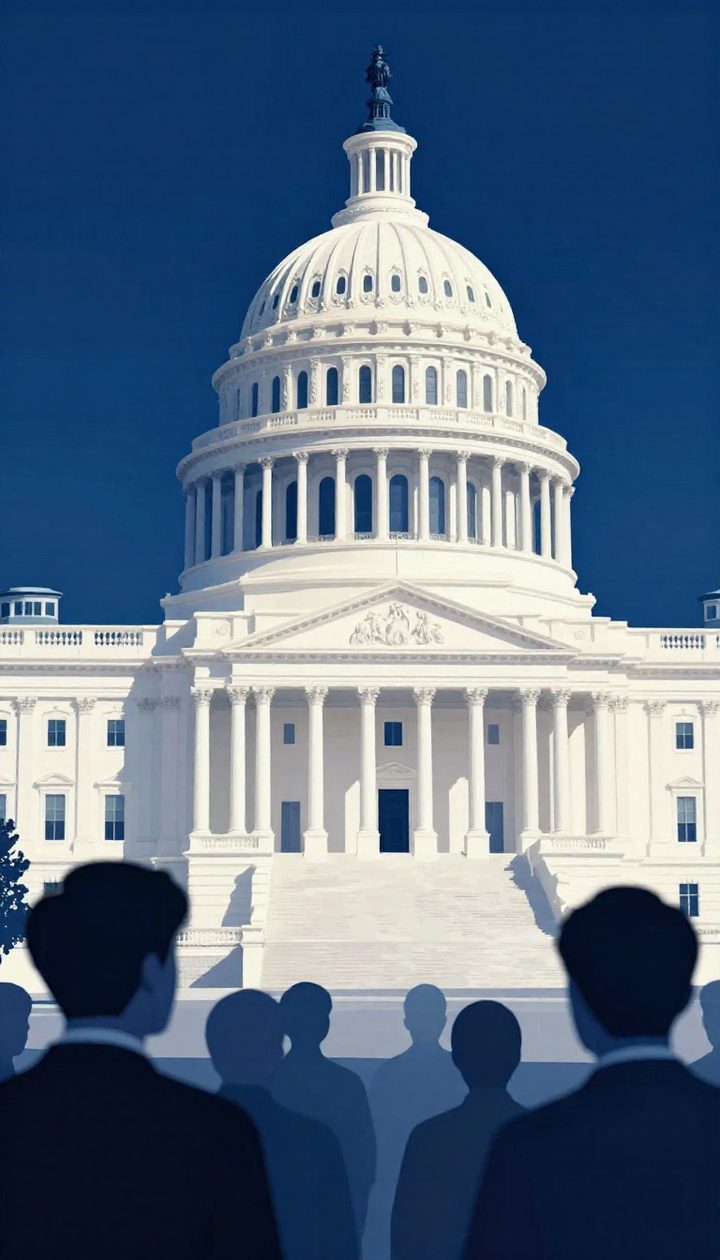
More than a dozen Catholic bishops met with U.S. lawmakers on September 16 to call for AI guardrails and support for the Kids Online Safety Act. They did so the same day Congress adjourned without voting on it and with no plans to return until after the November elections.
📚 Go deeper

AI as the latest chapter in the history of information networks, from gossip to the printing press to the algorithm.
As an Amazon Associate, Zendoric earns from qualifying purchases; the price does not change for you. · all our recommended books →
By Zendoric · September 18, 2026.
More than a dozen US bishops met on September 16 with senators and representatives at the Capitol to call for effective "guardrails" on artificial intelligence and to demand passage of the Kids Online Safety Act (KOSA, S.1748), the federal law that seeks to protect minors online. As Archbishop Alexander K. Sample of Portland, Oregon, chairman of the religious liberty committee of the United States Conference of Catholic Bishops (USCCB), told OSV News, the visits took place on the same day the USCCB announced a new working group to engage with technology leaders and lawmakers on AI, human dignity and children's online safety.
The meeting came on a particularly busy day in Washington: Congress was preparing to adjourn with no expectation of returning until after the November elections, according to the article. KOSA is held up by a specific disagreement between the chambers: the House of Representatives passed a version of the bill earlier this year, but the Senate's includes a "duty of care" clause that is absent from the House text, and over which the White House has negotiated with senators. That clause, Sample explained, would place on developers the responsibility for ensuring that protections for minors exist.
The backdrop is the dispute, already entrenched on Capitol Hill, over how to respond to warnings from several technology leaders who have called for slowing AI development in order to establish safeguards. President Donald Trump has broadly dismissed that concern and maintains a position favoring accelerated development, on the argument —according to the article— that slowing down would leave the United States behind China. Some Republicans back that line of industry self-regulation; some Democrats are calling for regulation. Pope Leo XIV himself had earlier this year called, in his encyclical "Magnifica Humanitas", for "adequate regulatory tools capable of upholding justice and curbing the distorting effects of technological power".
Our reading: what matters here is not that the Church has views on AI —it has for months, encyclical included— but the timing gap this episode exposes. Technology experts themselves, according to Sample, warned them that same morning that "the next 12-18 months are going to see tremendous advances". And Congress, in practice, is heading off on recess without having resolved even a narrow bill with relatively broad consensus such as KOSA, focused on minors rather than frontier AI. If specific, already mature legislation moves at this pace, any more ambitious regulatory framework on frontier models is, de facto, postponed indefinitely.
The other point worth attention is where the regulatory battle is actually being fought: not over whether there should be rules, but over who bears the responsibility. The Senate's "duty of care" is, in essence, the same debate we already see in other jurisdictions —in the European Union, the AI Act is beginning to build a liability and incident regime that falls on whoever deploys the system—: shifting the cost of risk from the user (or their parents) toward whoever designs and markets the technology. It is a governance mechanism, not a ban, which is why it generates less political friction than halting model development. It also explains why the White House is negotiating that specific point: that is where the real compliance cost for companies lies.
The "race with China" argument the Trump administration uses to resist regulation —a theme we have tracked in our comparison of the two countries' capabilities— reappears here, but applied this time to a field where it does not compete: protecting minors from addictive content and design does not slow foundational-model R&D against Beijing. Conflating the two debates, as part of the current political discourse does, serves more to block any legislation than to defend a real technological advantage.
The bishops, for their part, deliberately choose not to speak as technicians: Sample was explicit that they address lawmakers "not as experts, but as pastors", focused on the dignity of the person and —more briefly, but present at the meeting— on AI's impact on workers. It is a strategy consistent with the thesis we hold at Zendoric: the underlying problem is not whether AI advances —it will, and in the long run that capability may translate into health, prosperity and time freed up for people— but whether we build the minimum safeguards in time so that the transition does not leave the most vulnerable, starting with minors, paying the price of an experiment without a safety net. That this message comes from a religious institution rather than a technical regulator says as much about the current vacuum as it does about the urgency of the problem itself.
📚 Go deeper

DeepMind co-founder on the dilemma of containing technologies that do not want to be contained.

The book that started the existential-risk debate and that half the industry still cites.
As an Amazon Associate, Zendoric earns from qualifying purchases; the price does not change for you. · all our recommended books →
🔗 Related on Zendoric
- US bishops press Capitol Hill on the child safety bill against AI, and Congress leaves without voting on it · 2026-09-18
- California requires independent audits of chatbots that talk to minors: the 'Adam Act' is born · 2026-09-11
- The KIDS Act in the mirror: why protecting minors requires age verification and a duty of care, not good intentions · 2026-06-27