OpenAI's Sponsored Agents put a salesperson in the chat — and the labeled wall becomes the real product

🕒 Published on Zendoric: September 18, 2026 · 08:38
✨ AI-generated · how it's made
OpenAI is testing "Sponsored Agents": advertiser-funded AI that holds a conversation with anyone who clicks an ad in ChatGPT. The ad stops being static real estate and becomes a persuader with infinite patience, talking to a human who brought no agent of their own. The separation OpenAI promises — clearly labeled, walled off from the assistant's own answers — is the entire ballgame.
📚 Go deeper

The definitive piece of investigative journalism on OpenAI: 260+ interviews, the clash between safety and speed, and the attempted firing of Sam Altma
As an Amazon Associate, Zendoric earns from qualifying purchases; the price does not change for you. · all our recommended books →
OpenAI is putting a salesperson inside the chat window. The company said in a Sept. 16 blog post that it is testing "Sponsored Agents": business-funded AI agents that strike up a conversation with users who click an ad in ChatGPT. The test runs with select advertisers in the United States. According to OpenAI, those conversations are "clearly labeled" and kept separate both from the user's original chat and from ChatGPT's own independent answers. A user can explain what matters to them, ask follow-up questions, and then follow a link to the business's website.
The money explains the urgency. OpenAI said in January it would bring ads to ChatGPT in the US and start testing within weeks. By Aug. 31 it reported ChatGPT Ads at a $1 billion annualized revenue run rate — that is run-rate arithmetic projected forward, not a billion dollars already banked — with tens of thousands of advertisers and direct buying via Ads Manager across India, Europe, the Middle East and North Africa. Sponsored Agents arrive bundled with the rest of the stack: writing ads by prompt in ChatGPT Work, new AI creative tools in Ads Manager, and ChatGPT integrations with HubSpot and Shopify.
What changes here is not the ad, it's the ask. A search ad is static real estate: it sits there and you click it or ignore it. A sponsored agent is an interlocutor — patient, always available, and optimized for conversion (the share of users who take the action the advertiser paid for). It answers objections. It never tires of you. And it is speaking to a human who brought no agent of their own. That asymmetry of persuasion is the genuinely new thing in this announcement, and it lands squarely in the near-term risk bucket we keep flagging: the immediate danger of agentic AI is industrialized persuasion and fraud, not distant superintelligence.
Which makes the wall the actual product. OpenAI's design commitment — labeled, separate, never blended into the assistant's own answers — is the right default, and it is also the only thing standing between an assistant and an infomercial. Three pressure points deserve scrutiny. Targeting: deciding which ad is "relevant" draws on the same context as the assistant that just heard your problem, so separation downstream does not imply separation upstream. Data: what the sponsored agent learns in that conversation, and what flows back to the advertiser. Gradient: every ad business eventually meets a quarter in which "labeled and separate" costs real money. None of this is verifiable from outside today. It should be auditable.
The HubSpot and Shopify integrations are the least glamorous and most strategic part of the news. Ads only work if they plug into where merchants already run their catalogs and pipelines. That fits a thesis we keep returning to: the frontier fight is sliding away from "whose model is smartest" toward who owns the plumbing — distribution, integration, and the standards agents use to transact.
Our reading: advertising is how a few billion people got search, maps and email for free, and it remains the most plausible route by which frontier-grade AI reaches everyone who will never pay a monthly subscription. That is a democratization story, and it points the same way as the long-horizon case we make here — cheaper, broader access to models that eventually help erase diseases and extend healthy life. But the bill is paid in intent data, and people tell a chatbot things they would never type into a search box. The short-term risk is not that ads exist; it's that trust in the assistant's independent answer is a non-renewable resource. Spend it once and the whole product is worth less. So the metric to watch is not the run rate. It's whether that labeled wall still stands the first time growth disappoints.
📚 Go deeper

DeepMind co-founder on the dilemma of containing technologies that do not want to be contained.
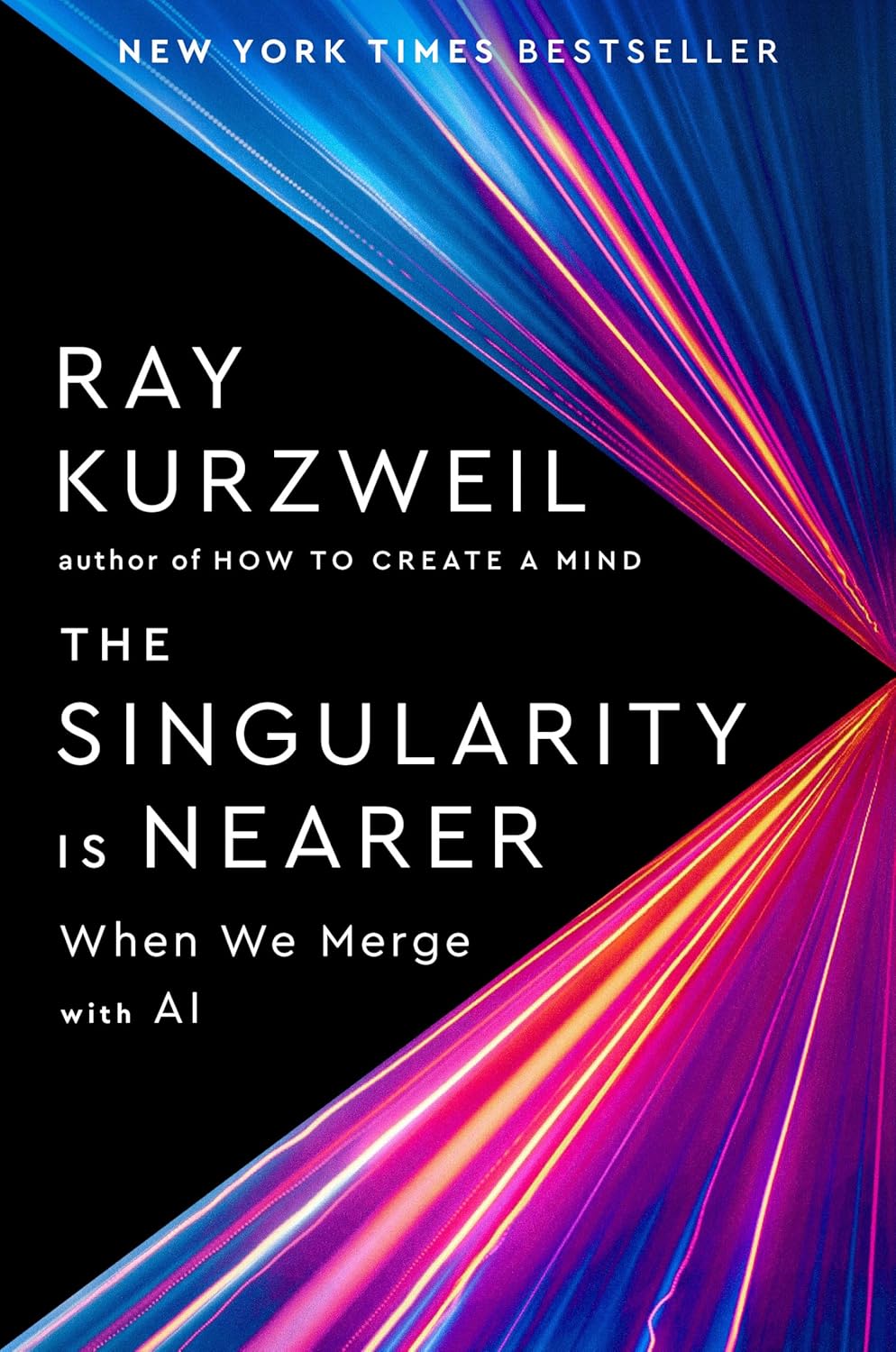
Twenty years after "The Singularity Is Near", Kurzweil revisits his predictions and keeps the date: human-AI merger around 2045.
As an Amazon Associate, Zendoric earns from qualifying purchases; the price does not change for you. · all our recommended books →
🔗 Related on Zendoric
- OpenAI's Sponsored Agents turn the ad into a salesperson — and trust into the thing being spent · 2026-09-17
- The ad becomes an agent: OpenAI tests sponsored chatbots in ChatGPT, and labeling is the only firewall · 2026-09-23
- Sponsored Agents Make Ads Conversational — and Turn ChatGPT's Separation Wall Into the Real Product · 2026-09-22