The flop of Tyga's AI-made album reveals generative music's real fight: authorship, not sound
🕒 Published on Zendoric: September 14, 2026 · 07:48
✨ AI-generated · how it's made
Tyga's new album made with generative AI scored 1 out of 100 on Album Of The Year, and the Florida State campus is already debating whether that counts as art. The real battle, however, is legal: who controls the data that music is trained on and who gets paid for it.
📚 Go deeper

AI as an extractive industry: the lithium, the energy, the underpaid data-labeling work and the bodies behind the cloud.
As an Amazon Associate, Zendoric earns from qualifying purchases; the price does not change for you. · all our recommended books →
By Zendoric · September 14, 2026.
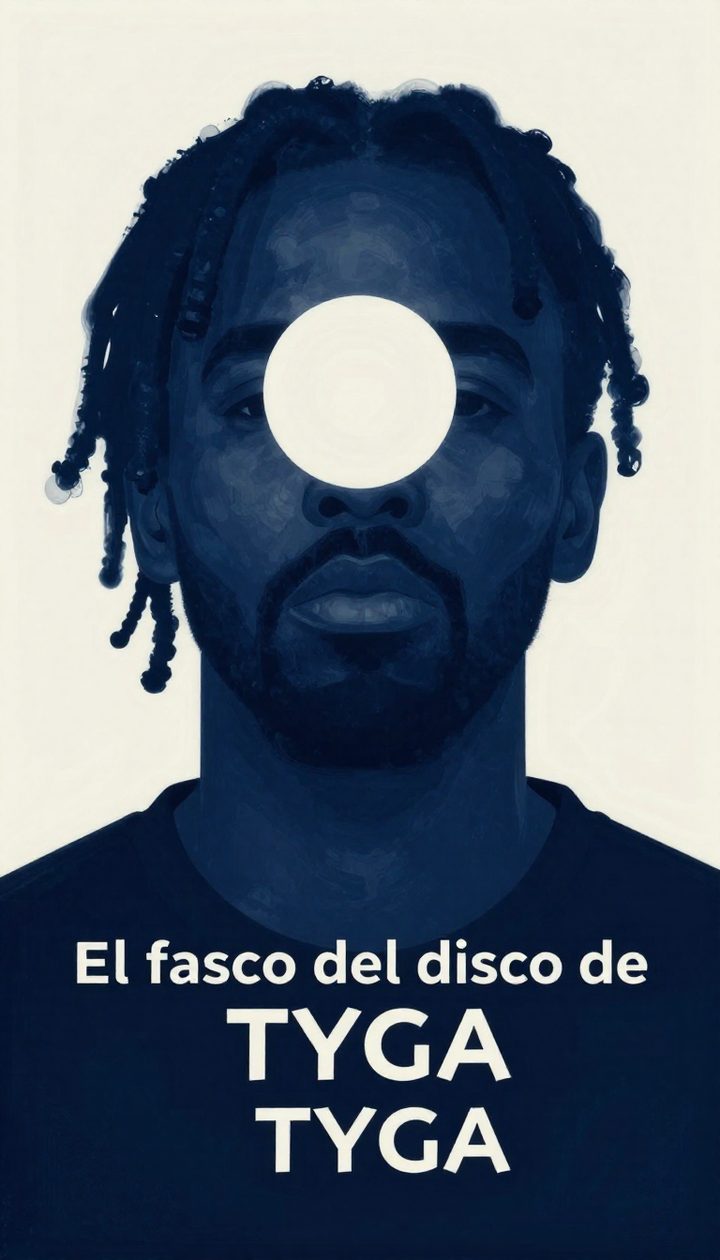
In July, Tyga released an eighties synth-disco album, «$TARFACE», made with generative artificial intelligence. The critical response was almost unanimous: Pitchfork called it «smug, complacent and depressing», and the aggregator Album Of The Year gave it a 1 out of 100, tied with the lowest possible score on the site. It was not a purely sonic rejection: it was a rejection of how it was made.
That episode has reached a university campus as a microcosm. At Florida State University (FSU), students and professors quoted by the independent newspaper FSView & Florida Flambeau display the same disagreement running through the entire music industry right now. Tegan Sutton, a business administration student, puts it bluntly: «if artists only use AI for their lyrics and to edit their voice, it's not real music anymore»; for her, art demands new ideas that, she argues, AI cannot generate on its own. Sofia Kennedy, a psychology student, draws a finer line instead: she accepts AI as a collaborator if the artist still brings their own hands, judgment and creativity, in the style of the painting-robot installations that are also exhibited as art.
Chemistry professor Oliver Steinbock represents the opposite extreme: he uses it in his classes to compose songs about thermodynamics, something he says he could not have done otherwise. He is not worried that human music will decline: he recalls that it already survived radio, recording, the synthesizer, playback and streaming, and he is betting it will survive this too. FSU, in fact, is not limiting itself to debating the issue: in 2025 it launched its own site with AI tools and news, and in 2026 the Sparks AI pilot program to bring the technology into existing courses without rewriting the curricula. The institution is moving forward with practical adoption while its own students still cannot agree on whether that is desirable in the creative sphere.
Behind the fight over taste lies another one, quieter and more decisive: the legal fight. Suno, the platform that generates complete songs —music and vocal performance included— from a simple text prompt, faces several lawsuits from major labels and independent artists alleging, as the article reports, that the company trained its models on copyrighted music without authorization. It is worth being precise: these are allegations in litigation, not proven facts, and Suno has not commented in the available material. Steinbock does point, however, to a way out that is beginning to take shape: licensing agreements among labels, streaming platforms and AI companies that could return part of that money to the artists themselves.
That, in our view, is the real hinge of the matter, more than whether a critic likes a record or not. The Tyga scandal is loud but fleeting: bad records —made with AI or without it— have always existed, and the market punishes them on its own. What will truly determine whether generative music adds to or subtracts from musicians is who gets paid for the training data. That is exactly the pattern we already see in other generative AI domains —text, image— where lawsuits over the unauthorized use of protected material have ended up pushing content creators and AI labs toward licensing deals. If that logic takes hold in music too, the outcome need not be the replacement of the musician, but a new revenue stream for the style and the voice that fed the model.
In the short term, however, the transition is uncomfortable and uneven, as on almost every front where this technology lands: there will be more failed albums reinforcing the «AI slop» stigma, more artists feeling expropriated before a clear compensation framework exists, and more confusion about what counts as genuine authorship. The distinction FSU's own students draw by instinct —a tool that extends the human hand versus a substitute that erases it— is, in fact, the same one that should guide both cultural criticism and regulation: it is not technology that decides whether music survives, but who controls the data, who gets paid for it and who keeps artistic judgment in charge.
📚 Go deeper

How opaque algorithms decide who gets credit, a job or parole — and why they tend to punish the same people.

Algorithms in justice, medicine, cars and art, explained with British humor and mathematical honesty.
As an Amazon Associate, Zendoric earns from qualifying purchases; the price does not change for you. · all our recommended books →
🔗 Related on Zendoric
- Whose work is AI-made art? An essay challenges the assumption that 'it isn't yours' · 2026-07-25
- ULA brings Gemini for Education into its classrooms: the university AI bet hinges on literacy, not software · 2026-10-11
- Trademarking the voice: the legal play with which artists get ahead of deepfakes · 2026-06-27