SenseTime posts its first profit since going public, but its real AI business is still losing money

🕒 Published on Zendoric: September 13, 2026 · 07:12
✨ AI-generated · how it's made
China's SenseTime closed the first half of 2026 with a profit of 617.3 million yuan, its first since listing in Hong Kong, buoyed by gains on its investments. Without those gains, its generative AI business is still losing money — though less and less.
📚 Go deeper
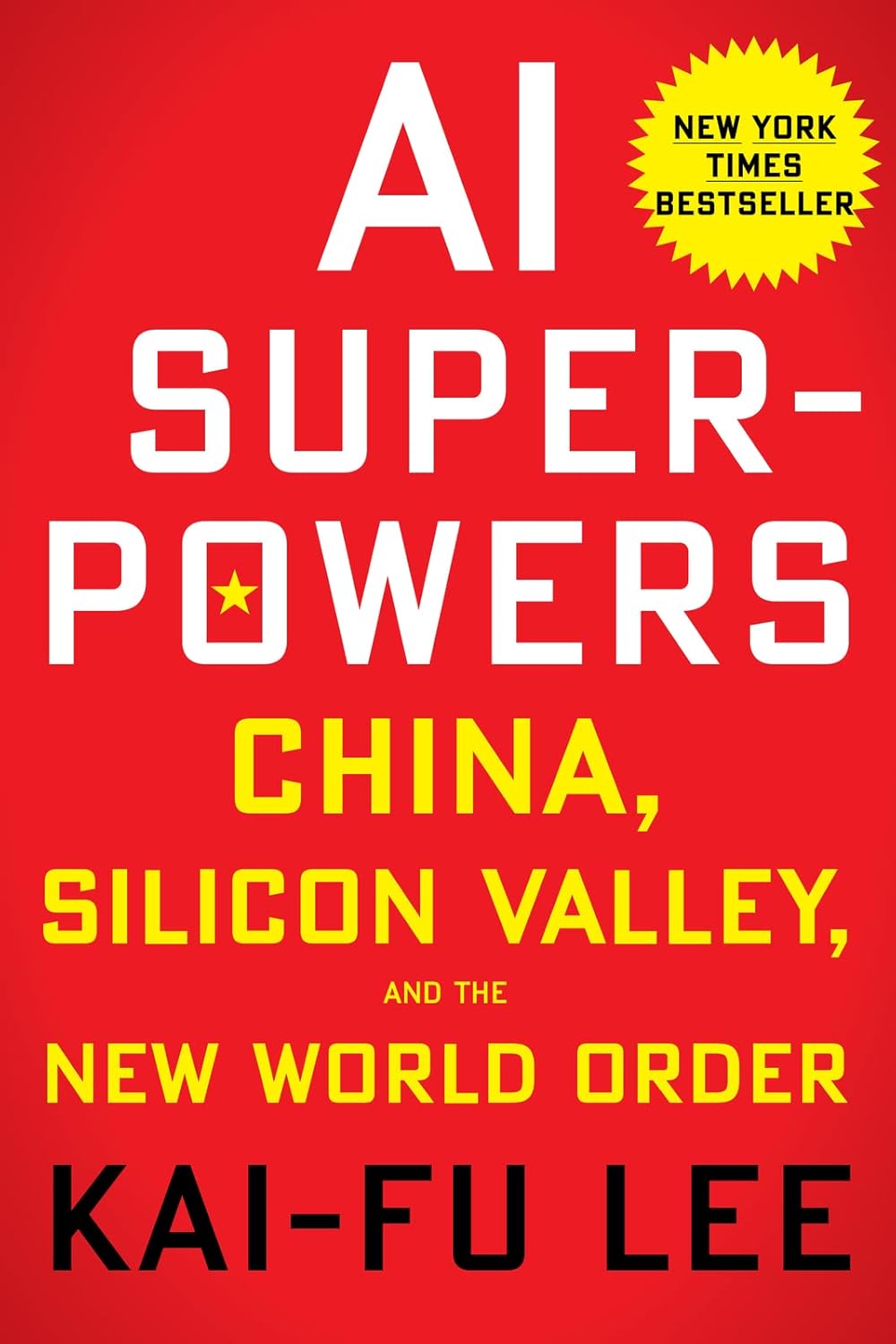
China vs.
As an Amazon Associate, Zendoric earns from qualifying purchases; the price does not change for you. · all our recommended books →
By Zendoric · September 13, 2026.
SenseTime, one of China's best-known artificial intelligence companies and listed on the Hong Kong Stock Exchange, closed the first half of 2026 with a net profit of 617.3 million yuan under international accounting standards (IFRS) — its first since going public in 2021. A year earlier it had lost 1.49 billion yuan in the same period. Revenue grew 23.4% year on year, to 2.91 billion yuan ($407 million), according to the interim accounts filed with Hong Kong's securities regulator. Gross margin improved by 2.9 points, to 41.4%, and gross profit rose 32.9%, to 1.21 billion yuan.
There is a caveat that SenseTime itself acknowledges in its report: much of that profit does not come from selling AI, but from the revaluation of stakes in companies SenseTime has incubated or funded. Strip out that effect using the adjusted (non-IFRS) metric the company also publishes, and the business remained in the red: -385.9 million yuan, albeit 67.3% less than a year earlier. Adjusted EBITDA (earnings before interest, taxes, depreciation and amortization) did turn positive, at 384.9 million yuan, against a loss of 540.3 million the previous year — a genuine operating improvement, but a different thing from "the company is now making money selling AI," which is the reading the headline suggests.
Generative AI was the revenue engine: it grew 28.2%, to 2.33 billion yuan, and already accounts for 79.9% of the company's total. Computer vision, its historic image and video recognition business, grew more slowly, 13.9%, to 496.8 million. Revenue outside China surged 127%. SenseTime also introduced, for the first time in its results, a "recurring revenue" metric — revenue from contracts with customers that were already using it, rather than one-off sales — which more than doubled, to 1.14 billion yuan, rising from 21.6% to 39.3% of the total. It is the signal software companies reach for when they want to convince the market that they are ceasing to be a bespoke-project business and becoming a platform with predictable revenue. The company says it served more than 1,000 enterprise customers in the half, over 100 of them new, in sectors such as education, public administration, banking, insurance and logistics.
On infrastructure, SenseTime says it operates 48,000 petaflops of computing capacity and that its SenseCore platform processed an average of 2.4 trillion tokens a day in July, 22 times more than a year earlier, also serving four other external foundation-model providers. The company claims to have cut the time between validating a model in research and deploying it at scale to one week, and to have reduced unit electricity costs by 8% through joint management of compute and energy, saving more than 12 million yuan. None of these operating figures has independent verification; only the financial statements were reviewed by the company's auditor. On product, SenseTime says more than 45 million people have used its consumer agent Kapi, and that its office agent Raccoon is deployed at customers including Lenovo, Ping An Technology, JD.com and China's three big telecom operators.
Our reading is that this result matters less for the headline — "first profit" — than for what it reveals about the phase China's AI industry is entering. For years SenseTime was the quintessential example of the Chinese "AI dragon": a computer vision company that went public dragging losses quarter after quarter, funded by the promise that scale would eventually offset the spending. That model has an expiry date, in China and anywhere else: at some point the market demands that the business generate cash on its own, not merely through the revaluation of an investment portfolio. What matters about this half is that SenseTime is starting to move in that direction — recurring revenue rising, adjusted EBITDA positive — even if it has not quite arrived.
More broadly, this tension between "accounting profit" and "profitable operating business" repeats across the generative AI industry, inside and outside China: valuations and results that depend on funding rounds and portfolio revaluations, while selling AI models and services still does not cover the cost of the infrastructure that sustains them. SenseTime is not an exception, it is a symptom. The difference is that here the company separates the IFRS result from the adjusted one with a degree of transparency, a standard worth demanding before accepting any "profit" figure in this sector at face value.
Over the medium term, what interests us is not this half's accounting result but whether SenseTime can sustain the growth of its recurring revenue without depending on capital gains from its portfolio companies. If it can, it will be further proof that Chinese generative AI is beginning to move from demonstrating capability — closing the gap with Western models on benchmarks — to the financial discipline of a mature software business, with customers who pay by subscription rather than by project. That maturing, more than any model ranking, is what will decide which AI companies survive the phase of massive compute spending the entire industry is going through, in China as in Silicon Valley.
📚 Go deeper

The reference manual for building products on top of AI models: prompts, RAG, fine-tuning, agents, evaluation and deployment.

Semiconductors as the oil of the 21st century: history, espionage, and why an island of 23 million people underpins the entire AI economy.
As an Amazon Associate, Zendoric earns from qualifying purchases; the price does not change for you. · all our recommended books →
🔗 Related on Zendoric
- Alibaba bans Claude Code: the first visible cut in an AI market fragmenting into blocs · 2026-07-07
- Price pressure: big customers are pushing OpenAI and Anthropic toward open models · 2026-10-07
- AI in New York schools: when the promise of safety clashes with the civil rights of a million students · 2026-06-28
Sources & references
- TechNode Global — SenseTime posts its first profit since going public, but its real AI business is still losing money
- CNBC — OpenAI delays its IPO as Altman, Amodei and Musk call for slowing down AI in a rare united front
- The Verge — Altman shelves OpenAI's IPO and admits building an out-of-control AI is "absolutely" possible