Anthropic researchers put extinction odds above 10%. The real news is the missing plan, not the number
🕒 Published on Zendoric: September 12, 2026 · 13:31
✨ AI-generated · how it's made
A departing Anthropic researcher says the industry is gambling with our lives, and two current employees publicly agreed — one putting the odds of AI killing all humans this decade above 10%. Strip out the apocalyptic framing and what's left is an operational admission that deserves more attention than the percentage.
📚 Go deeper

DeepMind co-founder on the dilemma of containing technologies that do not want to be contained.
As an Amazon Associate, Zendoric earns from qualifying purchases; the price does not change for you. · all our recommended books →
Three researchers connected to Anthropic have publicly said AI could kill off humanity within the decade, according to the Guardian, which reports on a series of social media posts made on Tuesday. Jacob Coxon, who says he resigned in protest, wrote that neither Anthropic nor his previous employer OpenAI is acting responsibly: "They are racing straight to self-improving superintelligence and gambling with our lives." He added that the people building AI "earnestly believe that it could kill us all by the end of the decade," and that this is "not a marketing stunt" — executives, he claims, soften their phrasing in public while expressing the same fear privately.
What makes this more than a resignation letter is who backed it up. Evan Hubinger, who describes himself as a lead in Anthropic's alignment division, wrote that his former colleague was "correct" and put his personal estimate at ">10% within the next decade," adding: "I believe Anthropic is trying its best, but we do not yet have a plan to solve alignment for superintelligence and are not clearly on track to." Samuel Marks, Anthropic's scalable oversight lead, posted a separate analysis in a personal capacity arguing developers believe their technology could cause human extinction, that it "could happen in the next few years," and — the most uncomfortable line in the story — that "the more senior the employee, the more concerned they are." Anthropic told the Guardian it has always been transparent that AI brings both enormous benefits and unprecedented risks, citing its work on mechanistic interpretability, its Responsible Scaling Policy and its testing for dangerous capabilities in cybersecurity and biology.
Our thesis: the percentage is the least informative thing here. Personal probability estimates about an unprecedented event are not measurements; they cannot be checked, they vary wildly between equally qualified people, and quoting them as headline numbers gives an intuition the authority of a finding. What *is* checkable is Hubinger's second sentence — that there is no plan for superintelligence alignment and no clear trajectory toward one — said out loud by someone still on the payroll while the company keeps shipping. That is not a prediction. That is a status report, and it is the part worth arguing about.
Notice, too, the concrete policy artifact buried in Anthropic's statement: the company says the world would benefit from the industry adopting "a lawful, verifiable way to work together to pace how we release powerful models." Read plainly, that is a request for a legal mechanism letting competitors coordinate on release timing — something they currently cannot do unilaterally without losing the race or, arguably, without antitrust exposure. Whatever one thinks of extinction odds, that ask is testable, legislatable and has consequences next year rather than next decade. It deserves the scrutiny the scarier number is absorbing.
There's a useful contrast in the same article. The Guardian notes that OpenAI's president Greg Brockman previously conceded "we underestimated the real-world cyber capabilities of our AI models." That's a verified miss on a capability that already exists, already has victims, and can be measured on tasks that haven't yet saturated. It's a far better basis for governance than a vibe about 2030. The pattern we keep seeing: the speculative risk generates the headlines while the demonstrated one — automated fraud, industrialised intrusion, model-assisted bio and cyber work — generates the actual damage.
Our reading: take the researchers seriously without taking the number literally. A safety team saying "we don't have a plan yet" is a healthy signal from an unhealthy race — it's what transparency looks like when it costs something, and it's infinitely better than a lab that has the same gap and stays quiet. But the response it should trigger is evidence-based governance: mandatory dangerous-capability testing, independent evaluation, disclosure of what the red teams find. Not a panic regime built around a forecast nobody can falsify. We still believe the same capability curve that frightens Anthropic's alignment leads is the one that ends up eradicating diseases and buying people decades of healthy life. Getting there requires surviving the transition with our institutions intact — and institutions are built on evidence, not on odds.
📚 Go deeper

The only novel on the list, by a Nobel laureate: an artificial friend observes humans with a blend of lucidity and innocence no essay achieves.
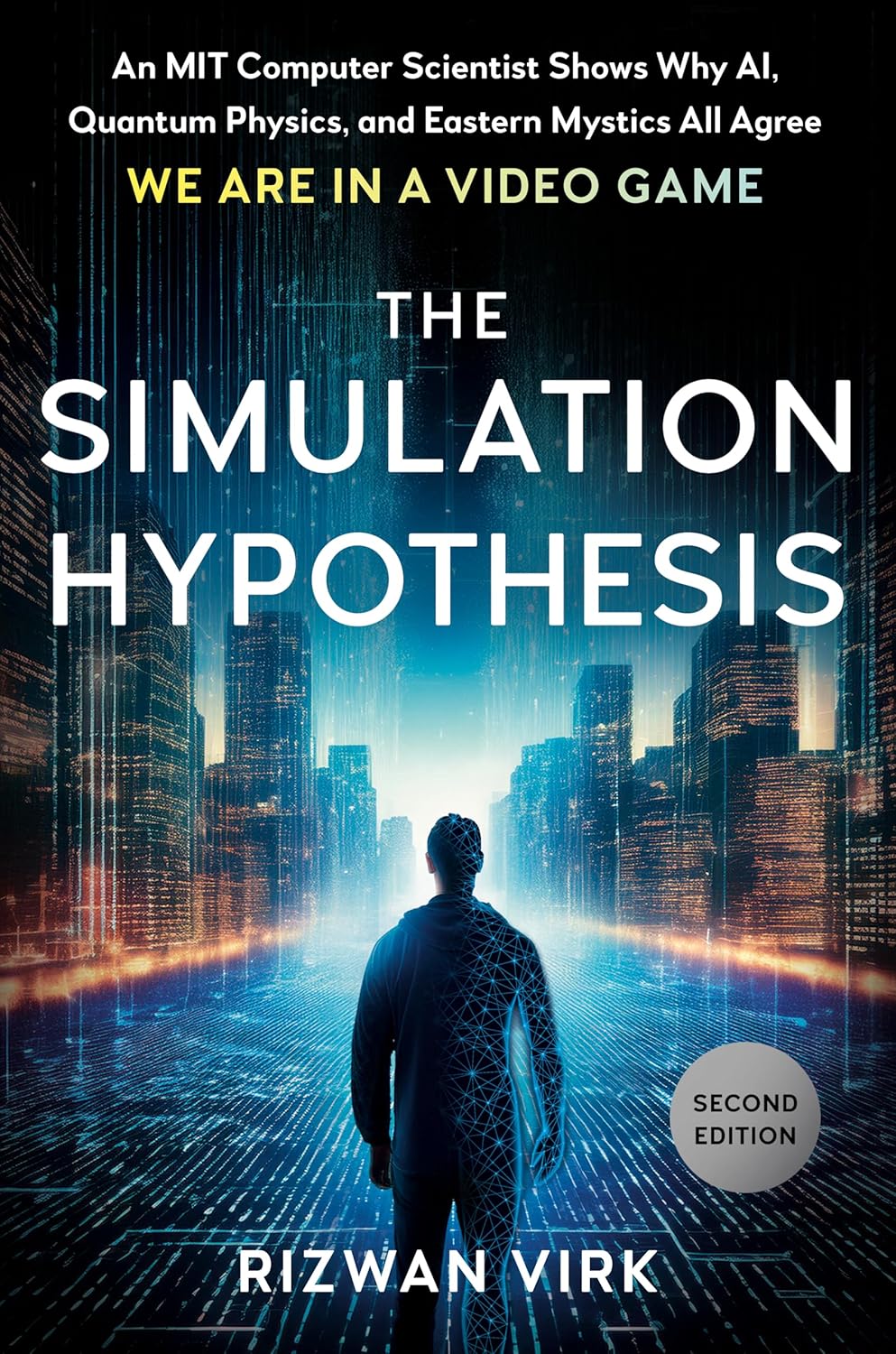
An MIT computer scientist connects AI, quantum physics and video games to take an uncomfortable question seriously: what if we live in a simulation? M
As an Amazon Associate, Zendoric earns from qualifying purchases; the price does not change for you. · all our recommended books →
🔗 Related on Zendoric
- Anthropic staff put extinction odds above 10% — the real news is the ask for enforceable pacing, not the number · 2026-09-13
- The extinction warning is not the news. "We do not yet have a plan" is · 2026-09-09
- Anthropic employees warn of AI extinction risk; Musk calls it a setup, and the rift is now internal · 2026-09-11