Singapore tests AI that cross-references data between banks to stop scams before the money vanishes

🕒 Published on Zendoric: September 12, 2026 · 13:31
✨ AI-generated · how it's made
Singapore's financial regulator (MAS) is testing AI models that combine data from several banks, the police and the supervisor itself to detect scam chains that no single bank can see in full today. It is a shift in approach: from monitoring each account to monitoring the entire network, with results expected by the end of 2026.
📚 Go deeper

How opaque algorithms decide who gets credit, a job or parole — and why they tend to punish the same people.
As an Amazon Associate, Zendoric earns from qualifying purchases; the price does not change for you. · all our recommended books →
By Zendoric · September 12, 2026.
The Monetary Authority of Singapore (MAS) is testing artificial intelligence models that cross-reference data between banks, the police and the regulator itself to detect accounts used in scams in near real time. Managing Director Chia Der Jiun announced it during an appearance at the Global FinTech Fest, as reported by Finance Magnates. The stated goal is simple: detect fraud earlier, intervene faster and reduce losses.
The problem this experiment aims to solve is structural. Money from a scam typically passes through accounts at several different banks before vanishing, and each institution sees only the leg that runs through its own books. No individual bank has visibility into the full chain, so patterns that would be obvious viewed as a whole go unnoticed when viewed piecemeal. MAS has not disclosed which banks are taking part in the trial, which datasets are being used or what criteria will determine whether the system moves from pilot to real deployment; it has only said it expects results by the end of 2026. In parallel, the regulator runs PathFin.ai, a separate programme that matches financial institutions with already-validated AI solutions and which, according to Chia, now exceeds 300 participants, designed above all so that smaller banks do not have to shoulder the cost of evaluating tools on their own.
Singapore is not alone in this move. As sector context, several regulators are applying AI and advanced analytics to fraud, each at a different point in the chain. The Hong Kong Monetary Authority has told its banks to consider using AI and network analytics to monitor authorized payment scams —those in which the victim is deceived into approving the transfer— and to detect networks of mule accounts, and it has also tested joint analysis of information across banks. The UK's FCA uses machine learning and web scraping to locate potentially fraudulent websites. Australian regulator ASIC is focused on dismantling the online infrastructure that recruits victims: it coordinated the takedown of 11,964 phishing and fake investment websites in 2025, 90% more than the previous year. And FINRA, the US securities supervisor, applies machine learning at another level entirely: hundreds of billions of market events to detect manipulation, not retail scams.
Our reading is that the real bottleneck in the fight against financial fraud was never a shortage of detection algorithms, but institutional fragmentation: each bank optimizes its own perimeter while the fraudster operates precisely in the seams between perimeters. What Singapore is testing is not so much a smarter model as a coordination architecture —banks, police and regulator sharing signals— to treat fraud as a network problem rather than an isolated-account one. It is also the flip side of a thesis we have already argued at Zendoric: AI's most verifiable near-term harm does not come from speculative scenarios, but from the industrialization of fraud and scams assisted by deepfakes and automation. This initiative is the institutional response to that same phenomenon, and it is welcome news: defensive AI is starting to match the sophistication of the offensive AI that feeds it.
That said, it is worth not jumping to conclusions. MAS has not explained what safeguards govern the sharing of this data between private institutions and law enforcement, nor what happens if the model generates false positives that block legitimate accounts. That opacity, combined with the fact that Singapore operates with a level of institutional trust in data sharing that other countries do not share —the United States is debating right now, in the opposite direction, how far to tolerate surveillance tools such as licence plate readers— makes clear that this kind of governance advances application by application and country by country, not by blanket decree over the models. The outcome between now and the end of the year will tell whether sharing data between banks helps to halt the money before it disperses, or whether the experiment remains a proof of concept with no operational translation. In the meantime, it is exactly the kind of defensive infrastructure we need to build in order to get through the hard phase of this transition with less friction.
📚 Go deeper
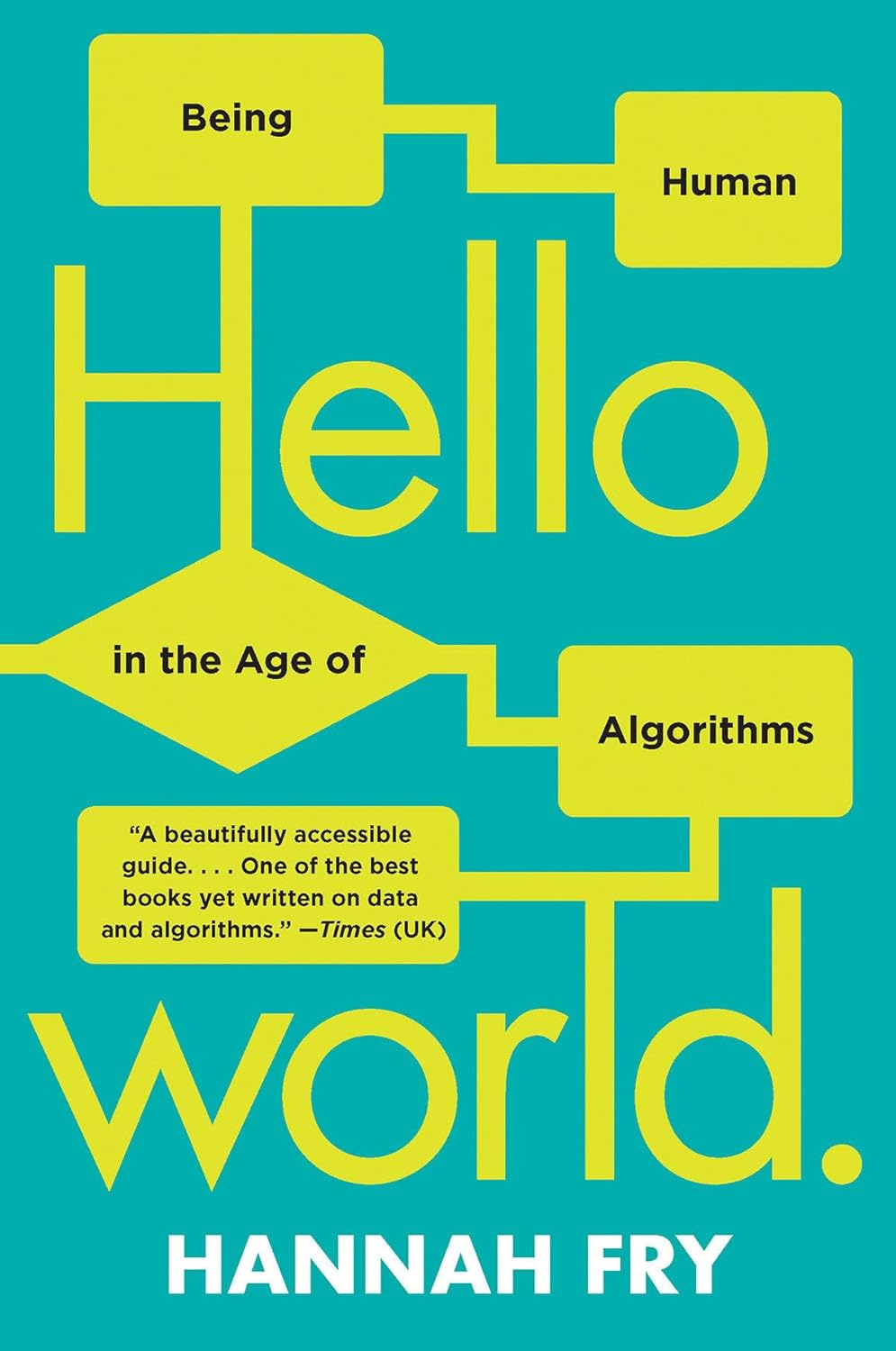
Algorithms in justice, medicine, cars and art, explained with British humor and mathematical honesty.

The best starting book if you're not technical: a Wharton professor explains how to work WITH AI — when to delegate, when to supervise, when to keep i
As an Amazon Associate, Zendoric earns from qualifying purchases; the price does not change for you. · all our recommended books →
🔗 Related on Zendoric
- Deepfakes and AI scams: Meta touts millions of accounts taken down, but the data comes from Meta itself · 2026-09-04
- Canada regulates agentic AI in banking: when the supervisor puts a name to the risk (Claude Mythos included) · 2026-07-14
- Reasoning as a footprint: distilling chains of thought into small models · 2026-07-22