The Apple Watch Series 12 debuts an AI-powered Siri that records, transcribes and summarizes your conversations
🕒 Published on Zendoric: September 11, 2026 · 03:15
✨ AI-generated · how it's made
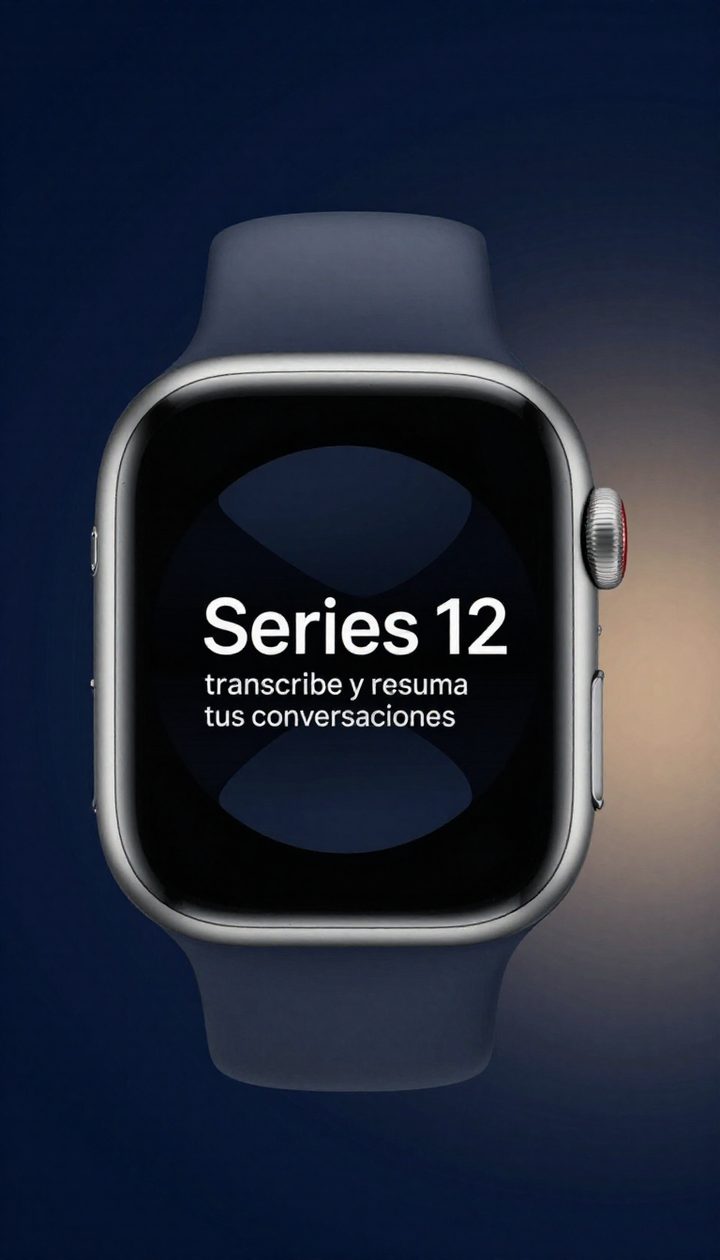
Apple unveiled the Apple Watch Series 12 at its September 9 event, and the headline novelty is not design but software: a feature dubbed Audio Intelligence that turns Siri into a permanent "ambient listening" assistant.
📚 Go deeper

The definitive piece of investigative journalism on OpenAI: 260+ interviews, the clash between safety and speed, and the attempted firing of Sam Altma
As an Amazon Associate, Zendoric earns from qualifying purchases; the price does not change for you. · all our recommended books →
Apple unveiled the Apple Watch Series 12 at its September 9 event, and the central novelty is not design but software: a feature dubbed Audio Intelligence that turns Siri into a permanent "ambient listening" assistant. The stated goal is for the watch to capture, transcribe and summarize conversations and surrounding sounds so that users can "be more present" without having to take notes manually.
The feature breaks down into several pieces. Sound Recognition comes to the Apple Watch to alert deaf or hard-of-hearing users to relevant sounds — sirens, alarms, doorbells, a baby crying — using on-device processing, even when the iPhone is not nearby. Live Rewind allows users, with a double press of the Digital Crown, to see the last 15 seconds of detected audio as text, useful for recovering something missed in a conversation; that snippet can be queried with Siri or saved to the new Siri app to review later. Siri Recap goes a step further: when enabled, after a conversation Apple Intelligence automatically generates a title and key points in the Siri app, as a summary of what was said. On top of that comes built-in Shazam, which recognizes music in the environment and displays the song and artist directly in a Smart Stack widget on the wrist.
Apple has been explicit that Live Rewind and Siri Recap will arrive in beta later this year, first in English, for both the Watch Series 12 and the Watch Ultra 4, and points to its own support page detailing how these features are enabled and what its privacy approach is. That is a telling detail: the very way it was announced — pointing to privacy documentation and limiting the initial language — suggests Apple is aware of the sensitivity of turning a watch into a device that records and summarizes other people's conversations, something that will foreseeably raise questions about consent from third parties recorded without having asked for it.
On the hardware front, the Series 12 incorporates the new S11 chip and comes in aluminum (space gray, black, light gold and dark bronze), titanium (radiant gold and natural titanium) and ceramic (night blue and pearl white) finishes. Apple claims a 25% improvement in battery life during outdoor workouts, up to 10 hours, and fast charging capable of adding up to 12 hours of battery in 15 minutes. The aluminum version also debuts Ceramic Shield 2, which the company describes as more resistant than the glass on any smartwatch and 60% harder than the Ion-X on previous aluminum models. There are no significant design changes compared with the previous generation.
On health, the watch adds new optical and electrical heart-rate sensors with continuous background monitoring every five seconds — 60 times more frequent than before, according to Apple — and adds perimenopause and menopause tracking within Cycle Tracking. The Health app is redesigned with new Insights and Longevity tabs, including a "Health Age" metric that compares the user's indicators with their chronological age. By combining the iPhone camera with the Apple Watch, Apple says it can offer detailed physical assessments of flexibility, strength and balance, analyzing the video locally through on-device AI. VO2 max measurement is also enabled if the Apple Watch is paired with AirPods Pro 3 or another third-party heart-rate sensor.
On price and availability, the Series 12 starts at $399 in aluminum, $699 in titanium and $899 in ceramic, with preorders already open and a September 18 launch; it is also offered through the Apple Upgrade leasing program, with 12- or 24-month installments starting at $11.99 a month. It is a figure Apple highlights indirectly: despite the wave of price increases that affected much of its lineup this year, the Apple Watch maintains its $399 entry price, the same it has carried for several consecutive generations, including last year's Series 11 — which introduced 5G, hypertension monitoring, a sleep score and tougher Ion-X glass, and which at the time was Apple's thinnest smartwatch at 9.7 mm thick.
One piece of corporate context the article itself underscores: the Series 12 is one of the first products launched under John Ternus as Apple's new chief executive, after taking over from Tim Cook on September 1. Ternus previously served as the company's head of hardware engineering and directly oversaw the development of earlier Apple Watch generations, which gives this launch symbolic value as the first calling card of the leadership change.
Taken together, Apple's bet confirms a trend already visible among other wearable makers and within the Apple Intelligence ecosystem itself: moving generative AI from the phone to devices that are permanently worn and "listening" to the environment, with the promise of easing the cognitive load of remembering and taking notes. The article does not go into adoption figures, reactions from data protection authorities or comparisons with similar features from other manufacturers, so any assessment of these features' real impact on the privacy of third parties being recorded, or of their commercial success, depends on how the beta is ultimately implemented and how users and regulators react once it is available.
📚 Go deeper

The story of NVIDIA and Jensen Huang: how a video-game card company ended up making the most coveted resource on the planet.

DeepMind co-founder on the dilemma of containing technologies that do not want to be contained.
As an Amazon Associate, Zendoric earns from qualifying purchases; the price does not change for you. · all our recommended books →
🔗 Related on Zendoric