Besxar wants to manufacture semiconductors in orbit by reusing SpaceX's Falcon 9 rockets
🕒 Published on Zendoric: September 11, 2026 · 03:15
✨ AI-generated · how it's made
Besxar, a startup founded by Ashley Pilipiszyn, a former OpenAI employee, is developing what it describes as an orbital semiconductor factory, using the vacuum of space as a substitute for the clean rooms that chip fabrication plants require on Earth today.
📚 Go deeper

The story of NVIDIA and Jensen Huang: how a video-game card company ended up making the most coveted resource on the planet.
As an Amazon Associate, Zendoric earns from qualifying purchases; the price does not change for you. · all our recommended books →
Besxar, a startup founded by Ashley Pilipiszyn, a former OpenAI employee, is developing what it describes as an orbital semiconductor factory, using the vacuum of space as a substitute for the clean rooms that chip fabrication plants require on Earth today. The underlying idea is simple: much of the complexity and cost of a terrestrial fab comes from having to create pressurized environments that keep out even the microscopic dust that could ruin a chip during production. Pilipiszyn argues that it makes more sense to "go where physics already works" instead of "fighting physics" on Earth.
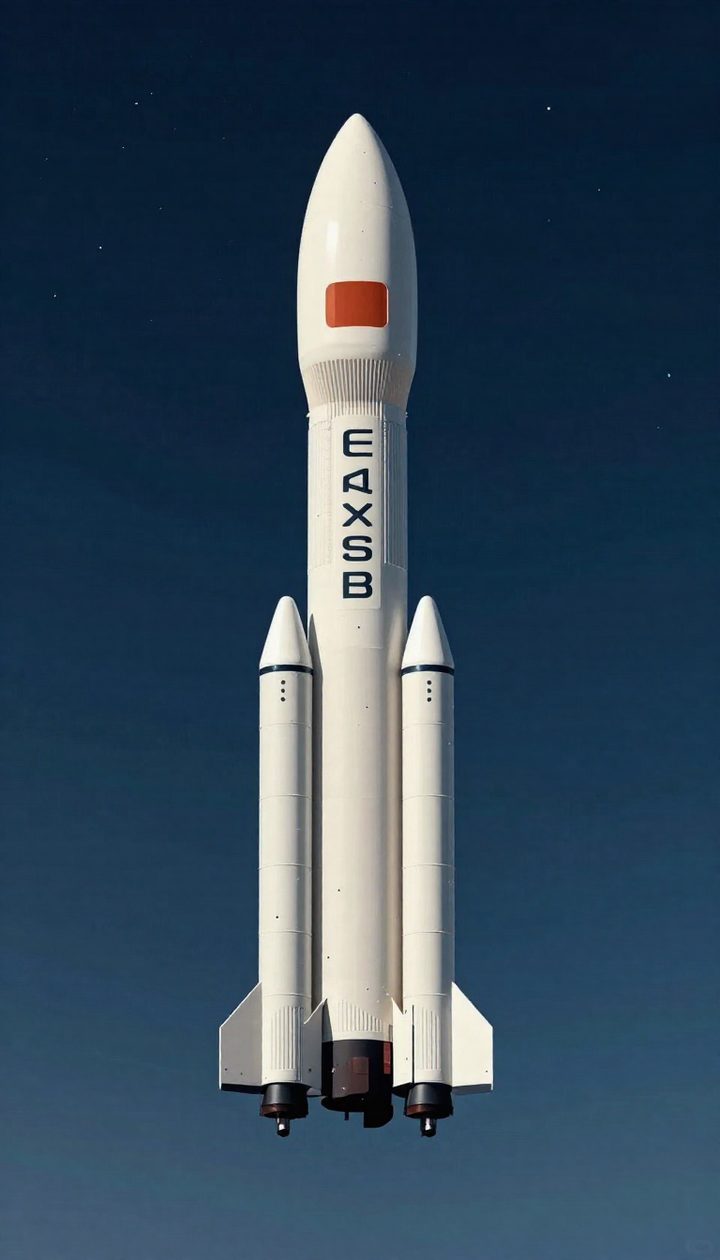
To prove the concept, Besxar has secured SpaceX's agreement to let it use Falcon 9 rocket boosters as a test platform: in theory, prototyping its orbital factory across a dozen flights. The Falcon 9 booster is, according to the article, the vehicle that goes to space and returns to Earth most often: it made that round trip 163 times last year and has already flown more than 100 times this year, making it a cheap, frequent platform for experimenting without depending on dedicated missions.
The company has raised nearly $14 million, including a $9 million seed round led by Dauntless Ventures and Overture VC. Pilipiszyn had approached SpaceX three years ago to negotiate flights on Starship, the next-generation rocket still under development, and ended up opting for this deal involving Falcon 9 boosters as a way to reduce technological risk in the meantime.
In July, Besxar sent up its first two "fabships" — small containers designed to carry and test semiconductor materials in orbit — on a Starlink mission. The goal was to verify that the containers could survive launch, protect the wafer samples from contamination and expose them to the vacuum of space. Despite a failure in the flight data system of one of the containers, which the company is investigating, the test met its objectives: according to Pilipiszyn, the samples that flew turned out to be the cleanest, with fewer contaminant particles than terrestrial wafers that were not sent to space, something she considers very promising for scaling up the process.
Besxar's plan for the next two years involves continued iteration: first heating the wafers, then depositing a material on them, then two materials, and so on, until it produces qualification samples. The ultimate goal is to fly larger factories aboard a vehicle such as Starship once it is operational. The company's name, incidentally, comes from "beskar", the fictional metal used to make Mandalorian armor in the "Star Wars Legends" comics.
Once it reaches that qualification-sample stage, Besxar aims to supply leading chipmakers with the wafers used in advanced semiconductors, the kind that regulate electrical power in data centers, robots and electric vehicles. It is not alone in pursuing this idea: the article mentions United Semiconductors and Space Forge as other companies trying to exploit the space environment to obtain higher-quality semiconductors. All of them share, according to the text, the same fundamental limitation: the difficulty of bringing a significant volume of product back to Earth.
Pilipiszyn hopes to scale from a few wafers to hundreds and then thousands per factory, but admits that leap depends entirely on the existence of cheap, frequent rockets: on SpaceX getting Starship into operation, or on competitors such as Rocket Lab or Stoke Space delivering their own next-generation rockets. As she puts it herself, Besxar's bet is that "a solid transportation layer already exists", which lets the company focus entirely on "the application layer": manufacturing and the logistics of returning its products to Earth and getting them to market as fast as possible.
📚 Go deeper

Semiconductors as the oil of the 21st century: history, espionage, and why an island of 23 million people underpins the entire AI economy.

The definitive piece of investigative journalism on OpenAI: 260+ interviews, the clash between safety and speed, and the attempted firing of Sam Altma
As an Amazon Associate, Zendoric earns from qualifying purchases; the price does not change for you. · all our recommended books →
🔗 Related on Zendoric
- SpaceX launches Google's first AI chips into space in the initial orbital test of Alphabet's Suncatcher project · 2026-10-03
- Thinking Machines, Mira Murati's lab, launches Inkling: an open model with 975 billion parameters · 2026-07-17
- Florida doctor charged with using AI 'nudify' apps on photos of minors · 2026-07-20