Anthropic hires the researcher who turned down $1.5 billion from Meta: the AI talent war is now priced in billions

🕒 Published on Zendoric: September 11, 2026 · 03:15
✨ AI-generated · how it's made
Andrew Tulloch, the researcher who turned down as much as $1.5 billion from Zuckerberg, is leaving Meta after less than a year to join Anthropic next week and optimize training and inference for its models, just as the firm prepares to go public.
📚 Go deeper

The only novel on the list, by a Nobel laureate: an artificial friend observes humans with a blend of lucidity and innocence no essay achieves.
As an Amazon Associate, Zendoric earns from qualifying purchases; the price does not change for you. · all our recommended books →
By Zendoric · September 11, 2026.
Andrew Tulloch, one of the most sought-after AI researchers in the industry, is leaving Meta to join Anthropic next week, a company spokesperson confirmed to Business Insider. The news was first broken by Semafor. Tulloch will join the inference and performance team, where his work will consist of optimizing how Anthropic's models are trained and how they respond to users: inference is, put simply, the process by which an already-trained model generates an answer, and its efficiency determines both the speed and the cost of serving AI to millions of people.
Tulloch embodies the volatility of the AI talent market all by himself. He spent eleven years at Meta before joining OpenAI in 2023, where he worked on training GPT-4o, GPT-4.5 and o3. In 2025 he co-founded the startup Thinking Machines Lab and, while there, turned down a pay offer from Mark Zuckerberg that, as The Wall Street Journal revealed, may have reached $1.5 billion. Even so, he ended up landing at Meta in October of that same year. Now, in less than a year, he is leaving again, this time for Anthropic, shortly after Meta launched Muse, an AI agent designed to complete tasks autonomously.
The hire comes amid the all-out talent war waged by Anthropic, Meta, OpenAI, Google and the rest of the major labs since the launch of ChatGPT, a competition that has sent the bargaining power — and the salaries — of researchers with Tulloch's track record soaring. For Anthropic, the addition brings some stability at a particularly intense moment: the company is preparing to go public, is competing with rivals for business and is managing growing public concern about the adverse effects of AI. That last tension became visible this very week, when researcher Jacob Coxon announced his departure from Anthropic and wrote, in his own words, that 'the people building AI sincerely believe it could kill us all before the decade is out.' That is his claim, not a verified fact, but it reflects the level of unease coexisting with the company's own commercial expansion.
Our read: when a single person can negotiate packages rivaling the GDP of a small country, the signal is clear. The bottleneck in frontier AI is no longer just compute or data, but a handful of people capable of squeezing both resources to the maximum. In the short term, that concentration of talent — and of the power that comes with controlling it — is one of the imbalances worth facing head-on: a two-speed labor market in which a few hundred researchers earn astronomical figures while the rest of the tech industry lives with layoffs and wage restraint.
But the specific work Tulloch will be doing also points to the brighter side of the equation. Optimizing training and inference is not a flashy headline, but it is exactly what brings down the cost of serving AI to more people: every efficiency gain moves the technology closer to becoming cheap, available infrastructure rather than a luxury reserved for a few. It is the prosaic path toward the abundance we often talk about at Zendoric: it does not arrive through a magic model, but through thousands of hours of low-level engineering that make each query cost a fraction of what it did before. And the contrast with Coxon's departure this same week is also an honest reminder: even at the company that presents itself as the most cautious in the sector, attracting the best optimization talent coexists, within the same fortnight, with in-house researchers who doubt the course is safe. Both things are true at once, and pretending otherwise — in either direction — would be the real mistake.
📚 Go deeper
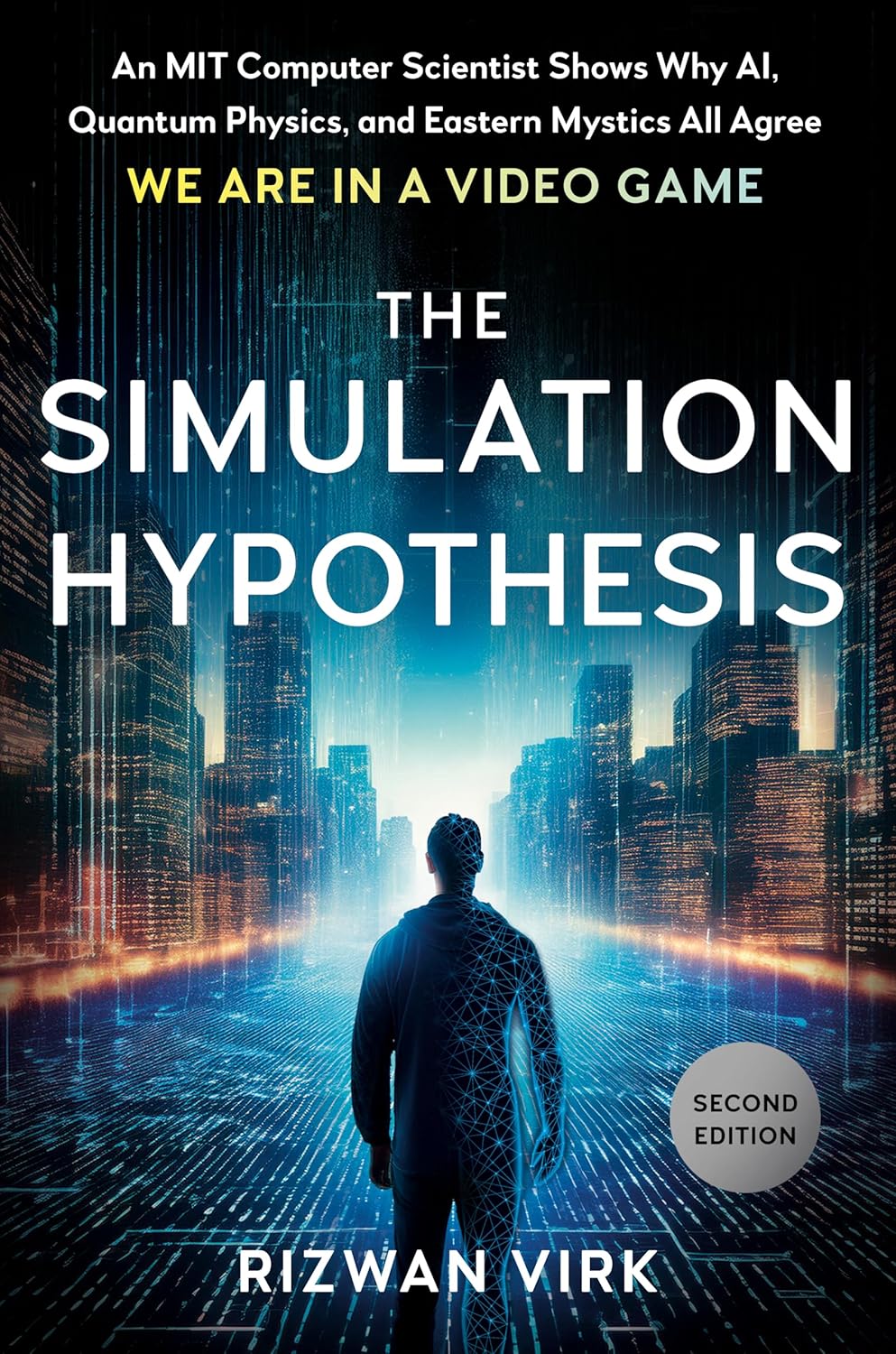
An MIT computer scientist connects AI, quantum physics and video games to take an uncomfortable question seriously: what if we live in a simulation? M

The best starting book if you're not technical: a Wharton professor explains how to work WITH AI — when to delegate, when to supervise, when to keep i
As an Amazon Associate, Zendoric earns from qualifying purchases; the price does not change for you. · all our recommended books →
🔗 Related on Zendoric
- The transformer architecture is solved: the real LLM moat lives in training, not in the diagram · 2026-06-28
- OpenAI's Billions in Losses Are the Price of Building the Future, Not a Warning Sign · 2026-06-30
- Anthropic pays Musk $40B for compute: the scarcest thing in AI is no longer talent, it's a plugged-in data center · 2026-09-05