Alamos Gold trades 7.7% below its theoretical value, according to an AI-generated market alert

🕒 Published on Zendoric: September 11, 2026 · 03:15
✨ AI-generated · how it's made
GuruFocus signs off with "automated technology" on the notice that Alamos Gold (AGI) is trading 7.7% below its theoretical value after falling 3.4%. The miner's numbers matter less than who writes them.
📚 Go deeper

DeepMind co-founder on the dilemma of containing technologies that do not want to be contained.
As an Amazon Associate, Zendoric earns from qualifying purchases; the price does not change for you. · all our recommended books →
By Zendoric · September 10, 2026.
Let's start with the facts, which belong to the stock market and not to artificial intelligence: on September 10, Canadian gold miner Alamos Gold Inc (AGI) fell 3.4% to $35.67 per share, within a 52-week range running from $27.05 to $55.41. According to GF Value — GuruFocus's proprietary estimate combining historical multiples, past growth and future projections — the stock's theoretical value is $38.66, which puts the closing price 7.7% below that estimate. The GF Score, a composite index of financial strength, profitability, growth, valuation and momentum, places AGI at 83 out of 100, with one striking detail: 10/10 on growth and 9/10 on financial strength, but only 1/10 on recent momentum. The current P/E (12.9x) is far below its five-year median (31.9x), and no insider buying or selling has been recorded over the past twelve months.
So far, a gold miner that has nothing to do with our usual coverage. What does interest us comes at the end of the article, in a line GuruFocus includes almost as a formality: "This stock alert was generated using automated technology and GuruFocus financial data (...) reviewed by GuruFocus editorial team prior to publication". In other words, no human analyst wrote this text from scratch; an automated system assembled the financial data into an analysis template, and a person reviewed it before publication. That is the piece's real news value, far more than the valuation of any particular miner.
This is not an isolated anecdote. GuruFocus, like much of the data-driven financial press (Reuters, Bloomberg and dozens of screening platforms have been doing something similar for years, with varying degrees of automation), has industrialized the production of market notes: thousands of tickers, updated daily, with the same narrative skeleton — price, GF Value, GF Score, historical P/E comparison, guru and insider moves — filled in by a model with the day's data. It is exactly the kind of task our thesis on AI and employment has been flagging for months as the most exposed: back-office work, structured, repetitive and with little creative margin, where AI does not complement the junior analyst but replaces them outright in first-line writing.
The flip side is that human editorial review is still there, though relegated to a final quality check rather than to the writing itself. And the content itself betrays the rough edges of that model: it calls AGI "undervalued" in the headline and in the body, yet classifies its GF Valuation as "fairly valued" in the text, a minor inconsistency that would probably slip by without a demanding human eye. It is the kind of friction that appears when the writing is automated but the judgment is not, at least not entirely: the template produces surface coherence, not necessarily underlying logical coherence.
Our reading is that this case illustrates, in miniature, the transition we have already described for the financial sector: fewer administrative hands drafting standardized market notes, more people devoted to what the machine does not do well — spotting contradictions, contextualizing the noise, deciding what actually matters to an investor. In the short term, that means less demand for junior analysts doing mechanical writing work. In the medium term, if the pattern spreads, the promise of abundance applied to this sector is not that financial analysis disappears, but that it becomes cheaper and more democratic: automated, free coverage of thousands of stocks that previously only research boutiques followed, leaving human judgment — and its responsibility — where it truly adds value. Neither the miner nor its share price is the news; the news is that it no longer surprises us that the writer is a machine and the byline belongs to an editorial team that merely reviews.
📚 Go deeper
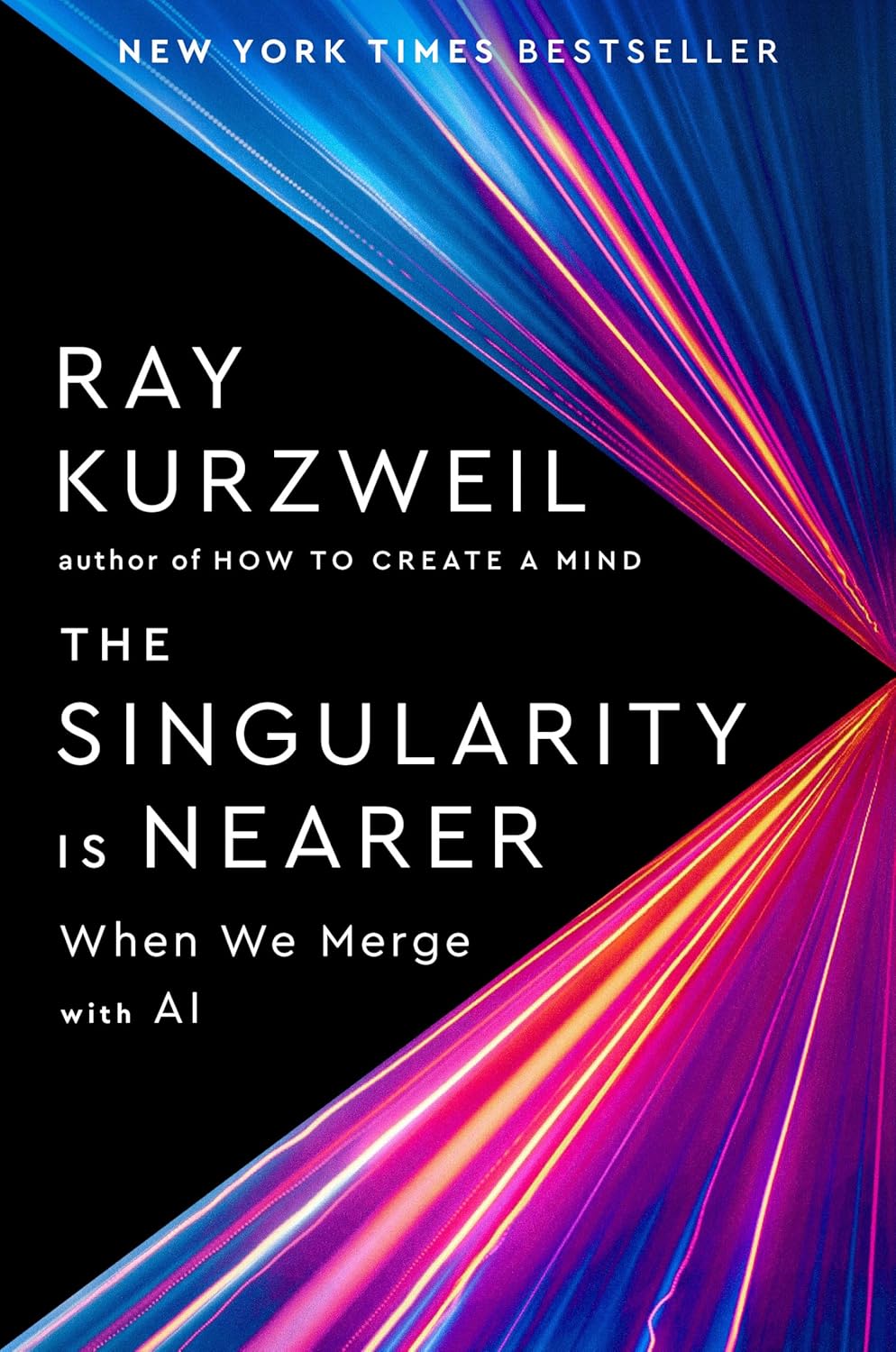
Twenty years after "The Singularity Is Near", Kurzweil revisits his predictions and keeps the date: human-AI merger around 2045.

AI as the latest chapter in the history of information networks, from gossip to the printing press to the algorithm.
As an Amazon Associate, Zendoric earns from qualifying purchases; the price does not change for you. · all our recommended books →
🔗 Related on Zendoric