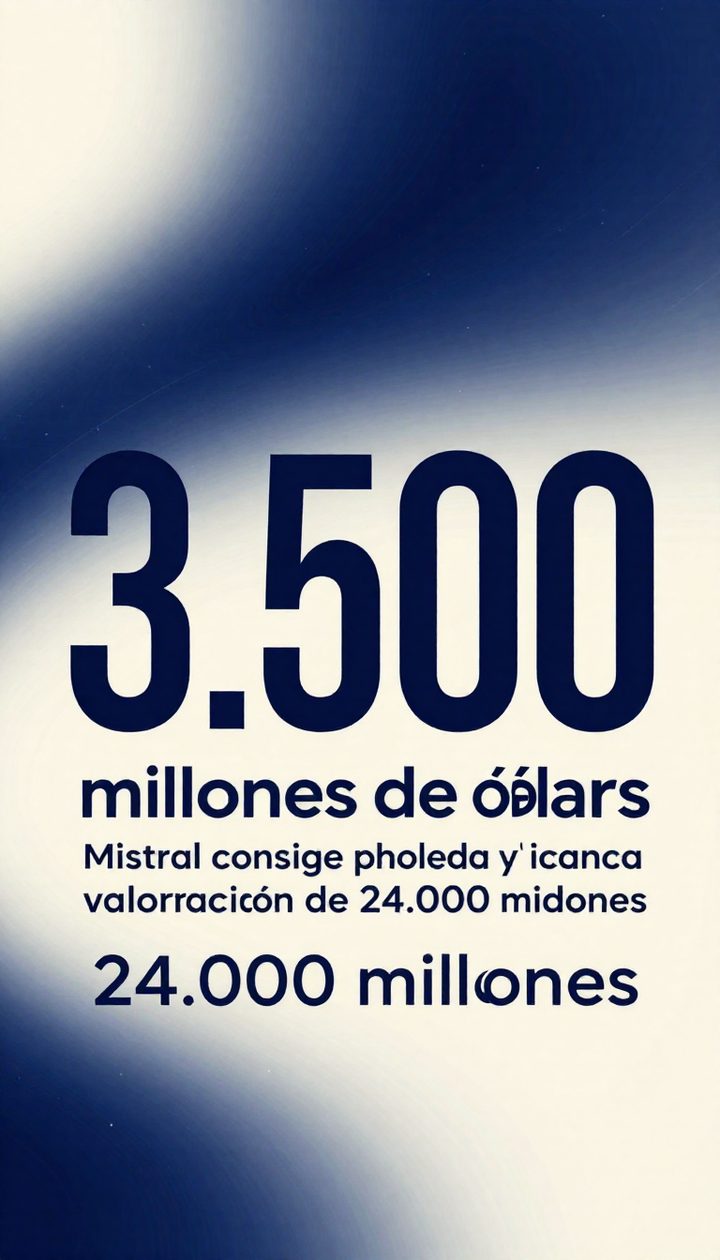
Mistral raises $3.5 billion and reaches a $24 billion valuation in a round led by Samsung
🕒 Published on Zendoric: September 9, 2026 · 00:20
✨ AI-generated · how it's made
Mistral AI, the French artificial intelligence startup, has announced a €3 billion funding round (about $3.5 billion) that lifts its post-money valuation to more than €21 billion (approximately $24 billion).
📚 Go deeper

Semiconductors as the oil of the 21st century: history, espionage, and why an island of 23 million people underpins the entire AI economy.
As an Amazon Associate, Zendoric earns from qualifying purchases; the price does not change for you. · all our recommended books →
Mistral AI, the French artificial intelligence startup, has announced a €3 billion funding round (about $3.5 billion) that lifts its post-money valuation to more than €21 billion (approximately $24 billion). The round is led by Samsung Electronics, the South Korean memory chip giant, and also includes the participation of the Scaleup Europe Fund — an investment fund backed by the European Union and managed by EQT, whose investors include the European Commission, Novo Holdings and Santander — as well as existing investor PSG Equity.
The jump in valuation is notable: barely a year ago, in a round led by Dutch semiconductor equipment maker ASML, Mistral was valued at €11.7 billion. In twelve months, the company has almost doubled its valuation, cementing its position as Europe's leading contender in the AI race against US giants such as OpenAI and Anthropic.
Chief executive and founder Arthur Mensch told CNBC that the capital will go mainly toward expanding infrastructure, including building its own data centers and renting additional compute capacity. According to Mensch, the long-term goal is to rely entirely on its own infrastructure: the company expects the amount of compute it owns to grow by around 100% over the next five years. With that, Mistral aims to train «bigger and faster» models.
A central element of Mistral's strategy is its commercial approach, which differs from that of OpenAI or Anthropic: rather than simply offering general-purpose models, the company works directly with specific firms to develop tailored AI tools integrated into their business processes. It already does so with ASML, embedding AI into its manufacturing processes, and Mensch said he would pursue a similar approach with Samsung, now that the Korean manufacturer is joining as an investor and, presumably, as an industrial partner.
On the financial front, Mensch had said earlier this year that he expected Mistral's annual recurring revenue (ARR) to exceed $1 billion for the year. Following the new round and the associated partnerships, the CEO said he expects to «beat» that figure if current trends hold, though he declined to offer a specific revised number. He expressed confidence that the current funding will accelerate the company's growth heading into 2027.
The strategic backdrop to the deal is the narrative of European «sovereign AI»: Mistral explicitly positions itself as a non-US, non-Chinese alternative within the industry, appealing to growing demand — in Europe and other regions — for AI technology that does not depend on providers from Washington or Beijing. To that end, it is betting on open-weight models, in contrast to the closed, proprietary systems of OpenAI and Anthropic.
The company acknowledges, however, that it faces very intense competition from Chinese AI labs, whose open-source models have gained considerable technical capability. Mensch said Mistral's next models, due to launch «very soon», will be «very competitive». He further argued that Chinese labs do not operate or serve enterprise customers outside China, which limits their suitability as suppliers for European companies.
Mistral admits that in some cases its clients may deploy Chinese models on its own infrastructure, but maintains that this «does not create a very strong dependency» on those labs, since the data remains within Mistral's systems. Mensch raised doubts about the long-term reliability of relying on Chinese models, pointing to uncertainty over whether they will receive sustained updates over time or could be affected by future export restrictions. In his words, «the volatility in this space is really extreme right now», which is why Mistral aspires to be a «trusted partner» that can guarantee its customers access to ever-better models in the future — a guarantee that, according to the CEO, can only be sustained by continuously training its own models.
Taken together, the deal cements Mistral as Europe's best-capitalized generative AI project, now backed by a top-tier industrial player such as Samsung and by funds tied to the European Union itself, at a moment when AI geopolitics — marked by the rivalry between the United States and China — is pushing European governments and companies to seek alternatives of their own.
📚 Go deeper
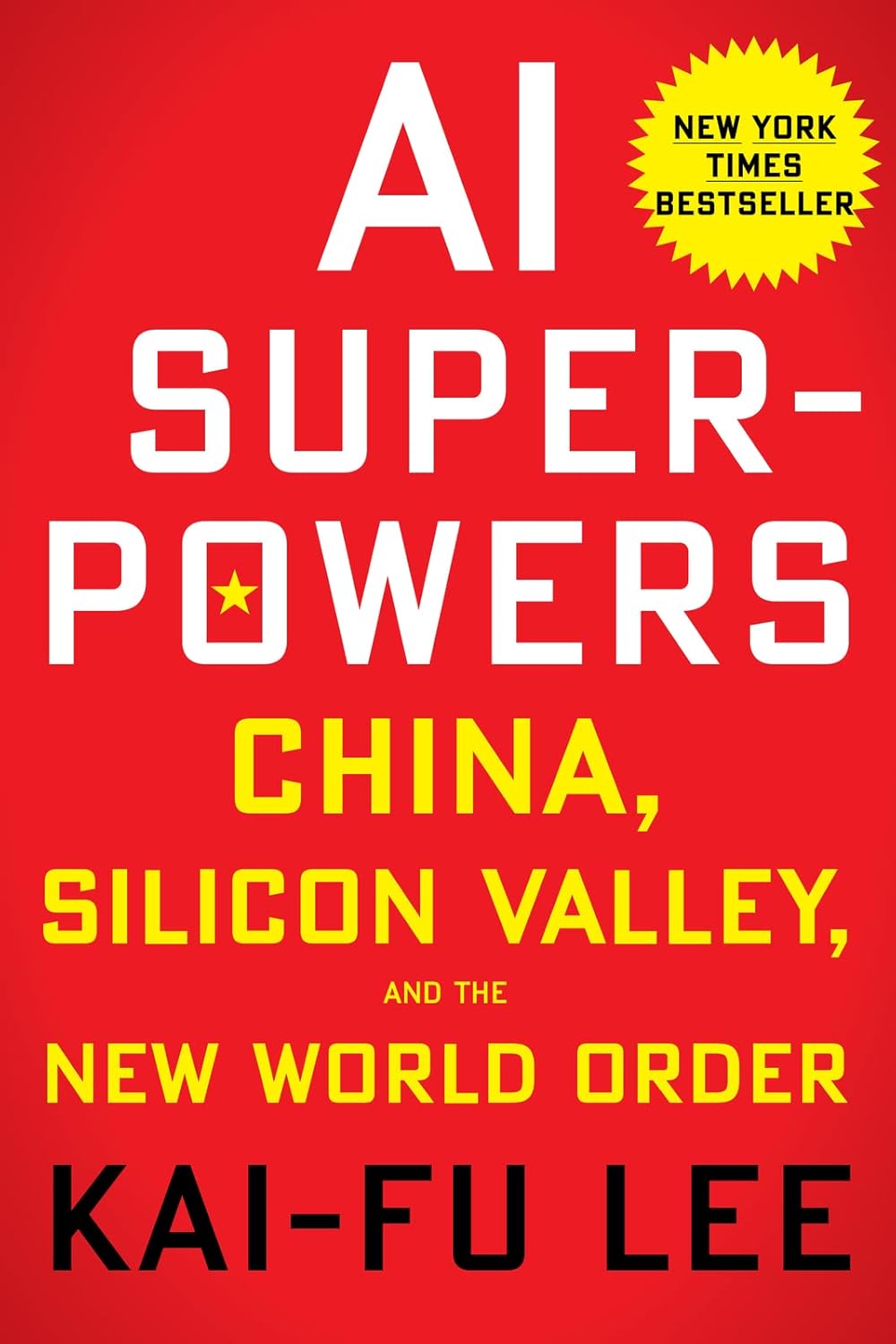
China vs.

The definitive piece of investigative journalism on OpenAI: 260+ interviews, the clash between safety and speed, and the attempted firing of Sam Altma
As an Amazon Associate, Zendoric earns from qualifying purchases; the price does not change for you. · all our recommended books →
🔗 Related on Zendoric
- Mistral raises 3 billion euros in the largest funding round ever for a European startup · 2026-09-10
- Emergent, India's second AI unicorn in just one month: is India's AI race finally taking off? · 2026-07-18
- TypeSafe AI, maker of the non-text model Jev, raises $870 million at a $7.5 billion valuation · 2026-10-14