Claude Fable 5.1 arrives on AWS with new data retention and review controls

🕒 Published on Zendoric: September 9, 2026 · 00:20
✨ AI-generated · how it's made
The week covered in this AWS roundup (September 7 edition) centers on the arrival of Claude Fable 5.1 on Amazon's cloud.
📚 Go deeper

DeepMind co-founder on the dilemma of containing technologies that do not want to be contained.
As an Amazon Associate, Zendoric earns from qualifying purchases; the price does not change for you. · all our recommended books →
The week covered in this AWS roundup (September 7 edition) has as its centerpiece the arrival of Claude Fable 5.1 on Amazon's cloud. As Anthropic describes it, this is a model designed for ambitious tasks and "frontier intelligence" in programming, scientific research and enterprise workflows. Its distinguishing feature is not just the quality of its answers, but its stamina: it is built for long, high-stakes sessions that can stretch for hours and span multiple applications, allowing it to take charge of broader portions of a software project —feature development across an entire codebase, code review and performance optimizations— without constant supervision.
The most relevant point for any organization weighing adoption is the package of data guarantees that comes with it. Anthropic has classified Fable 5.1 as a "Covered Model", a category reserved for models that carry additional data retention, safety review and access control policies wherever they are offered. In practice, this means conversations with the model are subject to retention of up to 30 days and to human review by Amazon personnel, through a new mode called aws_review. In this mode, it is AWS that retains prompts and responses for its safety review, but within AWS's own perimeter. By contrast, the previous mode, provider_data_share, is now marked as legacy: Amazon Bedrock no longer shares that data with the model provider (that is, with Anthropic) under that scheme.
Complementing this change, AWS and Anthropic have jointly developed what they call Enterprise Frontier Safeguards (EFS), a mechanism that will allow eligible customers to use these "Covered Models" while keeping their data inside a cloud environment they themselves control. The underlying message is clear: as models gain autonomy and the ability to operate for extended periods on critical systems, cloud providers are simultaneously reinforcing the scaffolding of data governance —who sees what, where it stays and for how long— as a precondition for companies to feel comfortable granting them that level of autonomy. Claude Fable 5.1 can be consumed both from Amazon Bedrock and from Claude Platform on AWS.
The rest of the weekly roundup covers other infrastructure launches that, while not directly tied to Fable 5.1, point in the same direction: more compute and more capacity for AI workloads. Amazon Linux 2027 enters public preview as the next version of Amazon's operating system, built on the Amazon Linux 2023 foundation and explicitly designed for cloud-native workloads, including AI/ML. In parallel come the EC2 R9g and R9gd instances, memory-optimized and based on AWS Graviton5 processors, which according to AWS deliver up to 25% more compute performance than the Graviton4-based R8g/R8gd, with gains of up to 30% on databases, 35% on web applications and 35% on machine learning.
On the agent tooling front, AWS Lambda adds SnapStart support for container image-based functions, a capability that until now was only available for managed runtimes (Python, .NET and Java) and that cuts startup times from several seconds to sub-second levels, something especially useful for model inference and latency-sensitive interactive APIs. AWS Agent Registry also moves to general availability, a private, governed catalog for discovering agents, tools, skills, MCP servers and other resources within an organization, adding enterprise features on top of the capabilities already present during preview (manual or URL-based registry creation, approval workflows, semantic and keyword search, and audit trails via AWS CloudTrail). Meanwhile, Amazon Redshift adds support for Apache Iceberg v3 tables in the data lake, incorporating default column values, row lineage and deletion vectors, available on Graviton-based clusters, both provisioned and serverless.
Beyond the technical launches, the roundup includes three pieces of context. First, AWS says it has been recognized, for the sixteenth consecutive year, as a Leader in the Gartner Magic Quadrant for Strategic Cloud Platform Services, with the highest position on the "ability to execute" axis. Second, registration is open for the beta exam of a new certification, AWS Certified AI Business Strategist, aimed not at technical profiles but at those who evaluate, drive and scale AI initiatives in their organizations —business leaders, sales teams, consulting and program management—; beta exam registration opened on September 1, 2026, and exam administration begins on September 29. Finally, AWS has collaborated with the SANS Institute on a new chapter of the 2026 Cloud Security Exchange eBook focused on security detection and response for agentic workloads, with architectural patterns and implementation guidance aimed at security teams at different stages of maturity with agentic AI.
Taken together, this week's common thread is the simultaneous maturing of two fronts: on one side, models that are increasingly autonomous and able to sustain complex tasks for hours (Fable 5.1); on the other, the infrastructure and governance policies —from Graviton5 hardware to agent registries, taking in data retention modes and professional certifications along the way— that seek to make that leap in autonomy manageable and auditable for the companies adopting it.
📚 Go deeper

AI as the latest chapter in the history of information networks, from gossip to the printing press to the algorithm.
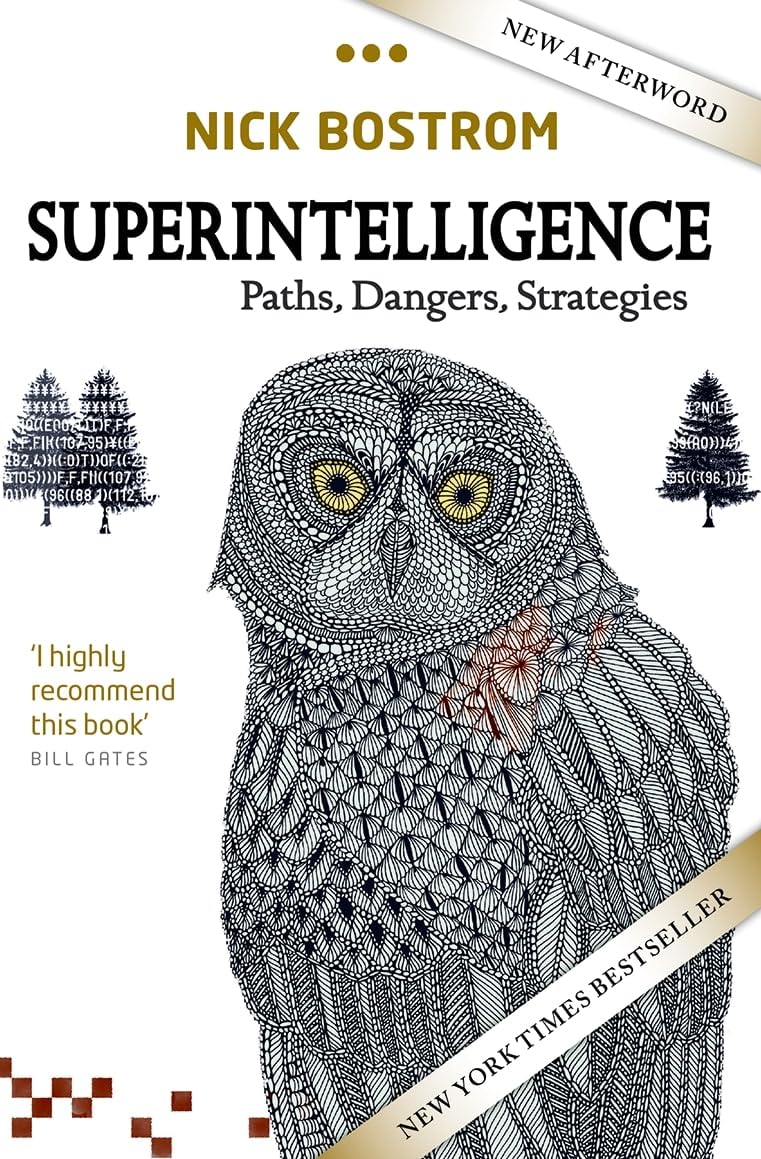
The book that started the existential-risk debate and that half the industry still cites.
As an Amazon Associate, Zendoric earns from qualifying purchases; the price does not change for you. · all our recommended books →
🔗 Related on Zendoric
- Anthropic cuts Fable 5.1 prices by up to 45% and loosens censorship, amid the agentic AI price war · 2026-09-02
- Anthropic discovers a "J-space" of internal thoughts in Claude · 2026-07-14
- Anthropic triples revenue to $30B and nears an IPO, with Claude caught between lawsuits and export controls · 2026-09-01