Anthropic cuts Fable 5.1 prices by up to 45% and loosens censorship, amid the agentic AI price war

🕒 Published on Zendoric: September 2, 2026 · 08:27
✨ AI-generated · how it's made
Anthropic unveils Claude Fable 5.1 and Mythos 5.1: the former costs up to 45% less on agentic tasks and blocks fewer basic science questions. It arrives alongside a $35 billion cloud contract with Lambda, in the middle of a price war with Chinese open models.
📚 Go deeper

DeepMind co-founder on the dilemma of containing technologies that do not want to be contained.
As an Amazon Associate, Zendoric earns from qualifying purchases; the price does not change for you. · all our recommended books →
By The Verge · September 1, 2026.
Anthropic has unveiled Claude Fable 5.1 and Claude Mythos 5.1, the update to its two flagship model families. According to the company itself, Fable 5.1 performs better than Fable 5 but costs around 25% less in typical use and up to 45% less on complex agentic tasks — those in which the model chains together several steps and tool calls without constant supervision — thanks to a price reduction for tokens already in cache (previously processed and stored data that the model can reuse without recomputing it from scratch). Fable 5.1 is already available on all platforms; Mythos 5.1, for now, is reaching only participants in Project Glasswing.
Early users describe gains beyond price. Dan Shipper, chief executive of Every, calls it "the strongest coding model we've used," and highlights that it is also fast, token-efficient and "talks like a normal person." Aaron Levie, CEO of Box, recounts that his company's agent running Fable 5.1 caught nuances and ambiguities in the data that Fable 5 missed on the same test. More revealing is the observation from the account posting as Lisan al Gaib: in benchmarks, Mythos 5.1 with "low" reasoning matches its predecessor set to maximum. In other words, Anthropic has not merely made the model cheaper: it has extracted more capability per unit of compute, which is the real lever in a price war that is no longer fought on benchmark scores alone.
The update also addresses two recurring customer complaints, as Anthropic itself acknowledges: data retention and the excessive zeal of its safety filters. On the first, the company says its Enterprise Frontier Safeguards will offer "complete privacy" by storing data on the customer's own servers rather than Anthropic's, with rollout expected this autumn. On the second, Fable 5.1 debuts "more precise" safeguards that, according to the company, block basic biology questions less often than its predecessor. But the relaxation is not universal: Mythos 5.1 retains exactly the same biological restrictions as the previous version. And in cybersecurity, Anthropic broadens the permitted use of Fable 5.1 for identifying software vulnerabilities, but continues to route penetration testing, exploit generation and binary-level vulnerability analysis to the Opus models.
None of this is happening in a vacuum. According to SiliconANGLE, the launch comes after Anthropic closed a cloud computing deal with Lambda valued at $35 billion, the kind of infrastructure commitment that helps explain how a company can afford to cut prices by up to 45% without giving up on training ever more expensive models. Mashable, for its part, frames the launch at a moment of growing unease about the safety of agentic AI — precisely the category of tasks where Anthropic says it has cut its model's cost the most. Both threads coexist in the same move: more autonomy and more agents at lower cost, while the promise of granular control — which model can do what — tries to sustain corporate customers' trust.
Our take is that this is, above all, a response to the price pressure coming from Chinese open models. In our own quality index, Fable 5 was already leading comfortably over GLM, Qwen, DeepSeek and Kimi, but that capability advantage is not enough if the rival offers most of the performance at a fraction of the cost. With Fable 5.1, Anthropic attacks that front from both sides at once: it raises performance and slashes the price precisely in the category — agentic tasks — that is growing fastest in enterprise AI spending. It confirms that the competition is no longer fought on the benchmark scoreboard alone, but on cost per task solved, and there the open frontier has forced even the leader to move.
The second thread we find relevant is safety à la carte. Anthropic is not relaxing safeguards uniformly: it loosens those of its mass-use model on low-risk questions, such as basic biology, but keeps the lock intact on Mythos, and continues to reserve the most sensitive offensive cybersecurity capabilities for the Opus models. This is governance tiered by capability and by risk, not a single "more or less censorship" switch, and it is probably the right design in the short term: while the industry debates how to restrict access to the most dangerous offensive capabilities, Anthropic is testing a middle path within its own catalogue — allow the defensive, block the offensive. In the long run, that kind of graduated permissions architecture is exactly the trust infrastructure needed for agentic AI to be used in increasingly autonomous tasks without every leap in capability automatically translating into a new risk vector: the same path that, sustained over time, allows cheaper automation to arrive without collective security being the price paid.
📚 Go deeper
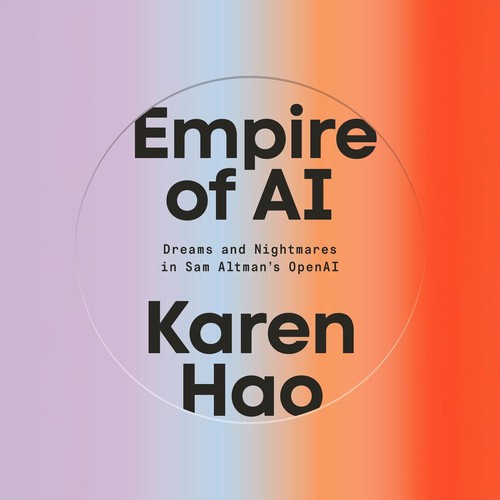
The definitive piece of investigative journalism on OpenAI: 260+ interviews, the clash between safety and speed, and the attempted firing of Sam Altma
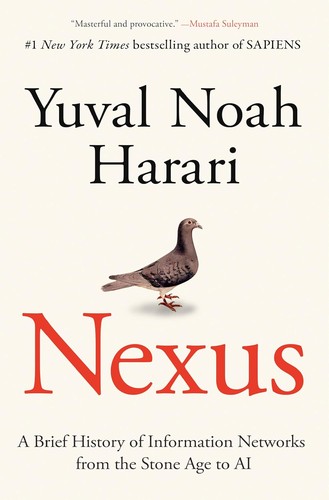
AI as the latest chapter in the history of information networks, from gossip to the printing press to the algorithm.
As an Amazon Associate, Zendoric earns from qualifying purchases; the price does not change for you. · all our recommended books →
🔗 Related on Zendoric
- Anthropic debuts Opus 5 at half the price of Fable 5, the same week the U.S. debates banning Chinese open AI · 2026-07-25
- When the state shuts down a model: the Fable 5 case redefines who's in charge of frontier AI · 2026-06-25
- Anthropic removes its hidden code against Chinese distillation: protecting the model, at the cost of trust · 2026-07-02