AI drones take the physical risk out of façade cleaning, but turn the employee into a contractor
🕒 Published on Zendoric: September 9, 2026 · 00:20
✨ AI-generated · how it's made
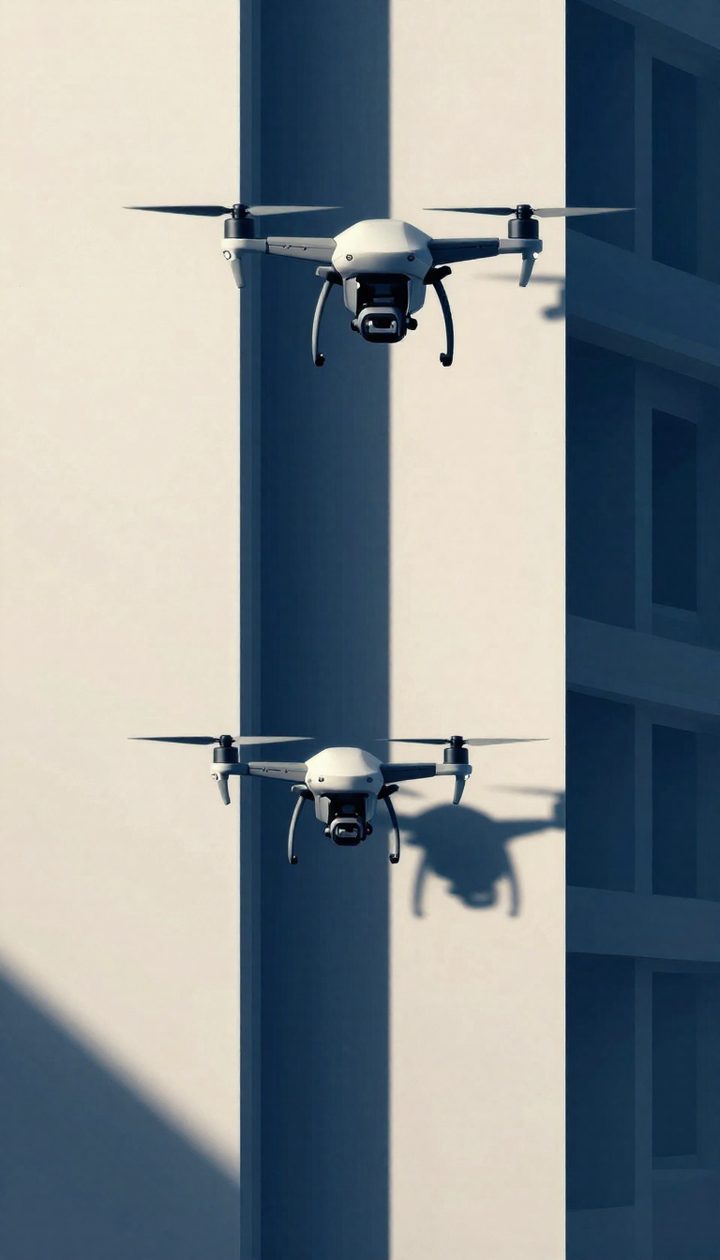
US startup SkyPSI equips drones with artificial intelligence to clean the façades of hotels, offices and hospitals, and trains workers to fly them. Its founder sells the idea as freedom from physical risk; we also see a change in employment status that is worth examining closely.
📚 Go deeper

The best starting book if you're not technical: a Wharton professor explains how to work WITH AI — when to delegate, when to supervise, when to keep i
As an Amazon Associate, Zendoric earns from qualifying purchases; the price does not change for you. · all our recommended books →
By Zendoric · September 9, 2026.
SkyPSI is a U.S. startup that supplies drones equipped with artificial intelligence to clean the exteriors of commercial buildings: façades and high-level surfaces. According to the information published on its own website, the company does not just sell the drone: it also provides the training and certification needed to operate it, and builds around that a model in which independent workers gain access to the technology to offer the service on their own to hotels, senior living facilities, office buildings, multifamily complexes, medical centers, parking structures and retail premises.
The division of labor is the company's central argument: the drone takes on the physical work and the risk of height, while the human handles remote control, precision and the commercial management of the service. Vic Pellicano, founder and chief executive of SkyPSI, sums it up this way: "For the working class, the equation was always the same: you traded your body for a paycheck. Not anymore. The robot takes the risk. You keep the contract. And this time, your name is on the business." It is a textbook startup quote, but it points to something real: high-level façade cleaning generally ranks among the manual trades most exposed to falls and serious accidents, and automating precisely that part —the fall, not the decision— is where robotics adds value beyond debate.
It is worth being precise about what we have here: everything we know about SkyPSI comes from its own website and from the curation of it done by the outlet Social Geek, republished by Pulzo. The article contains no figures on fleet deployed, revenue, number of certified operators or comparative accident data; it is the story the company wants to tell about itself, not independent verification. That does not invalidate it, but it does require reading it for what it is: corporate marketing with a plausible technological core.
And that is where the nuance the CEO's quote does not resolve lies. Going from "employee who cleans façades" to "certified operator who flies a drone" sounds like a promotion, and at the individual level it probably is: less physical risk, more skill, more visibility as a service provider under one's own name. But the business model described —an independent worker who gains access to the company's technology to deliver the service— is also, at bottom, a contractor model, with the usual economic risks of that arrangement (equipment, ongoing training, no permanent payroll) replacing the physical risks of before. And if a single certified operator can, over time, supervise several drones or several buildings at once, the total number of people needed for the same volume of work may fall even if every job that survives is a better one. The company does not address that arithmetic; we do point it out.
This is, in miniature, the transition we have been describing across very different trades: AI and robotics do not wipe out a category of work all at once, they redefine it, and the redefinition almost always begins by removing the most dangerous or most repetitive component of the task. In the short term, that means fewer falls from height but also less permanent employment and more self-employment, with all the precariousness that can entail if it does not come with solid working conditions. In the long term, however, it is exactly the kind of substitution that underpins our underlying thesis: the fewer human bodies exposed to falling from a ninth floor to clean a pane of glass, the closer we are to an economy where human work is reserved for judgment, client relationships and supervision, and the physical, risky part is left to machines. The challenge, here as in every sector going through this transformation, is that the promise of "your name is on the business" translates into decent contracts and not just a nice slogan for selling drones.
📚 Go deeper

How opaque algorithms decide who gets credit, a job or parole — and why they tend to punish the same people.

The reference manual for building products on top of AI models: prompts, RAG, fine-tuning, agents, evaluation and deployment.
As an Amazon Associate, Zendoric earns from qualifying purchases; the price does not change for you. · all our recommended books →
🔗 Related on Zendoric
- Jensen Huang says AGI is already here: the man selling the machines also sells the story · 2026-09-07
- UCLA Health bets on AI for cancer detection: another sign that precision medicine is no longer just a promise · 2026-06-26
- Gunslinger: when agentic AI comes down from the lab to the cockpit of a turboprop · 2026-06-27