Michigan State creates an AI minor and makes AI literacy mandatory university-wide, not just in engineering

🕒 Published on Zendoric: September 7, 2026 · 02:54
✨ AI-generated · how it's made
Michigan State University is launching a 22-credit minor in artificial intelligence this year along with two new AI literacy courses open to any student, funded by a $5 million fund. The telling detail: one of those courses failed twice for lack of enrollment in 2025 and is now full.
📚 Go deeper

The only novel on the list, by a Nobel laureate: an artificial friend observes humans with a blend of lucidity and innocence no essay achieves.
As an Amazon Associate, Zendoric earns from qualifying purchases; the price does not change for you. · all our recommended books →
By Zendoric · September 7, 2026.
Michigan State University (MSU) has launched this academic year a minor —a 22-credit secondary specialization, less demanding than a full degree— in artificial intelligence, along with two new courses open to any student and the addition of AI content to introductory engineering courses. The story comes from The State News, the university's student newspaper, citing academic officials at the school.
The core of the minor is CSE 345, "Foundations of Artificial Intelligence," to which is added an elective chosen from AI agents, deep learning, biometrics or autonomous vehicles, as S. Patrick Walton, associate dean of academic programs at the College of Engineering, explained to The State News. In parallel, the first-year courses EGR 100 and EGR 102 —mandatory for every engineering student— now include comparing results from different generative AI tools, notions of prompt engineering (framing instructions to get better answers from a model) and a three-week project in which students first design their own algorithm and then ask a language model to translate it into code, and afterwards assess whether the result is reliable.
More interesting than the minor itself are the two new courses, both under the code CSE 291 and with no prerequisites: "Computational and AI Literacy for the Modern Workplace," three credits and in person, and "AI Fundamentals: What Every Student Should Know," one credit and asynchronous. The first was designed in 2025 but could not be offered in either semester of that year for lack of enrollment; only with the backing of the new university initiative "AI Ready Spartans" has it managed to get off the ground this year, and it has done so with all 30 seats filled. It is a small but telling data point: a year ago students themselves did not see the need; today the demand already exists.
That initiative, launched in April 2025 by MSU president Kevin Guskiewicz and backed by the Green and White Council —a group of 18 business and civic leaders from Michigan—, also has a $5 million donation from an anonymous alumnus of the Eli Broad College of Business. In other words: it is not just the university reacting on its own initiative, but the region's business world directly funding the effort to ensure its future hires arrive already literate in AI.
Professor Marilyn Wulfekuhler, who teaches both new courses, sums up the goal with a comparison worth remembering: AI as a calculator, not as a substitute for reasoning. In her introductory Python course she restricts the use of AI until after the first exam, precisely so that students first learn to do things on their own. It is a tension that runs through MSU's entire curricular overhaul: the same courses that teach how to use AI also deliberately teach when not to use it, to prevent it from replacing the learning of the basics instead of accelerating it.
Our reading is that this story, though confined to a single university, is representative of a much broader underlying shift: American higher education —and Western higher education in general— is late to institutionalize something the labor market has been demanding for some time. Dean Walton himself admits it: universities around the world are still "figuring out what the best ways are to use AI tools to enhance student learning, not to replace it," and no one today can predict what shape that teaching will take three years from now. It is an honest admission that the curriculum is running behind the technological frontier, not ahead of it.
This connects with something we have already noted in analyzing AI's impact on employment by sector: in education, those who learn to orchestrate AI as a support tool win, and those who limit themselves to transmitting content that a model already reproduces better and more cheaply lose. What MSU is attempting —with more institutional clumsiness than conviction, judging by the failed 2025 attempt— is to carry that same logic over to its own students before they reach the labor market. The detail of the student who, already on an internship, discovered that the AI used internally at his software company is trained on proprietary, regulated code, and therefore makes fewer mistakes than public tools, points in the same direction: real literacy is not knowing how to type a prompt, but understanding the limitations and the context of the tool being used.
In the short term, initiatives like this will always arrive late relative to the pace of the models —what is taught today about one generation of generative AI may be outdated before the student graduates—, and it is honest to acknowledge that. But in the long term, the more institutions incorporate that literacy as a foundation —not the specific tool, but an understanding of what a statistical prediction is and what it is not—, the better prepared the next generation will be to take advantage of the abundance AI promises without blindly depending on it. That is, in the end, the real goal of a 22-credit minor: not to produce AI users, but to produce people capable of judging it.
📚 Go deeper
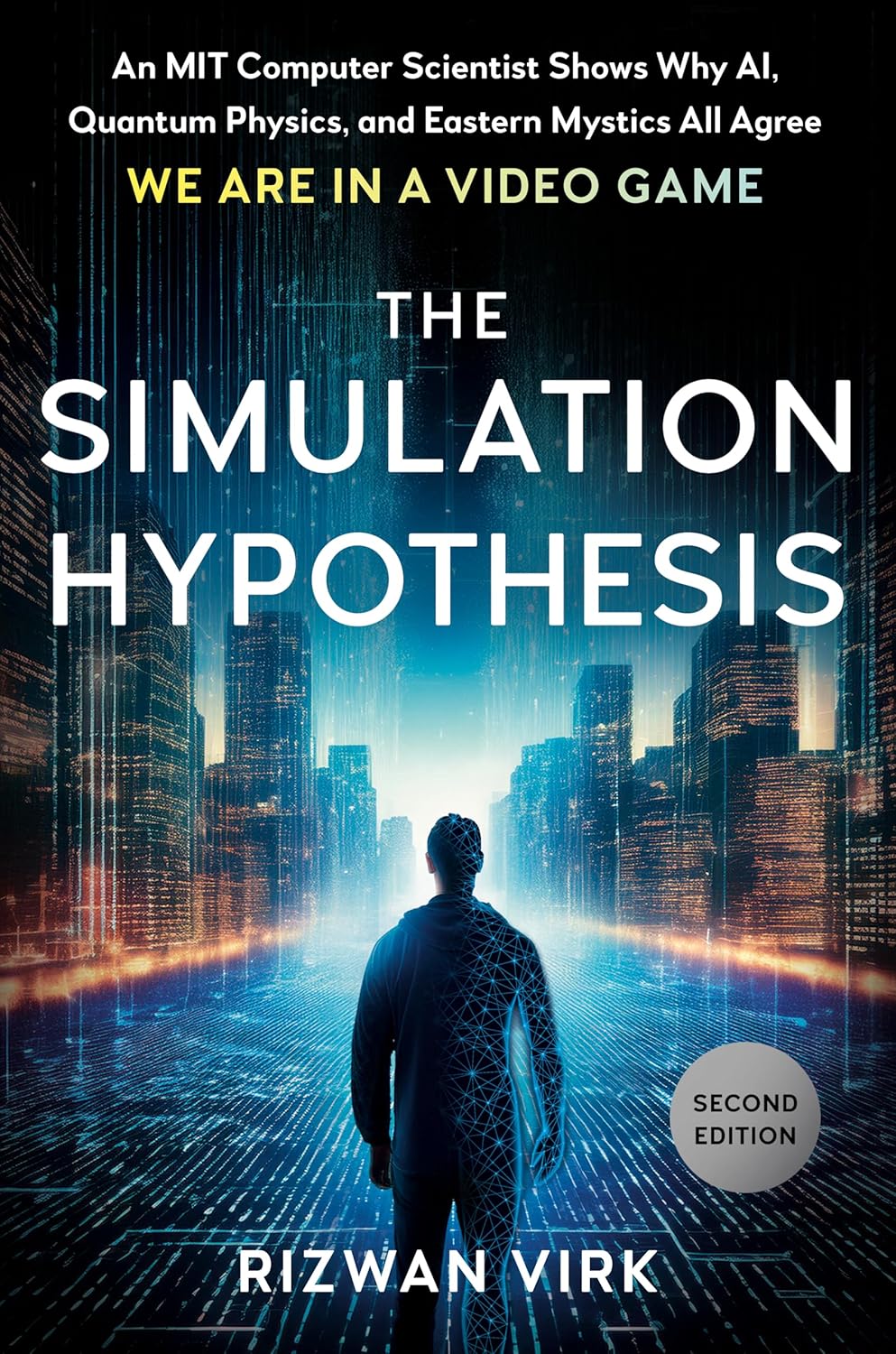
An MIT computer scientist connects AI, quantum physics and video games to take an uncomfortable question seriously: what if we live in a simulation? M

THE AI textbook: used by 1,500+ universities.
As an Amazon Associate, Zendoric earns from qualifying purchases; the price does not change for you. · all our recommended books →
🔗 Related on Zendoric
- Rock Hill puts its house in order before the school year: why revising AI policy is now a matter of school governance · 2026-06-24
- Ohio requires its school districts to have an AI policy, but the video doesn't reveal the substance of the debate · 2026-07-08
- Illinois passes the strictest AI safety law in the US, with mandatory audits · 2026-07-08