Alabama screens for weapons with AI at high school football, but the only proof it works is the police's word

🕒 Published on Zendoric: September 6, 2026 · 11:50
✨ AI-generated · how it's made
Calera High School (Shelby County, Alabama) is installing AI-powered weapons detectors at the entrances to high school football games. Local police cite 17 shootings across the southeastern US in the first month of the 2025 season to justify it, but the ones certifying that the system works are the same police who bought it.
📚 Go deeper

AI as the latest chapter in the history of information networks, from gossip to the printing press to the algorithm.
As an Amazon Associate, Zendoric earns from qualifying purchases; the price does not change for you. · all our recommended books →
By Zendoric · September 5, 2026.
Calera High School, in Shelby County (Alabama), has begun using artificial intelligence-based weapons detectors to scan fans before this season's football games. According to Calera's police chief, the system specifically identifies weapons and rules out keys or other metal objects. The scanners are portable and fans will see them before Friday's kickoff.
The justification given by local police is concrete: 17 shootings recorded in the southeastern United States during the first month of the 2025 high school football season. It is a figure that turns any high school stand into a space of real, not hypothetical, risk. The police chief himself says the technology «has worked» since the preseason game (the so-called jamboree), although the article offers no accuracy figures, no false positive or false negative rates, and no independent third-party evaluation.
That absence of verifiable data matters more than it seems. As industry context, computer-vision weapons detection in US schools, stadiums and public spaces has been rolling out at scale for several years, and some of those systems have come under journalistic and regulatory scrutiny in the US for advertising accuracy rates far higher than those later documented in the field. We do not know whether the vendor Calera uses is one of them: the article does not identify it. But the pattern is the same across the country: the word certifying these systems' success is almost always that of whoever decided to buy them, not that of an external auditor.
Our reading is that school physical security has become one of the fastest and least scrutinized AI deployment fronts in the United States, precisely because it does not compete for headlines the way frontier models do. There is no public benchmark here, no report from a security institute, no third-party figures auditing the error rate on the people scanned every Friday, many of them minors. That matters because false negatives let through exactly what is supposed to be stopped, and false positives normalize any fan, children included, being flagged by an algorithm without anyone explaining why.
In the short term, the problem is not the technology itself but the lack of governance around it: who audits these systems, how often, and what happens when they fail at a mass event. In the long term, if the promise holds and these systems really do reduce gun violence in crowded spaces, they fit Zendoric's underlying thesis: AI applied with judgment can protect lives and free communities from a very real fear. But that leap from promise to evidence has not yet been made, and until an independent audit confirms it, school safety will keep depending on trust, not on data.
📚 Go deeper

DeepMind co-founder on the dilemma of containing technologies that do not want to be contained.
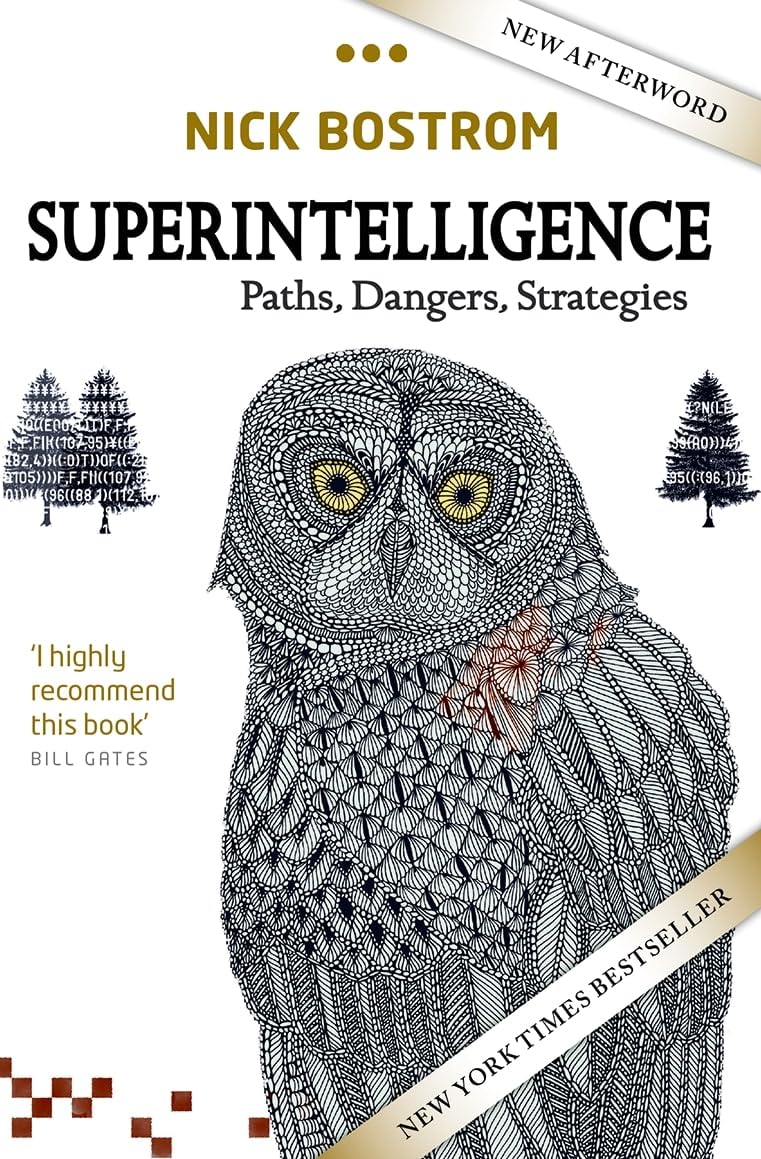
The book that started the existential-risk debate and that half the industry still cites.
As an Amazon Associate, Zendoric earns from qualifying purchases; the price does not change for you. · all our recommended books →
🔗 Related on Zendoric
- The Senate questions Flock (with no company witnesses): 120,000 AI cameras and no federal law to rein them in · 2026-09-24
- A Texas jury strikes down a police program that used AI and a rigged dog to search cars at random · 2026-10-01
- Naira: when AI-powered irrigation reaches a Senegalese village before electric power does · 2026-07-12