U.S. adds to its clinical guidelines the first AI test that calculates future breast cancer risk from the mammogram itself
🕒 Published on Zendoric: September 5, 2026 · 10:57
✨ AI-generated · how it's made
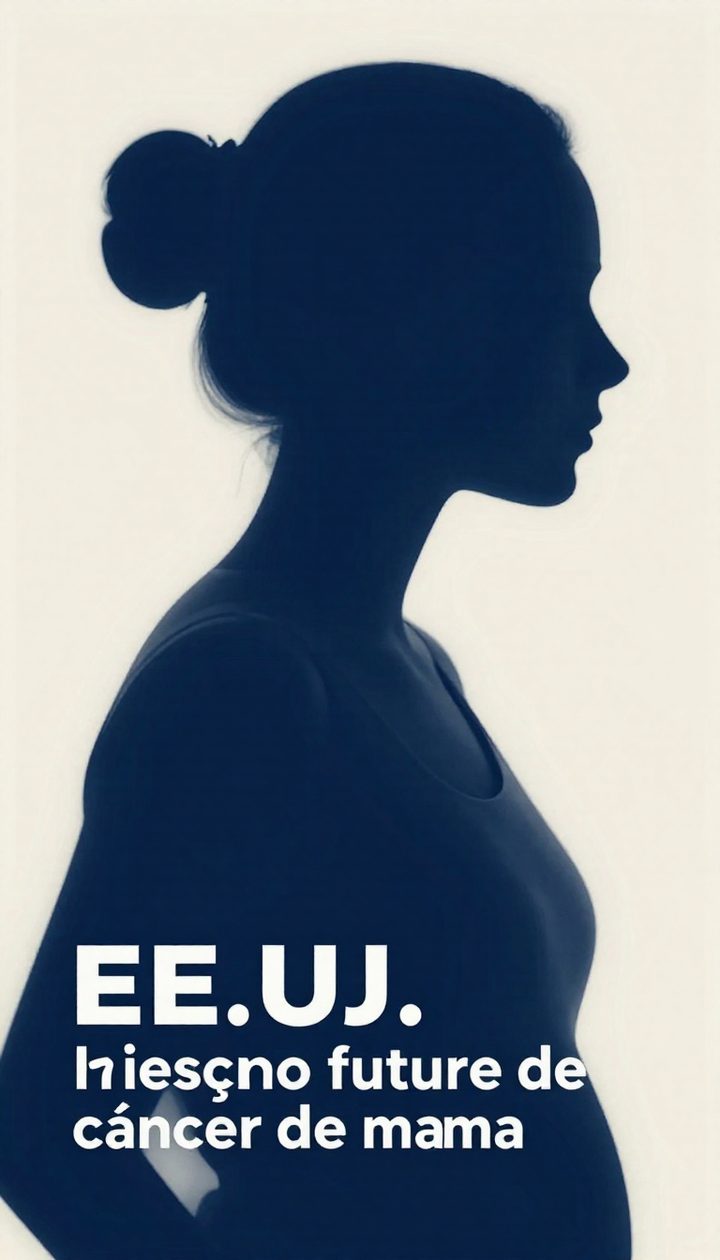
The National Comprehensive Cancer Network has added to its 2026 guidelines an algorithm that, from a standard mammogram, estimates the risk of developing breast cancer over the next five years. The threshold that triggers the alert: 1.7%, according to the guideline itself. It's not a diagnosis, it's a new variable for deciding who needs closer monitoring.
📚 Go deeper

DeepMind co-founder on the dilemma of containing technologies that do not want to be contained.
As an Amazon Associate, Zendoric earns from qualifying purchases; the price does not change for you. · all our recommended books →
By Zendoric · September 5, 2026.
The National Comprehensive Cancer Network (NCCN), the benchmark organization that sets the oncology protocols followed by most U.S. hospitals, has updated its breast cancer screening guideline (version 1.2026) to include, for the first time, a future risk calculation based on artificial intelligence. The source of that data is not a blood test or a genetic test: it is the mammogram the patient already has routinely.
It is worth distinguishing two things that are often confused under the same "AI in mammograms" label. One is detection AI, in use for years: it looks for masses or calcifications already present in the image and flags them to the radiologist. The other, the one now entering the NCCN guideline, is risk-prediction AI: it does not look for cancer that is present, but for subtle patterns in breast tissue that, according to the model, are associated with a higher probability of developing the disease in the future. It is a conceptual leap: from "is there something there?" to "how likely is it that something will appear?".
The specific figure set by the new guideline is a calculated five-year risk of 1.7% as the threshold for "increased risk", as the NCCN's own document states. Crossing that threshold does not mean having cancer or developing it with certainty; it opens a clinical conversation about whether to add MRI or ultrasound, consider risk-reducing drugs, start screening earlier or step up follow-up. The stated goal is to cover women who today fall outside the high-risk categories because traditional models —age, family history, genetic mutations, reproductive history— do not detect them, something that, according to the article, happens in a large share of diagnosed cases.
Technically, the model uses deep learning (neural networks trained on enormous volumes of mammograms from women who did and did not go on to develop cancer) to find statistical risk patterns that no human radiologist would identify at a glance. That is also its main weakness: the article itself acknowledges that the system does not always explain why it assigns a particular score, and that researchers are still trying to map which image features the algorithm is actually using. It is the classic "black box" problem in medicine: a useful result without a clearly traceable clinical cause.
The context of this news needs to be set out precisely. The Cure Today article draws on, and cites in its references, press releases from Clairity, the company that in June 2025 became the first AI platform authorized by the FDA (the U.S. agency that regulates drugs and medical devices) for breast cancer prediction, and which in April 2026 announced its own inclusion in the NCCN guideline. In other words: a national clinical guideline has just incorporated, from the outset, a single vendor's tool. That is not illegitimate —FDA authorization requires prior evidence— but it is worth keeping in mind: the opening created by this guideline update is today filled by a single commercial player, and other competitors will predictably seek the same path of FDA authorization plus NCCN recognition to enter the same market.
This news matters beyond breast cancer because it sets a pattern that is likely to be repeated: routine medical imaging + risk-prediction AI + inclusion in national clinical guidelines. If it works here, the same scheme can be extrapolated to chest CT scans for lung cancer risk, retinal imaging for cardiovascular risk or ultrasound for other tumors. The mammogram stops being just a snapshot of the present and becomes, potentially, a source of information about each patient's future.
That said, the article itself is honest about what is still missing, and it is important not to get ahead of ourselves: there is as yet no consolidated evidence that acting on this risk score —ordering more MRIs, bringing screening forward— genuinely improves clinical outcomes, or that the model works with the same accuracy across different population groups. That is exactly the kind of pending validation that separates a technological promise from a solid clinical practice: bias and equity across different patient groups have yet to be verified, along with the far from trivial risk of generating overdiagnosis or unnecessary anxiety from a score that not even its creators can fully explain.
Our reading is that this kind of advance —early risk prediction from data that is already collected routinely— is precisely the class of AI application that, in the long run, can bring us closer to genuinely preventive medicine: identifying who needs monitoring before the disease shows itself, instead of merely diagnosing it once it is already there. It is a small but real step toward the horizon of drastically reducing the burden of diseases such as cancer through data and AI. But the road there necessarily runs through the least glamorous part: years of independent validation, transparency about what the algorithm really detects, and studies showing that the score changes outcomes, not just that it sounds convincing in a press release. Slipping a model into a clinical guideline is the start of the scrutiny process, not the end.
📚 Go deeper

AI as the latest chapter in the history of information networks, from gossip to the printing press to the algorithm.
The book that started the existential-risk debate and that half the industry still cites.
As an Amazon Associate, Zendoric earns from qualifying purchases; the price does not change for you. · all our recommended books →
🔗 Related on Zendoric
- Anthropic, both accuser and accused: the complaint against Alibaba lands amid a regulatory storm · 2026-06-26
- Breast cancer leaves traces six years earlier: AI can already see them, and that forces a rethink of the entire screening process · 2026-06-28
- A hospital claims to be a pioneer in using AI to detect infections earlier: the promise matters more than the headline · 2026-07-15