A microscope, a phone and a 3D printer: how Uganda diagnoses malaria and cancer with AI
🕒 Published on Zendoric: September 5, 2026 · 10:57
✨ AI-generated · how it's made
In Uganda, a system that turns a smartphone into a smart microscope is already running in 35 health centers, diagnosing malaria and cervical cancer with over 92% accuracy. In Rwanda, another innovator uses sensors and soil-free potatoes to protect harvests. Two examples that life-changing AI is not always born in Silicon Valley.
📚 Go deeper

The only novel on the list, by a Nobel laureate: an artificial friend observes humans with a blend of lucidity and innocence no essay achieves.
As an Amazon Associate, Zendoric earns from qualifying purchases; the price does not change for you. · all our recommended books →
By Zendoric · September 5, 2026. In Uganda, an artificial intelligence (AI) diagnostic system is already running in more than 35 health centers, with over 150 laboratory technicians and 10 pathologists trained to operate it. It was developed by Rose Nakasi, a researcher at the Makerere AI Health Lab and a lecturer at Makerere University, as she explained during a webinar organized by Africa Science Dialogue.
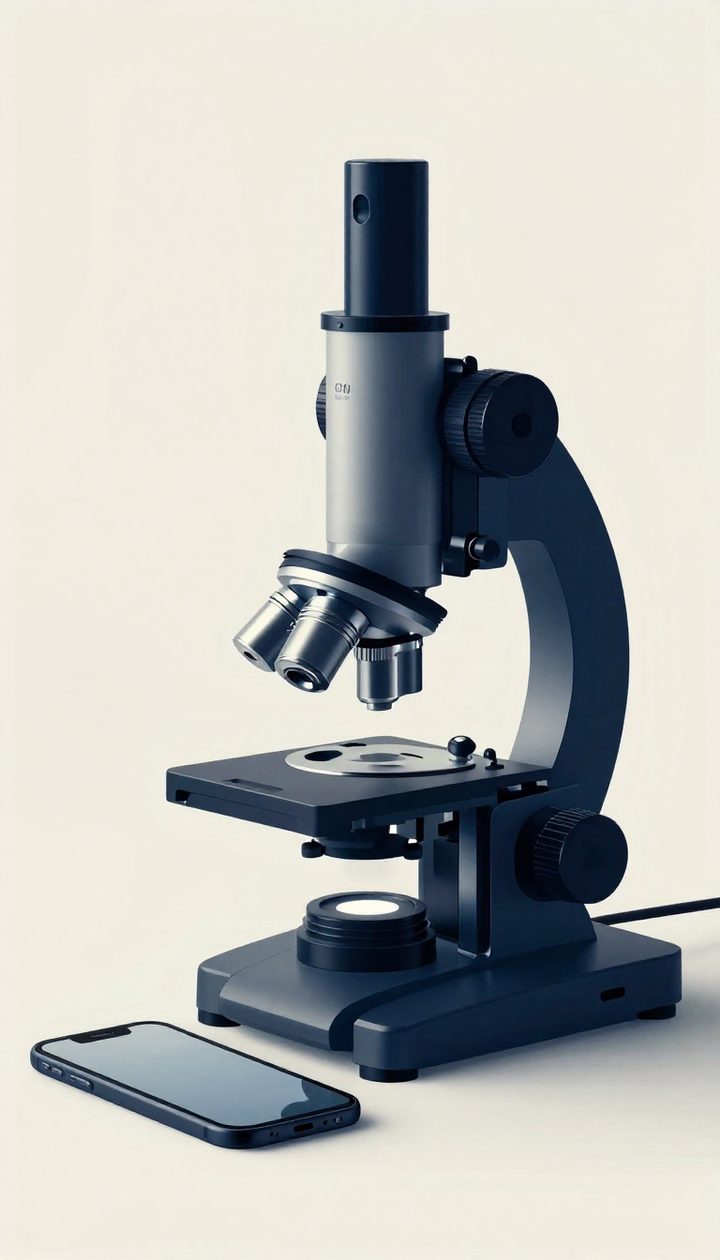
The device, dubbed the "ocular system", connects a smartphone to a microscope via a 3D-printed adapter. The phone's camera captures images of patient samples and an AI model trained to recognize pathogens analyzes them automatically, with no need for a sophisticated laboratory or an on-site specialist. According to data provided by Nakasi's own team, the malaria model achieves 92% specificity (the ability to correctly rule out negative cases) and the cervical cancer model exceeds 94% accuracy; the system is also designed for tuberculosis, although the source gives no results in that case. These are the laboratory's own figures, not those of an independent validation, something worth keeping in mind before taking them as definitive on a national scale.
"One of the factors that worsens the burden of these diseases is that we lack simple, fast, accessible and accurate diagnostics," Nakasi explained. "If a disease is not correctly diagnosed, you never get to the right treatment or care." It is a sentence that sums up the structural problem: across much of sub-Saharan Africa, what is missing is not only treatment, but knowing in time what is happening.
At the same webinar, Rwandan agroforestry specialist Clémence Uwamutarambirwa presented her Smart Potato Greenhouse Technology, a system of sensors installed in greenhouses that continuously measure temperature, humidity and soil moisture and send the data to a cloud platform. Farmers receive alerts on their phones and can switch on irrigation remotely. The system also incorporates hydroponic growing —potatoes grow in liquid nutrient solutions instead of soil— which, according to the innovator, increases seed potato production, saves water and protects crops from pathogens that normally live in the soil.
Neither the Ugandan diagnostic system nor the Rwandan greenhouse has a big tech company behind it, or a funding round worth hundreds of millions. They are projects born out of local research and innovation, designed for the real conditions of the places where they are used. Margaret Karembu, director of ISAAA AfriCenter and president of Africa Women for Biosciences, used the event —with more than 50 participants including scientists, farmers, journalists and public officials— to call for the push for women in science and technology not to rest on women alone: "it requires the support of men, as colleagues, supervisors, mentors and institutional leaders," she said.
Our take: this is, almost to the letter, the low-profile version of Zendoric's underlying thesis about AI. We are not talking about a frontier model competing on benchmarks, but about a very concrete application that tackles two of the fronts where this technology's long-term promise is most at stake: early disease detection and food security. A 3D-printed adapter and a model trained to recognize parasites in a microscope image do not sound spectacular, but this is exactly the kind of "appropriate" innovation —cheap, replicable, adapted to context— that can move the needle in public health more than yet another conversational assistant.
That said, it is worth keeping the real scale of the announcement in view: this is a deployment in a single country, in a little over 35 health centers, with no per-unit cost figures, no mention of regulatory validation by a national health authority or the World Health Organization, and no detail on who funds the maintenance of sensors and adapters once the research phase ends. It is the usual pattern for health tech in the Global South: the leap from a successful pilot to sustained national coverage is the stretch where most of these initiatives fail, not the technology itself. Short-term honesty requires putting it plainly: promising, but still at demonstration scale.
As sector context, this story also serves as a counterweight to a narrative dominated almost exclusively by the multibillion-dollar data center investments of OpenAI, Anthropic or Google. The abundance we defend as AI's horizon is not measured only in the parameters of a frontier model: it is also measured by whether a midwife in a rural Ugandan health center can diagnose cervical cancer with the phone already in her pocket, or whether a Rwandan farmer can save his potato harvest with an alert on his phone. That is the ground on which Zendoric's long-term thesis —less disease, more food, more time for what matters— stops being a headline and starts to look like a roadmap.
📚 Go deeper

An MIT computer scientist connects AI, quantum physics and video games to take an uncomfortable question seriously: what if we live in a simulation? M

DeepMind co-founder on the dilemma of containing technologies that do not want to be contained.
As an Amazon Associate, Zendoric earns from qualifying purchases; the price does not change for you. · all our recommended books →
🔗 Related on Zendoric
- The Economist: chip manufacturing turns vertical as Silicon Valley-style miniaturization runs out · 2026-07-10
- AI to detect cancer at Posadas Hospital: the official announcement arrives without data to back it up · 2026-07-19
- Biobío creates Latin America's first AI doctorate and puts AI to work diagnosing cancer at a public hospital · 2026-09-02