How kids feel about AI, in their own words

🕒 Published on Zendoric: September 4, 2026 · 09:12
✨ AI-generated · how it's made
The article, published by MIT Technology Review as part of its special issue on childhood and adolescence, gathers direct interviews with boys and girls aged 10 to 18 in the United States and Canada about their relationship with artificial intelligence.
📚 Go deeper
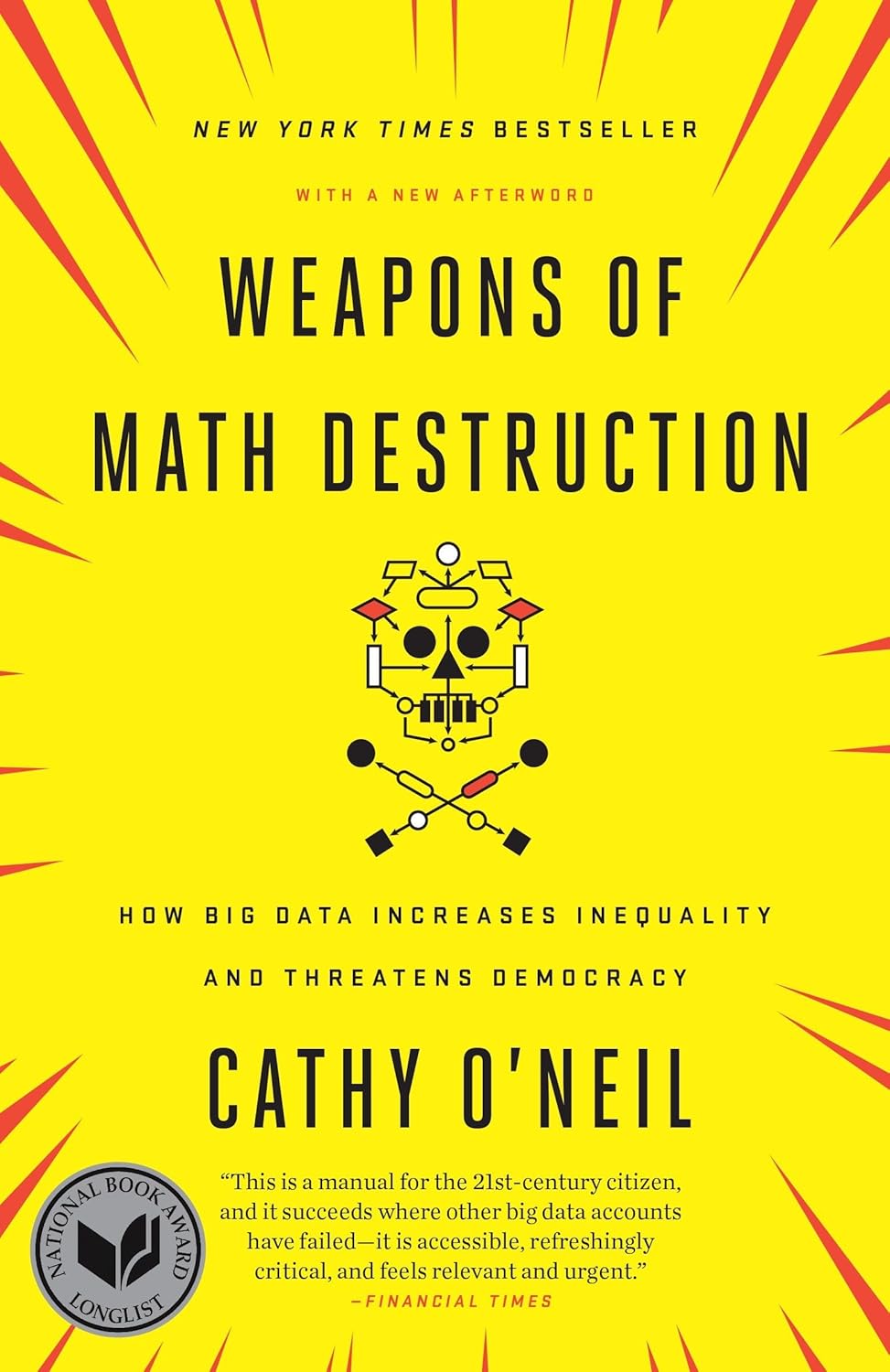
How opaque algorithms decide who gets credit, a job or parole — and why they tend to punish the same people.
As an Amazon Associate, Zendoric earns from qualifying purchases; the price does not change for you. · all our recommended books →
The article, published by MIT Technology Review as part of its special issue on childhood and adolescence, gathers direct interviews with boys and girls aged 10 to 18 in the United States and Canada about their relationship with artificial intelligence. The authors, journalists who also run an independent print magazine for preteens and teenagers, explain that they set out with specific expectations — they expected stories of academic cheating in the style of earlier generations with CliffsNotes or programmable calculators, and generic worries about deepfakes or job losses — but instead found a far more nuanced picture, ranging from outright rejection to creative and entrepreneurial use.
One of the central findings is that AI does not appear to be, for most younger children, an object of desire comparable to an iPhone or a Snapchat account. Many came across it through their parents or school, or simply find it already built into tools they use daily, such as Google search. The article cites a Pew Research Center survey published in February 2026: 57% of American teenagers had used chatbots to look up information, 54% for schoolwork and 47% for fun or entertainment, while only 12% had used them for emotional support or advice. In other words, by that measure teenagers are more than four times as likely to use AI in harmless ways as in potentially problematic ones.
The authors take a clear stance against moral panic: danger is a reason to teach people how to use the tool, not to avoid it, in the same way you do not teach a teenager never to drive, but to check the blind spots. And they stress that what surprised them most was how well the young people themselves are able to draw lines about which parts of their thinking, their creativity or their social life they are willing to delegate to a machine and which they are not.
Among the testimonies collected, one standout is Remy, 16 (New York), a programmer who describes himself as 'indifferent' to AI in his personal life: he practices taekwondo, reads and hangs out with friends without needing it, though he uses the free version of Claude for coding projects outside school, such as adjusting his computer's overclock. At school, however, he believes AI has made his assignments worse, because teachers, fearing chatbot use, now confine essays to 70-minute in-class exams, which in his view hurts his writing. He also mentions that Princeton voted to allow faculty to proctor in-person exams for the first time in more than a century, breaking an 1893 honor code, precisely because of the arrival of AI. As an example of the risks, he recounts how a group of hackers manipulated Instagram's chatbot to reset the passwords of famous accounts, such as Obama's, and post content from them. Remy compares AI's current state to the first cars or airplanes: a fascinating invention but still crude.
Danielle, 18 (California), studies engineering and works on a project called Next Voters alongside a team of more technically oriented peers, while she handles scaling: a system of AI agents that crawls official city and state websites, verifies the authenticity of the sources, updates them weekly, classifies them by topics such as civil rights, immigration or the economy, and writes a weekly newsletter that turns lengthy official documents into clear, cited summaries. Her goal is to lower the barriers to democratic participation, especially after noticing in her English class that a classmate did not know there was a war in Ukraine. For her, AI is neither good nor bad in itself — it depends on who uses it — and her project seeks to 'deal the cards' of information so that young people think critically for themselves, rather than having AI think for them. What worries her most is the impact of disinformation and of biases amplified by excessive trust in AI.
At the opposite extreme is Hazel, 17 (New York), who sums up her feeling about AI in a single word: 'angry,' and whose advice to other kids is simply 'stop using it.' A climbing and hiking enthusiast, she is most concerned about the environmental impact of the data centers that sustain AI: the massive water consumption drawn from local communities and the heat those facilities generate, capable of raising the surrounding temperature. As a form of everyday protest, she avoids interacting with AI every time it appears, though she admits it feels isolating when everyone around her is using it.
Wesley, 14 (Ohio), presented in the article as 'the storyteller,' wants his creativity to remain entirely his own: he uses AI only for technical tasks, such as checking the grammar of a story or debugging a game he programmed, but never to generate creative content. He does admit to using Character.AI for fun, a platform where users create characters with profiles and share them publicly to interact with them; he himself joined a pirate crew inspired by One Piece, the series he watches on Netflix. He warns that the platform's content is fairly unfiltered and that it pays to be careful about what you explore, and he points to a technical limitation: in the free version, conversation memory runs out and the chatbot starts to lose the thread if the chat goes on too long.
Sylvia, 10 (Michigan), represents the most childlike and innocent view: she has not used ChatGPT or Claude herself, though her mother has, and she compares AI to a calculator that does things for you. It bothers her that AI can deceive, as when her mother discovered that some songs she liked on Spotify had been composed entirely by AI. At school she uses a tool called SchoolAI to get ideas or help revising her writing, but she insists that drawing and songwriting — her great passions — are things she wants to keep doing herself.
Evelyn, 13 (Oregon), brings a very personal medical perspective: diagnosed with type 1 diabetes in January, her glucose monitor and insulin pump communicate with each other through AI to predict and automatically adjust doses, anticipating rises or drops in blood sugar and alerting her at night if her level falls. Before she had the pump, she suffered hypoglycemia episodes almost every night; now she sleeps better thanks to that system. She also uses AI to count carbohydrates when cooking or as study support, though she says flatly that she would never want AI to be her doctor. She describes herself as moderately optimistic: she believes the benefits outweigh the risks and that humans are still in control of the technology.
Finally, Krishiv, 18 (Ontario, Canada), is the most entrepreneurial profile: as a child he built worlds in Minecraft and games in Scratch, and on reaching high school, unable to access a Khan Academy AI tutor that was stuck at the waiting-list stage, he decided to create his own, called Aceflow, capable of turning class videos, PDFs or slides into unlimited practice questions with explanations in the teacher's style. The tool, which he began sharing on TikTok, drew thousands of users and opened doors for him: part-time jobs at the Canadian AI company BenchSci and at the venture capital firm Simple Ventures, participation in an MIT AI lab, co-teaching a course on AI agents with an MIT professor, and the launch of an SAT prep platform called CheetahPrep.com. He argues that his AI tutor democratizes something previously available only to families with the means to pay for private tutors, recalling an experience in eighth grade teaching programming to a group of students with special needs who ended up creating surprising video games with personalized attention. Even so, he admits that other kids' initial fear of AI is an important signal that should not be ignored.
The report also includes a playful element, a 'Cringe-o-meter' in which the young people themselves rate different uses of AI, from completely acceptable to unacceptable, although the downloaded text does not detail the specific scores assigned to each use.
In conclusion, the authors note that, unlike what many adults assume, these young people fear less that AI will take their jobs than that it will harm society as a whole, and that most of them, even those who use it fluently, want to keep control over their own thinking, their voice and their relationships. The article closes with an editorial correction: an earlier version had misstated the age of Krishiv, who was 18 at the time of publication.
📚 Go deeper
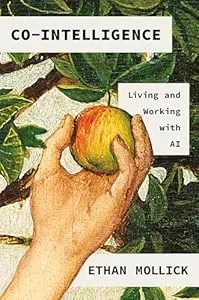
The best starting book if you're not technical: a Wharton professor explains how to work WITH AI — when to delegate, when to supervise, when to keep i
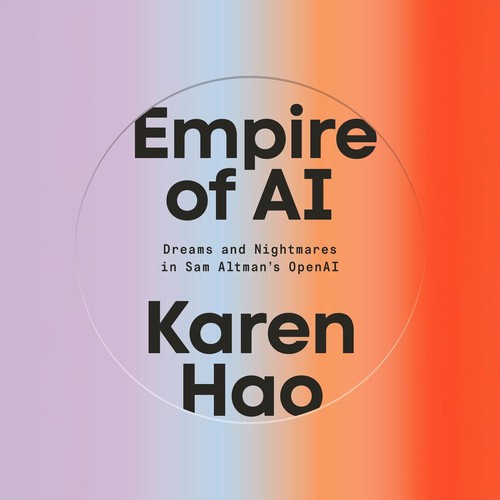
The definitive piece of investigative journalism on OpenAI: 260+ interviews, the clash between safety and speed, and the attempted firing of Sam Altma
As an Amazon Associate, Zendoric earns from qualifying purchases; the price does not change for you. · all our recommended books →
🔗 Related on Zendoric