Florida and Texas rein in Flock: when AI surveillance becomes a Republican campaign issue
🕒 Published on Zendoric: September 4, 2026 · 09:12
✨ AI-generated · how it's made
Florida is barring police from installing license-plate-reading cameras on its highways and revoking permits already granted. The shift, driven by two Republican governors, exposes an unprecedented rift between tough-on-crime politics and opposition to mass surveillance.
📚 Go deeper

The definitive piece of investigative journalism on OpenAI: 260+ interviews, the clash between safety and speed, and the attempted firing of Sam Altma
As an Amazon Associate, Zendoric earns from qualifying purchases; the price does not change for you. · all our recommended books →
By Reuters · September 3, 2026.
Florida's Department of Transportation has announced that it will revoke existing permits for automatic license plate reader (ALPR) cameras on state highways and will stop issuing new ones. The reason, according to the memo published this week, is the "exponential increase" in these devices together with "troubling reports of misuse, data privacy concerns and surveillance schemes." The move comes days after Governor Ron DeSantis said the use of these cameras "has gotten out of control."
The company behind most of these deployments is Atlanta-based Flock Safety: a network of some 120,000 AI-powered cameras installed on streets and highways in 49 US states, which automatically photograph and log every license plate that passes in front of them. They are marketed as a tool for police to identify and locate vehicles linked to crimes, but they are in the spotlight over improper use by some police departments and for violating citizens' privacy, according to the criticism cited by the source.
Florida is not an isolated case. Last week, Texas Governor Greg Abbott —also a Republican— ordered state agencies to pause funding for Flock cameras. That it is two Republican governors, and not Democrats, leading the pushback is the detail that should draw the most attention: it breaks the usual script in which police surveillance is associated with the right and opposition to it with the left.
Flock Safety has responded by defending its technology as a "critical public safety tool" that helps solve crimes in Florida and across the country, and has explicitly asked not to be banned but to be regulated: "we support thoughtful legislation and strong safeguards on privacy, transparency and accountability that allow the technology to be used responsibly without giving up law enforcement's ability to protect people," according to its statement.
The backdrop is broader than Florida or Texas. Alongside AI data centers, Flock's cameras have become a hot-button issue in this year's midterm elections, with candidates attacking their rivals over their ties to the technology. A Reuters/Ipsos poll that closed on Monday portrays a divided society: 38% of Americans support the use of Flock cameras in their community, against 47% who oppose them. Support is strongest among Republicans (54% in favor), while exactly the same percentage of Democrats say they are against.
That paradox —Republicans divided among themselves, with party governors at odds with their own base, which is more inclined toward "order"— is the most interesting piece of this story. Automated surveillance activates two instincts that coexist badly within the same electorate: distrust of a state that logs the movements of every car, and the demand for forceful tools against crime. When technology scales as fast as Flock's network has —up to 120,000 cameras in 49 states— that tension erupts before a legal framework exists to absorb it.
Our reading is that this episode fits a pattern we have already seen with other AI applications that make decisions about people: the problem is not so much the technical capability -reading a license plate accurately is not the most sophisticated thing AI does today- as the absence of guardrails proportional to the scale of the deployment. Without clear limits on how long the data is retained, who can query it, for which cases and with what judicial oversight, any mass sensor network ends up generating the same cycle: accelerated adoption, cases of misuse, political backlash and, finally, bans that are often clumsier than the regulation that could have been put in place in time. It is the same script, a different actor, that we have seen with algorithmic moderation without appeal or with AI agents deployed without adequate permission layers: governance arrives after the reputational damage, not before.
In the short term, it is foreseeable that more states will follow Florida and Texas before the November elections, and that Flock Safety itself will end up pushing for minimum federal legislation -transparency about what is captured, access audits, retention limits- rather than face a state-by-state patchwork of bans that fragments its business. In the long run, recognition tools like this one can be a legitimate part of a safer society if institutional design keeps pace with technical capability: AI surveillance does not have to be synonymous with an opaque state, but it will only stop being one when accountability is built with the same rigor as the camera system itself.
📚 Go deeper
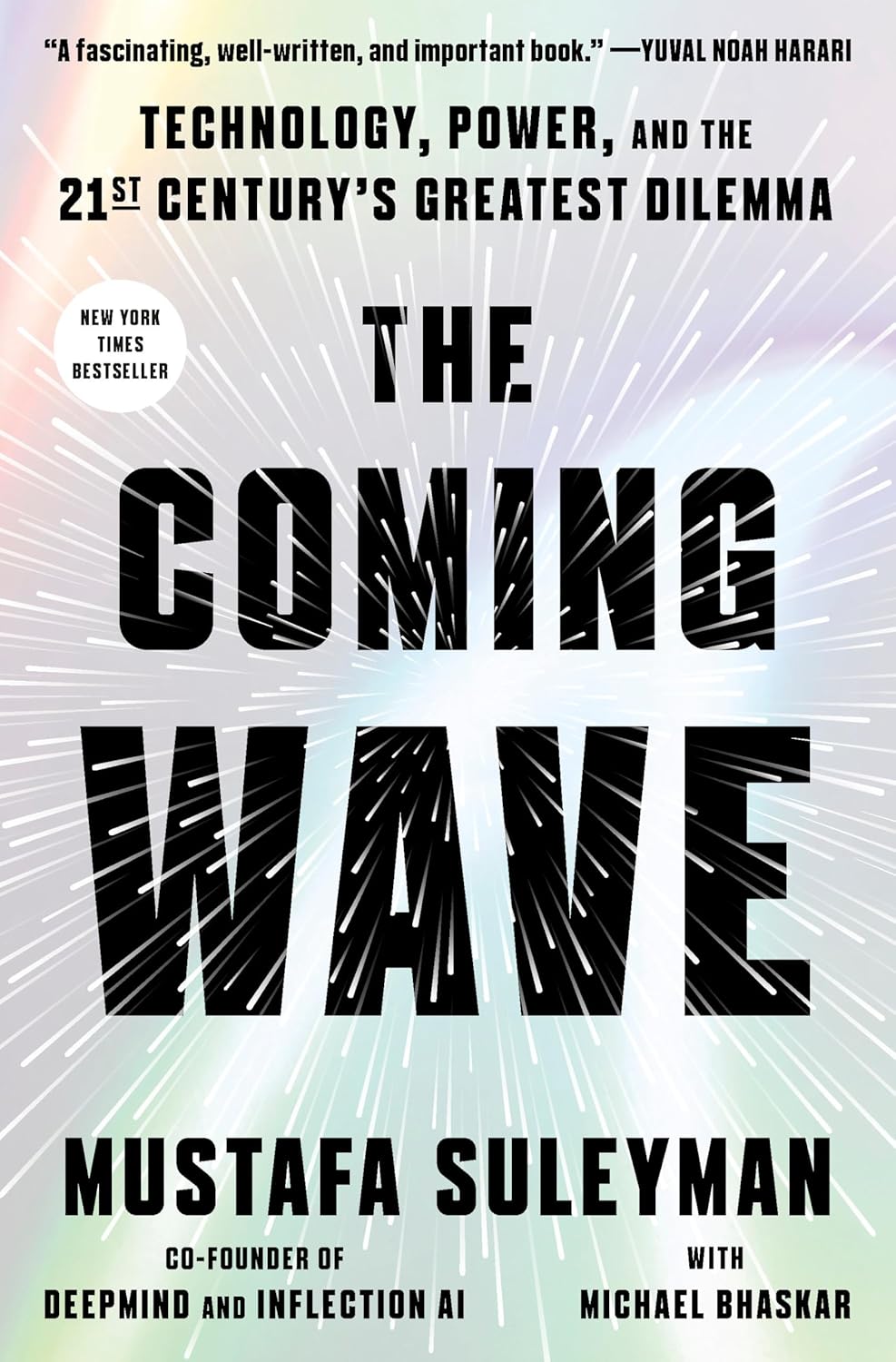
DeepMind co-founder on the dilemma of containing technologies that do not want to be contained.

AI as the latest chapter in the history of information networks, from gossip to the printing press to the algorithm.
As an Amazon Associate, Zendoric earns from qualifying purchases; the price does not change for you. · all our recommended books →
🔗 Related on Zendoric
- Students rebel against Flock Safety and its network of AI cameras that read license plates · 2026-07-20
- Flock's AI surveillance network is booming in the US, and not everyone wants it on their street anymore · 2026-09-02
- Celaya bets on an AI command center: predictive surveillance with accountability still pending · 2026-06-26