AvanteLab: Anthropic enters Central America with a plan to retrain jobs, not just automate them

🕒 Published on Zendoric: September 2, 2026 · 08:27
✨ AI-generated · how it's made
Dojo Coding and Garnier & Garnier are launching AvanteLab in Costa Rica, Central America's first agentic AI company, partnered with Anthropic. Behind the corporate announcement lies a more interesting bet: training talent before automation hits the region's administrative jobs.
📚 Go deeper

The best starting book if you're not technical: a Wharton professor explains how to work WITH AI — when to delegate, when to supervise, when to keep i
As an Amazon Associate, Zendoric earns from qualifying purchases; the price does not change for you. · all our recommended books →
By Zendoric · September 1, 2026.
Dojo Coding, a developer training school in Latin America, and Garnier & Garnier, a Costa Rican real estate group with three decades of experience, have created AvanteLab, presented as the first Central American company dedicated to the development and implementation of agentic AI —systems capable of carrying out tasks and processes with a greater degree of autonomy— at companies in the region. The new firm launches with a technology partnership with Anthropic, the AI research company behind the Claude models, which gives it access to build solutions on that technology under international security and reliability standards.
AvanteLab combines two arms: implementing AI agents in business processes and training programs to reskill its clients' teams toward higher-value roles. The latter draws on Forward Costa Rica, the software development training initiative driven by Garnier & Garnier, which, according to the company itself, has already trained more than 1,000 young people. The four founders —Philippe Garnier, Daniel Bejarano, Juan C. Guerrero and Roberto Solano— frame Costa Rica as a bridgehead for later expansion into the rest of Central America.
Broadly, much of the growth in service-sector employment in Costa Rica and its neighbors has been built on shared services and contact centers for multinationals: support, back-office work, repetitive administrative processes exported from the United States and Europe for their cost and their bilingual human capital. That is exactly the kind of task agentic AI automates first, because these are structured workflows with clear rules, not expert judgment or in-person service. That the local response arrives packaged as "talent reskilling" and not merely as a software sale is, in that context, the right decision: it acknowledges the problem instead of sidestepping it.
The move also fits a broader pattern in how frontier AI labs are scaling outside their core markets: instead of opening its own office in every country, Anthropic delegates to local integrators —here, a company formed by developer educators and a business group with a regional contact network— the job of translating the technology into the real needs of mid-sized companies that have no in-house AI team. It is the same "whoever controls distribution wins" logic we already saw in the fight among the big platforms to integrate agents: in emerging markets, distribution is done by local partners, not by the lab.
Our reading is that the real value of this announcement lies not in the technology —building agents on top of Claude is today an exercise dozens of consultancies offer in any geography— but in whether the reskilling side is executed at the scale and speed the threat demands. A thousand young people trained in previous years by Forward Costa Rica is a modest figure against the volume of administrative and contact center employment that sustains the Central American services economy. The "higher-value roles" narrative only holds if the training arrives before automation displaces today's jobs, not after. It is the same dilemma we have documented sector by sector: the short term is hard for anyone doing routine tasks, and no corporate alliance resolves it by decree.
That said, the case deserves following because it is an experiment with real stakes: if Central America manages to reskill talent at the pace of agentic AI adoption, it becomes a replicable model for other small, open economies that depend on exported services. If the training cannot keep up, the result will be a sharper gap between those who move into agent supervision and design roles and those left in tasks that no longer exist. AvanteLab is, for now, a newly incorporated startup with a launch press release; its impact will be measured in how many of those thousand-odd trained young people end up actually employed in something AI does not do better than they do.
📚 Go deeper
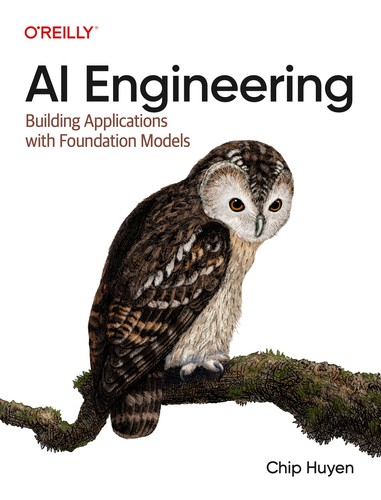
The reference manual for building products on top of AI models: prompts, RAG, fine-tuning, agents, evaluation and deployment.

How opaque algorithms decide who gets credit, a job or parole — and why they tend to punish the same people.
As an Amazon Associate, Zendoric earns from qualifying purchases; the price does not change for you. · all our recommended books →
🔗 Related on Zendoric
- Anthropic, both accuser and accused: the complaint against Alibaba lands amid a regulatory storm · 2026-06-26
- Meta enters the agentic AI price war: Muse Spark 1.1 arrives with a discount and its own cage · 2026-07-10
- MiTAC shows at WAIC what really holds back agentic AI: it's not the chips, it's the cooling · 2026-07-18