Meta enters the agentic AI price war: Muse Spark 1.1 arrives with a discount and its own cage

🕒 Published on Zendoric: July 10, 2026 · 00:24
✨ AI-generated · how it's made
Meta is charging for one of its models for the first time, and does so with an aggressive price cut against Anthropic and OpenAI. But the model is only distributed in-house: the competition is no longer just about intelligence, it's about who controls the pipe.
📚 Go deeper
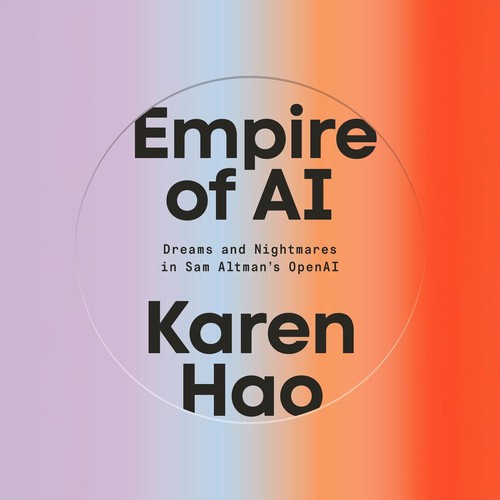
The definitive piece of investigative journalism on OpenAI: 260+ interviews, the clash between safety and speed, and the attempted firing of Sam Altma
As an Amazon Associate, Zendoric earns from qualifying purchases; the price does not change for you. · all our recommended books →
By Quartz · July 9, 2026.
Meta launched a paid public API for Muse Spark 1.1 on Thursday, its first AI model for which the company charges third parties. The price: $1.25 per million input tokens and $4.25 per million output, with $20 in free credit to get started. According to Bloomberg, Mark Zuckerberg put that rate at roughly a quarter of what Anthropic and OpenAI charge for comparable models, and Alexandr Wang, who leads Meta Superintelligence Labs, called it "very aggressive and attractive" on CNBC. Access comes through a developer portal in public preview, with early partners such as Replit, Cline and Box already onboard and a waitlist for the rest. One important nuance: Meta has said that, for now, it will not distribute the model on external platforms like OpenRouter, keeping access confined to its own properties.
The model is designed for agentic and coding work —tasks the AI completes autonomously across multiple steps—, with a one-million-token context window and the ability to run several subagents at once. It is version 1.1 (internal codename "Avocado") of the original Muse Spark released in April, which arrived as a restricted-access proprietary model with coding flagged as its weak point. That turn toward a closed model marks a break with the open Llama strategy that defined Meta for years; an open source version of Muse Spark remains "in development," according to Wang, but with no date. Meanwhile, a next-generation model is already being trained under the name "Watermelon," whose existence Zuckerberg and Wang confirm without committing to a timeline.
Zuckerberg claimed the model beats Google's Gemini on agent, coding and multimodal task benchmarks, and described its agentic reasoning as "state of the art or very close to it." That claim is worth treating with the usual caution: it is the company itself evaluating its own product, with no publicly verifiable methodology in the article, and the pattern of self-selected favorable comparisons is a constant in this sector — we have already seen it with "voter-optimized" Elos in other launches. Our stance as always: measure before buying the narrative, and here the scoreboard is not yet on the table.
What is a verifiable and significant fact is the price, and that is where the real strategic news lies. Meta doesn't need Muse Spark to be the best model on the market; it needs it to be good enough and far cheaper, in order to force a price war in the agentic-coding segment that today underpins much of Anthropic's and OpenAI's revenue. It's a classic move by a player with its own cash and infrastructure (and with the added pressure of Wall Street questioning Meta's AI spending, which this launch and Tuesday's Muse Image release aim to justify with signs of return). But the OpenRouter block reveals the other side: Meta is not competing solely for the best model, it is competing to control distribution and keep the developer inside its own garden. It's the same pattern we already pointed to when analyzing the de facto alliance between Google and Microsoft against OpenAI and Anthropic — the dispute shifts from which model reasons better to who controls the plumbing the agents run through.
Our read: in the short term this is good for the developer's wallet and bad for their freedom of choice — lower prices, but tied to the platform of whoever offers them, with the risk of fragmentation the agent ecosystem is already experiencing. In the medium term, it squeezes Anthropic's and OpenAI's margins in the coding segment, which is today the most contested and most profitable in the applied-AI business. But within the frame of our underlying thesis, this price war —just like the open-weight race led by Chinese models— is exactly the kind of deflationary pressure on cost per token that, sustained over time, brings computational abundance closer: the cheaper it becomes to automate code and routine tasks, the more resources are freed up for people and companies to devote themselves to what truly requires human judgment. The road there passes, inevitably, through episodes like this one: giants fighting over the price of the token while deciding, in parallel, who keeps the keys to the garden.
📚 Go deeper
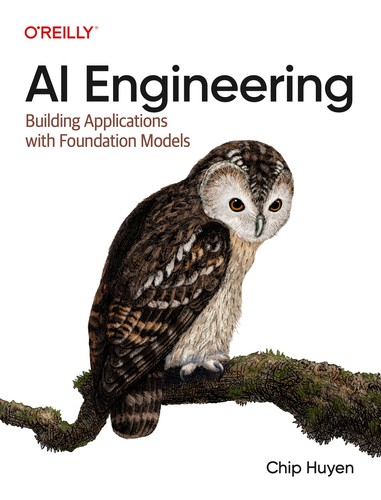
The reference manual for building products on top of AI models: prompts, RAG, fine-tuning, agents, evaluation and deployment.
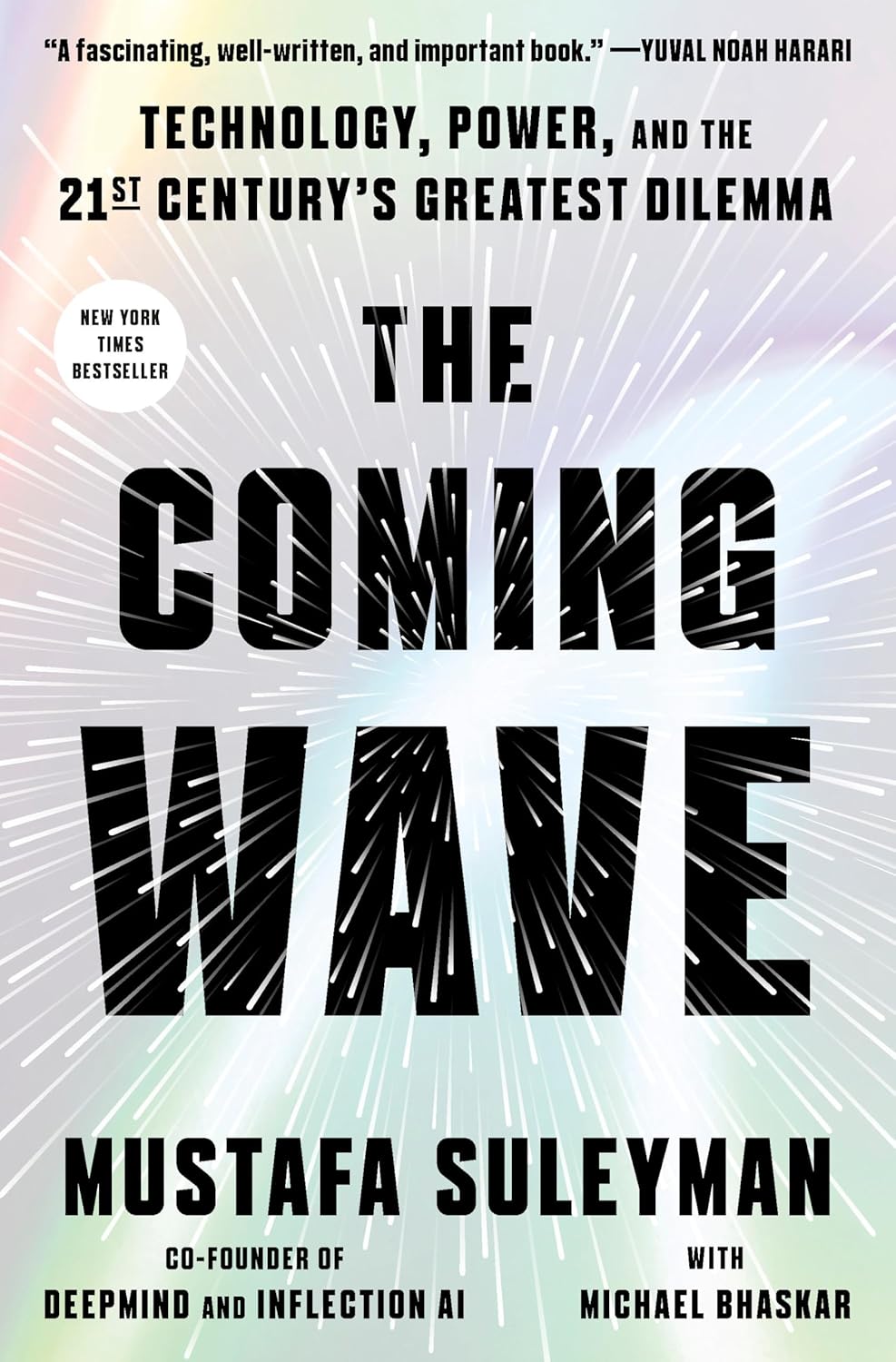
DeepMind co-founder on the dilemma of containing technologies that do not want to be contained.
As an Amazon Associate, Zendoric earns from qualifying purchases; the price does not change for you. · all our recommended books →
🔗 Related on Zendoric
- Meta starts charging for its AI: it launches the paid Muse Spark 1.1 API to take on Anthropic and OpenAI · 2026-07-11
- The distillation wars: why frontier labs now fight ghost armies of fake accounts · 2026-07-11
- Claude Sonnet 5 makes agentic AI cheaper: the battle is no longer the benchmark, it's who integrates best · 2026-07-17