Atlassian bets big on India as AI transforms software development

🕒 Published on Zendoric: September 2, 2026 · 08:27
✨ AI-generated · how it's made
Atlassian is consolidating its development center in India as a strategic research and development hub, in parallel with the expanding use of artificial intelligence agents within the company and the development of products built on its Teamwork Graph technology.
📚 Go deeper

The best starting book if you're not technical: a Wharton professor explains how to work WITH AI — when to delegate, when to supervise, when to keep i
As an Amazon Associate, Zendoric earns from qualifying purchases; the price does not change for you. · all our recommended books →
Atlassian is consolidating its development center in India as a strategic research and development hub, in parallel with the expanding use of artificial intelligence agents within the company and the development of products built on its Teamwork Graph technology. This was explained by Vikram Rao, CTO of Enterprise and Chief Trust Officer at Atlassian, who detailed that the Indian site already exceeds 2,700 employees, with a significant share of staff working in engineering, product and design, while the company is also expanding its sales headcount in the country.
Atlassian's commitment to India became visible in September 2025, when the company announced a new R&D center in Bengaluru. The new facilities occupy more than 2 lakh square feet (some 200,000 square feet), that is, four times the size of the company's previous office in that city. The teams based there are responsible for several of Atlassian's core product and technology areas, including its Service Collection line, the machine learning platform and search capabilities.
According to Rao, Service Collection is a core product line that generates more than a billion dollars in revenue and operates mainly in IT service management, covering both DevOps and IT Ops, and runs entirely out of India. "The entire team — engineering, product, design — is here. It is a core product line," he said. He also noted that teams working on the machine learning platform that powers the company's AI stack operate in the country, as well as a team dedicated to search, an area he considers central to Atlassian's mission. In his words, India has a strategic component that generates direct revenue for the company.
A central thread of the interview is how the rapid improvement of AI-assisted software development is lowering the barrier to creating software, but shifting the challenge toward deciding what software to build and how to manage the resulting workflows. Rao sums it up this way: "The problem has moved from how you can create software to creating a lot of software quickly. Therefore, what to create becomes important." The idea points to a fundamental shift in the industry: technical execution is being automated, while setting priorities and governing the development process gain relative weight.
This shift is also redefining the role of software engineers and other knowledge workers within the company. According to Rao, engineers are moving from writing code manually toward directing and evaluating AI agents, although human expertise in architecture, design and judgment remains important. "Earlier, an engineer was hands-on, writing code. This has shifted toward the engineer being the person who orchestrates agents and tells the agent what to do, giving it the right information so it can deliver the outcome," he explained.
As for hiring plans, Atlassian expects to keep expanding its operations in India, with additions in both engineering and sales. Rao mentioned that the company has had success recruiting directly at Indian universities, and stressed that new graduates bring an advantage as "AI-native" workers who can help Atlassian adapt its products and engineering practices. "I have doubled down on bringing in college students. They are extremely talented and quite AI-native," he said.
Taken together, Atlassian's case illustrates a broader trend among large software companies: rather than seeing generative AI as a threat to development centers in markets such as India, they are using it as an argument to deepen investment there, betting on young talent already familiar with these tools and redefining engineering work toward supervising and orchestrating agents instead of writing code by hand.
📚 Go deeper

How opaque algorithms decide who gets credit, a job or parole — and why they tend to punish the same people.
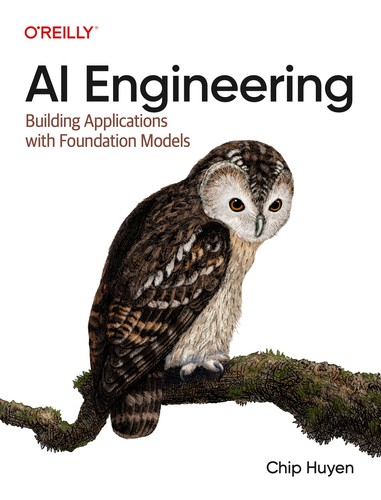
The reference manual for building products on top of AI models: prompts, RAG, fine-tuning, agents, evaluation and deployment.
As an Amazon Associate, Zendoric earns from qualifying purchases; the price does not change for you. · all our recommended books →
🔗 Related on Zendoric