The Marine Corps bets on AI and robots for 2040, but insists the soldier remains central

🕒 Published on Zendoric: September 1, 2026 · 00:48
✨ AI-generated · how it's made
The US Marine Corps has unveiled its Ground Combat Element 2040 plan, integrating AI, robotics and machine learning into its ground units to operate along contested coastlines facing China and Russia. Leadership insists the technology reinforces the Marine rather than replacing him.
📚 Go deeper
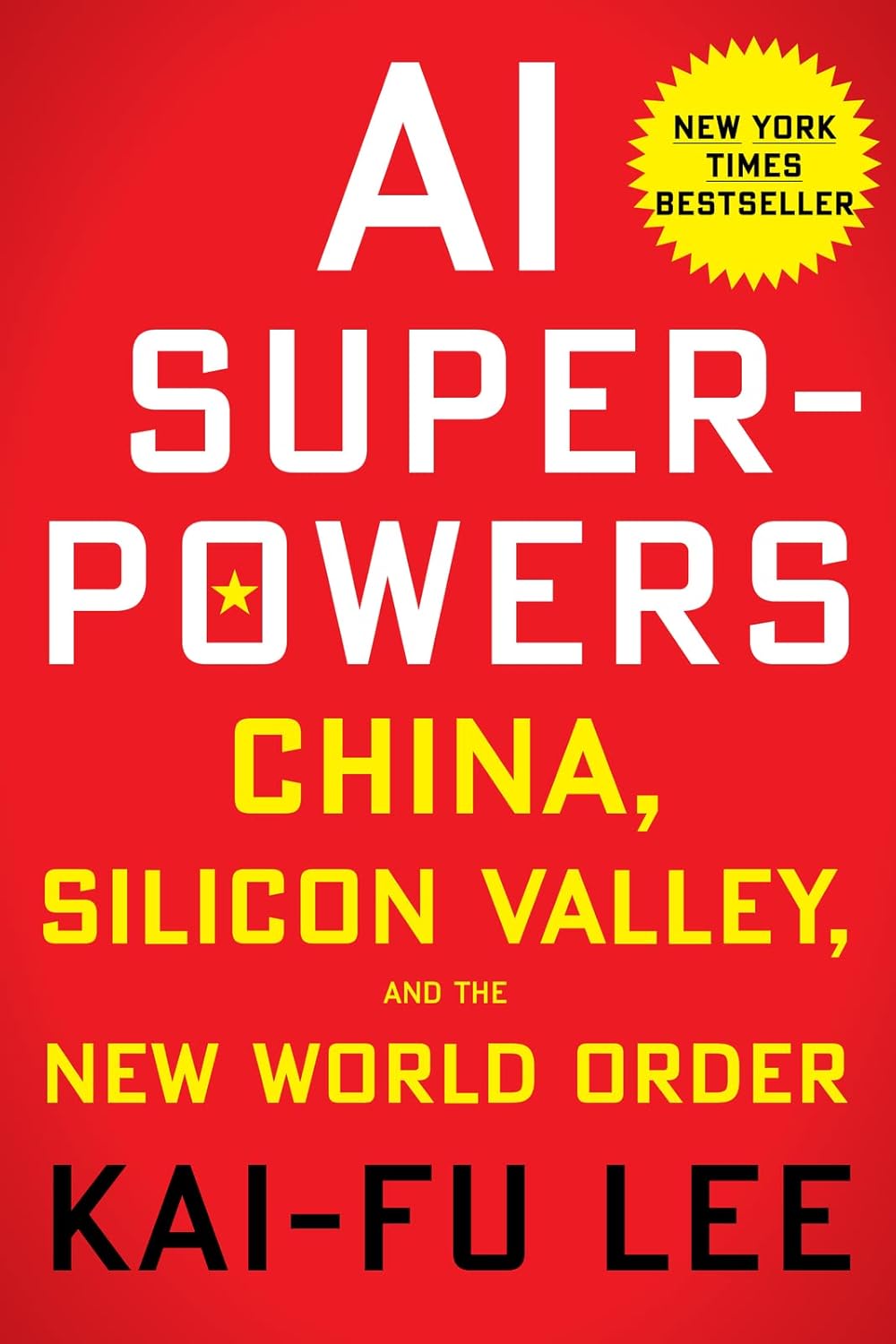
China vs.
As an Amazon Associate, Zendoric earns from qualifying purchases; the price does not change for you. · all our recommended books →
By The Washington Times · August 31, 2026.
The United States Marine Corps has published the report "Ground Combat Element (GCE) 2040 Initiative", a 15-year roadmap to redesign its ground combat units. The goal, according to the document itself, is a modular, multi-domain force capable of operating dispersed across contested coastal areas —what military doctrine calls the "littoral"— against explicitly named adversaries: China and Russia. Artificial intelligence, robotics and machine learning (systems that improve their performance with data without explicit reprogramming) are built in as pillars of that transformation.
This does not come out of nowhere. Under the "Force Design" umbrella, the Marine Corps has spent years shedding heavy tanks and traditional towed artillery, replaced by lighter, expeditionary anti-ship missile units. According to the report itself, GCE 2040 is the next phase of that process: a dispersed, lethal force with "information dominance", prepared for a battlefield where the document anticipates disposable drones, a contested electromagnetic spectrum —constant jamming and electronic warfare— and long-range precision weapons as the norm, not the exception. Lieutenant General Eric E. Austin, deputy commandant for combat development and integration, framed it as a bet on rapid learning, wargaming and experimentation to "reduce risk" in the face of an uncertain future, according to a statement of his cited by the source.
Lieutenant General Jay M. Bargeron, deputy commandant for plans, policies and operations, was explicit about the limit the Corps sets for itself: "we will aggressively pursue innovations in artificial intelligence, robotics and multi-domain operations, but we will never lose sight of the fact that the individual Marine is our most critical asset," he said. It is a deliberate distinction from the "war without soldiers" narrative that sometimes accompanies the debate on drones and autonomy: official US doctrine still anchors the final decision to a human being. It is also worth noting what the document does not specify: there are no budget figures, no specific robotics or AI systems named for deployment, and no verifiable timeline of milestones beyond the generic 2040 horizon. Strictly speaking, it is a vision and force-planning document, not a procurement contract or a demonstration of capability.
What matters for the broader AI debate lies in the context, not in the technical details that are missing. The Pentagon has spent years accelerating programs such as Replicator, designed to field thousands of low-cost autonomous systems, and contractors like Anduril and Palantir have gone from niche suppliers to central pieces of defense strategy. The war in Ukraine has been the great doctrinal accelerator: swarms of cheap drones and intensive electronic warfare have proved on the ground what were, until recently, PowerPoint slides. GCE 2040 is the translation of those lessons into the Marine Corps' corporate language.
Our reading is that the insistence on the "human-centric" is not just public relations: it is the most sensible design safeguard available to an institution integrating autonomy into lethal systems. The short-term risk is not the science fiction of robots deciding to kill on their own, but something more prosaic and already documented in other agentic AI contexts: systems that pursue objectives too literally, with insufficient oversight, in high-pressure environments with little tolerance for error. Keeping the human in the decision loop —and saying so explicitly in a doctrinal document— matters precisely because of that.
The geopolitical framing is not incidental either. Naming China and Russia as the benchmark confirms what we were already seeing on the civilian side of language models: AI competition has become the de facto organizing axis of Washington's military and industrial strategy. The difference is that here "closing the gap" is not measured in coding benchmarks but in the ability to manufacture and deploy cheap autonomous systems at scale, an area where China starts with an industrial edge in drone manufacturing. Over the long term, it is worth keeping some historical perspective: much of the dual-use technology that unsettles us today —from GPS to the internet— was born of military programs and eventually filtered into the civilian economy, including the robotics that now promises to make production and care cheaper. That does not make an AI arms race desirable; the absence of treaties on lethal autonomy and the opacity of these programs are real problems that demand governance, not applause. But it does explain why documents like this one deserve close attention: they are at once where short-term risk is cooked up and a window onto which technologies will, over the years, end up in civilian hands.
📚 Go deeper

The reference manual for building products on top of AI models: prompts, RAG, fine-tuning, agents, evaluation and deployment.

Semiconductors as the oil of the 21st century: history, espionage, and why an island of 23 million people underpins the entire AI economy.
As an Amazon Associate, Zendoric earns from qualifying purchases; the price does not change for you. · all our recommended books →
🔗 Related on Zendoric
- Robots to hold up an inverted pyramid: China's industrial bet in the face of its aging population · 2026-06-27
- The Pentagon formalizes more AI in combat decisions, and the market is already positioning itself · 2026-06-26
- BYD brings computer vision to the blind spot almost no one watches: the ground beneath the car · 2026-06-24