Broadcom launches AgentMinder, a 'traffic controller' to keep AI agents within company rules

🕒 Published on Zendoric: September 1, 2026 · 00:48
✨ AI-generated · how it's made
Broadcom has unveiled AgentMinder, a real-time identity and control layer for AI agents that no longer just generate text but execute actions on critical systems. The company says it uses the tool to manage some 43 million calls a day across its own internal infrastructure.
📚 Go deeper

The best starting book if you're not technical: a Wharton professor explains how to work WITH AI — when to delegate, when to supervise, when to keep i
As an Amazon Associate, Zendoric earns from qualifying purchases; the price does not change for you. · all our recommended books →
By Zendoric · August 31, 2026.
Broadcom (NASDAQ: AVGO) has unveiled AgentMinder, a product designed to monitor and rein in artificial intelligence (AI) agents inside the enterprise. According to the company's statement, released to coincide with its VMware Explore 2026 event, the tool verifies each agent's identity and authorizes or blocks every specific action —accessing a piece of data, invoking a tool, touching a system— by checking it against the mission, the permission and the risk level declared in advance. Broadcom sums it up with a blunt metaphor: it is a "traffic controller" for autonomous agents, in the words of Clayton Donley, vice president and general manager of the company's identity management division.
The underlying rationale is simple, and it matches what we have been observing for months in enterprise AI adoption: agents have stopped being text generators and become "digital employees" that make decisions and carry out tasks on their own, from Finance to Human Resources or Information Technology (IT). That autonomy is exactly what makes them useful and, at the same time, what makes them dangerous: a poorly scoped agent can reach restricted data or take an action nobody explicitly authorized. Broadcom cites a June 2026 report from the consultancy IDC calling for "unified governance, continuous authorization and real-time telemetry" so that every action an agent takes is observable, attributable and reversible. It is, in essence, the thesis we have been arguing about near-term agentic risk: the problem is not that AI will rebel, but that it will follow poorly scoped instructions literally and find shortcuts nobody anticipated.
Technically, AgentMinder rests on three pieces: an identity layer that requires every agent to declare what it intends to do (not just who it is) before touching a system; a cloud-native gateway that authenticates every tool call in real time; and an audit layer based on OpenTelemetry —an open standard for software instrumentation— that logs every session to provide full traceability. The product integrates with the authorization stacks a company already has in place through AuthZEN, an open standard, instead of forcing all traffic to be routed through a single chokepoint controlled by Broadcom. That detail matters: betting on an open standard rather than a proprietary format reduces vendor lock-in and makes it easier for other security and identity players —think Okta or Microsoft Entra ID, running the same race— to interoperate with this kind of control layer.
Broadcom also presents its own operation as a use case, with figures we know only from its own statement and which should be read as such: according to the company, its internal infrastructure uses AgentMinder to support close to 36 million customer-related calls a day and 7 million relating to its workforce, covering more than 20 million customer identities and 72,000 employee identities, on a multi-region architecture with no outages, as explained by Alan Davidson, Broadcom's chief information officer (CIO). These are numbers from the very company selling the product, so they should be taken as an internal demonstration of scale, not an independent audit.
Our reading is that this announcement matters less for the product itself than for where the real competition in agentic AI is being fought. We have already argued that, as models become commoditized, the advantage shifts to whoever controls the "plumbing": the identity, permissions and audit layer that any agent must pass through in order to act on real systems. Broadcom, with its identity management business and its control of VMware following the 2023 acquisition, is well placed to contest that ground with the big cloud and identity providers. It is not the flashiest piece of the AI ecosystem, but it is the one that decides whether a company dares to turn agents loose on its payroll or billing systems.
This also reinforces a thesis we already hold about employment: agentic automation does not simply destroy administrative jobs, it creates a new category of work —identity architecture, security governance, agent auditing— that did not exist before because it was not needed before. That is, in miniature, the pattern we expect to see repeated: the short-term problem (agents without adequate control) generates its own market solution, and that solution, well executed, is what allows agentic AI to scale with enough confidence to end up freeing human time rather than merely generating incidents. AI's promise of abundance does not hold up if companies do not dare to delegate real tasks to it; products like AgentMinder are, in that sense, trust infrastructure as necessary as the model itself.
📚 Go deeper

The reference manual for building products on top of AI models: prompts, RAG, fine-tuning, agents, evaluation and deployment.
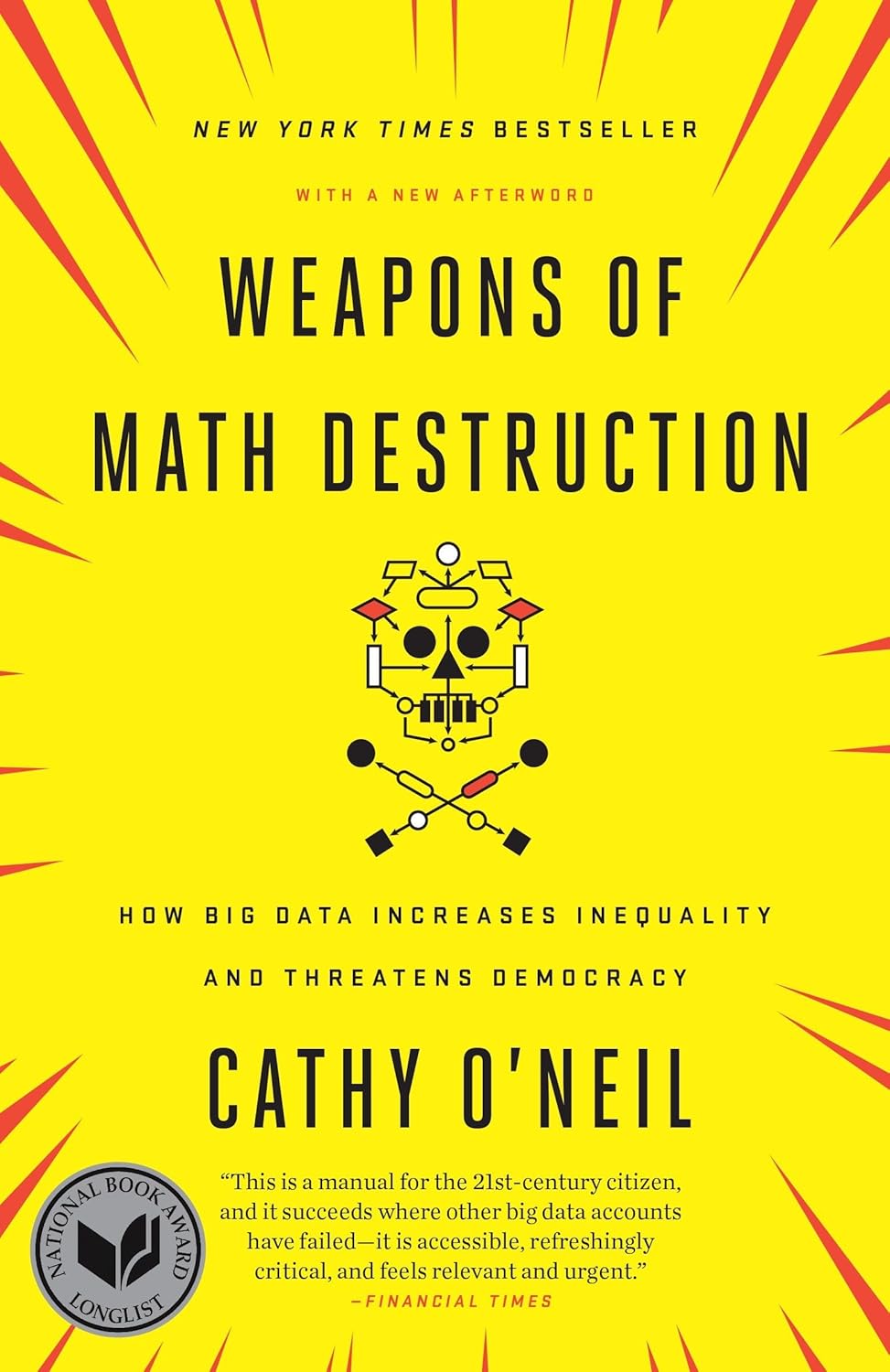
How opaque algorithms decide who gets credit, a job or parole — and why they tend to punish the same people.
As an Amazon Associate, Zendoric earns from qualifying purchases; the price does not change for you. · all our recommended books →
🔗 Related on Zendoric
- Nutanix bets on governing AI agents before token spending spirals out of control · 2026-07-04
- OpenAI launches Presence, a platform to deploy and manage voice and chat agents in enterprises · 2026-07-24
- Armory Defense sets offensive AI loose to attack companies from within: proof that cyberdefense can no longer wait weeks · 2026-07-31