Nutanix bets on governing AI agents before token spending spirals out of control

🕒 Published on Zendoric: July 4, 2026 · 00:29
✨ AI-generated · how it's made
Nutanix launches Agent Gateway within Enterprise AI 2.7, a control layer to audit access, permissions and token consumption in hybrid agentic AI deployments. The move anticipates a problem many companies have yet to grasp: the bill and the risk of having thousands of autonomous agents operating without centralized oversight.
📚 Go deeper
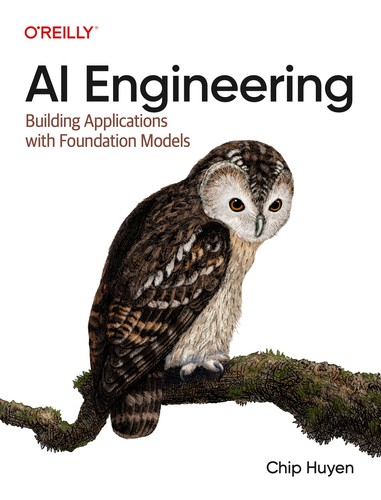
The reference manual for building products on top of AI models: prompts, RAG, fine-tuning, agents, evaluation and deployment.
As an Amazon Associate, Zendoric earns from qualifying purchases; the price does not change for you. · all our recommended books →
By La Ecuación Digital · July 3, 2026.
Nutanix has added Agent Gateway to its Enterprise AI 2.7 platform, a control layer situated between AI agents, language models (its own or third-party ones) and the enterprise tools those agents access. The core function is twofold: access governance through the Model Context Protocol (MCP)—with granular per-agent permissions and audit logs—and economic observability, that is, monitoring of token consumption by agent, team or business unit, with quotas and spending limits. The company, which trades on the Nasdaq as NTNX and competes in the hybrid multicloud computing space, also offers a unified API so that development teams can access both models hosted in the public cloud and self-hosted private models from a single layer.
The context that justifies this product is concrete and already verifiable in many organizations: the leap from generative AI pilots to agents in production radically changes the risk profile. A chatbot has a limited perimeter; an autonomous agent chains together calls to models, invokes tools, queries internal systems and can coordinate with other agents, all with persistent permissions that are rarely well defined. Sammy Zoghlami, vice president of EMEA at Nutanix, sums it up with a figure worth taking as a vendor's warning rather than a universal fact: organizations with "hundreds or even thousands of autonomous agents" without centralized governance, in his words.
Our reading is that this announcement, though modest in media reach, documents a real phase shift in the industry: the conversation about enterprise AI is moving from "which model is best" to "who controls the plumbing through which the agents flow." We have pointed this out before when analyzing the Google-Microsoft tussle over agent integration and standards: competitive advantage lies not only in the model's intelligence, but in who governs access to, the cost of, and the traceability of its use. Nutanix competes here against hyperscalers and against the very inertia of companies deploying agents without a prior governance architecture, a terrain where infrastructure players such as Nutanix, IBM or Salesforce (with its integration of Claude into Slack) are seeking to become indispensable before operational chaos forces companies to buy a solution under pressure.
The cost-per-token angle deserves a separate reading. When an apparently simple task triggers several intermediate calls to models and tools without the user noticing, spending becomes an opaque variable competing with the aggregate cloud budget. This is not a minor technical problem: it is a design signal. A poorly configured agent that multiplies calls to an oversized model is, in practice, technical debt with a monthly bill. The ability to compare providers, route by cost and decide when to migrate to a self-hosted model—with all the maintenance burden that entails—is shaping up to be an enterprise-architecture competency as critical as perimeter security was a decade ago.
In terms of our underlying thesis, this kind of product is exactly the type of "boring but necessary" infrastructure that separates enthusiasm for agentic AI from its sustainable adoption at scale. In the short term, it confirms that the transition toward generalized autonomous agents brings real friction: uncontrolled costs, new attack surfaces (poorly defined MCP access), and the need to rebuild corporate identity and permission models, something no company solves overnight. But in the long term, the more mature the governance layer—auditing, quotas, traceability—the faster and with less friction organizations will be able to delegate real tasks to agents, freeing up human capacity for judgment and customer relationships, not for manually monitoring thousands of calls to an LLM. Governance is not the brake on agentic AI: it is the condition for it to become widespread without collapsing under its own cost and its own risks.
📚 Go deeper

The best starting book if you're not technical: a Wharton professor explains how to work WITH AI — when to delegate, when to supervise, when to keep i
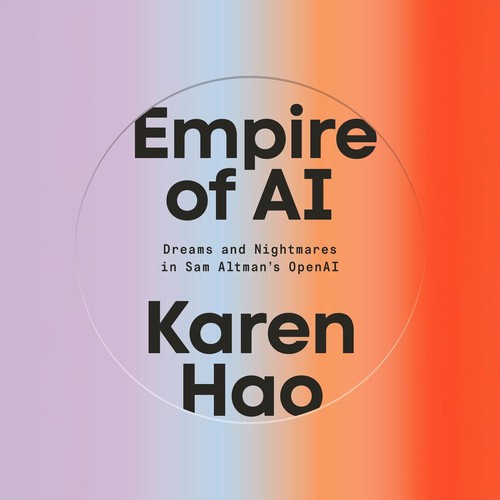
The definitive piece of investigative journalism on OpenAI: 260+ interviews, the clash between safety and speed, and the attempted firing of Sam Altma
As an Amazon Associate, Zendoric earns from qualifying purchases; the price does not change for you. · all our recommended books →
🔗 Related on Zendoric
- DARPA's 100,000-agent swarm bets on decentralized AI — the hard problem is control, not scale · 2026-07-17
- 93% of companies blow their agentic AI budget: the problem isn't the token, it's the self-review loop · 2026-07-20
- Why AI agents fail with confidence: it's not the model or the context, it's data engineering · 2026-07-24