Visa cuts 2,600 jobs — and this time it's product and engineering, not the back office
🕒 Published on Zendoric: September 1, 2026 · 00:48
✨ AI-generated · how it's made
Visa is laying off roughly 7% of its workforce, with the cuts landing mainly on product and technology teams. The CEO memo talks about efficiency and reinvestment, not AI directly — but the savings are heading toward stablecoins and money movement. That reallocation, not automation, is the clearest signal here.
📚 Go deeper

The best starting book if you're not technical: a Wharton professor explains how to work WITH AI — when to delegate, when to supervise, when to keep i
As an Amazon Associate, Zendoric earns from qualifying purchases; the price does not change for you. · all our recommended books →
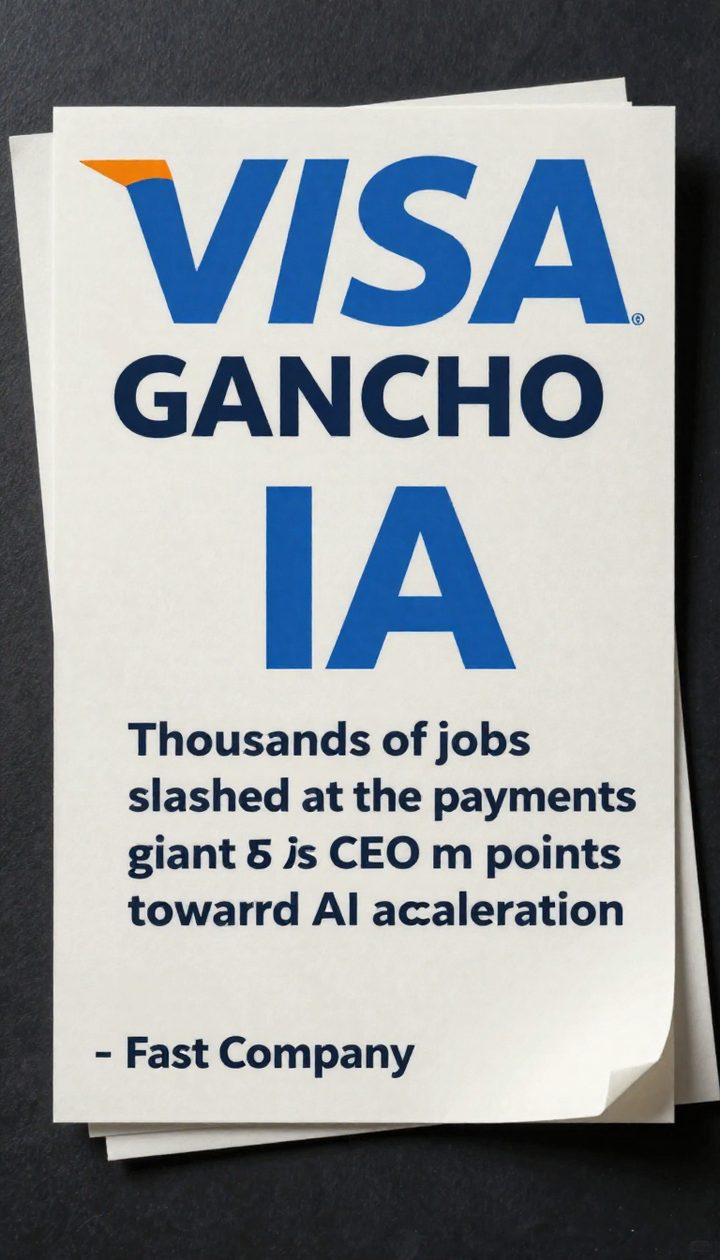
Visa is preparing to cut about 2,600 jobs, roughly 7% of a workforce of some 34,000, the company confirmed to Fast Company. The reduction was first disclosed internally in a memo from CEO Ryan McInerney, whose accuracy Visa also confirmed. Per the memo, the cuts fall primarily on **product and technology teams** — not, notably, on the administrative layers where AI-driven job loss is usually expected to land first.
McInerney framed it as reallocation rather than retrenchment: a "deep conviction that we are doing what is right for Visa, our clients and our partners as we continue to focus on driving efficiency across the company in order to reinvest in our highest potential opportunities." Bloomberg reports that the savings are earmarked for commercial and money-movement solutions, consumer payments, and value-added services including stablecoins. The backdrop is a payments landscape being chipped at by smaller, faster fintech competitors.
A point of precision worth making, because the headline invites the opposite reading: the memo excerpts made public talk about efficiency and reinvestment. Visa's broader positioning includes a focus on AI-driven efficiency gains, and that is the frame media coverage has reached for. But nobody at Visa has produced a headcount-to-automation ledger. Treat "AI layoffs" here as an interpretation, not a disclosed fact — and note how convenient that interpretation is. "We are being disrupted by fintechs and stablecoin rails and need to redeploy capital" is a harder sentence for a CEO to say than "AI made us more efficient." The first implies competitive pressure; the second implies foresight. Investors reward the second.
That said, the composition of the cuts is the genuinely interesting data point, and it cuts against our own prior. Our working thesis on AI and employment has been that back-office and administrative roles are the most exposed while judgment, relationship and in-person work hold up. Visa just did the opposite: it thinned product and engineering. If that pattern repeats across large incumbents, it suggests something more specific than "AI replaces workers." It suggests that AI coding tools have raised the output per engineer enough that a company can hold its roadmap steady with a smaller team — and that when a firm decides its existing product bets are the wrong ones, the people building those bets go first, regardless of how automatable their work is.
**Our reading.** Two things are happening at once and they should not be conflated. One is a genuine productivity shift: engineering teams in 2026 ship more per head than they did in 2023, and that arithmetic eventually shows up in headcount at companies not growing fast enough to absorb it. The other is ordinary strategic repositioning — a 60-year-old payments incumbent moving money from legacy product lines toward stablecoins and money movement because the rails underneath its business are being rebuilt. Visa is doing both, and the AI story is being used to narrate the second.
For anyone working in tech, the useful signal is not "AI is coming for engineers." It is that being on a well-staffed team inside a profitable incumbent is no longer protection if your team is building the thing the company has decided to stop betting on. The roles Visa is funding — payments infrastructure, stablecoin plumbing, value-added services — are also technical. The work is moving, not evaporating.
And the longer arc still holds. Payments becoming cheaper, faster and more automated is, at the level of the whole economy, a good thing: friction removed from every transaction is real value released. But the transition cost is being paid in specific, identifiable jobs, in specific quarters, by 2,600 named people. Both facts are true, and an honest account of this moment has to hold them together rather than pick the comfortable one.
📚 Go deeper
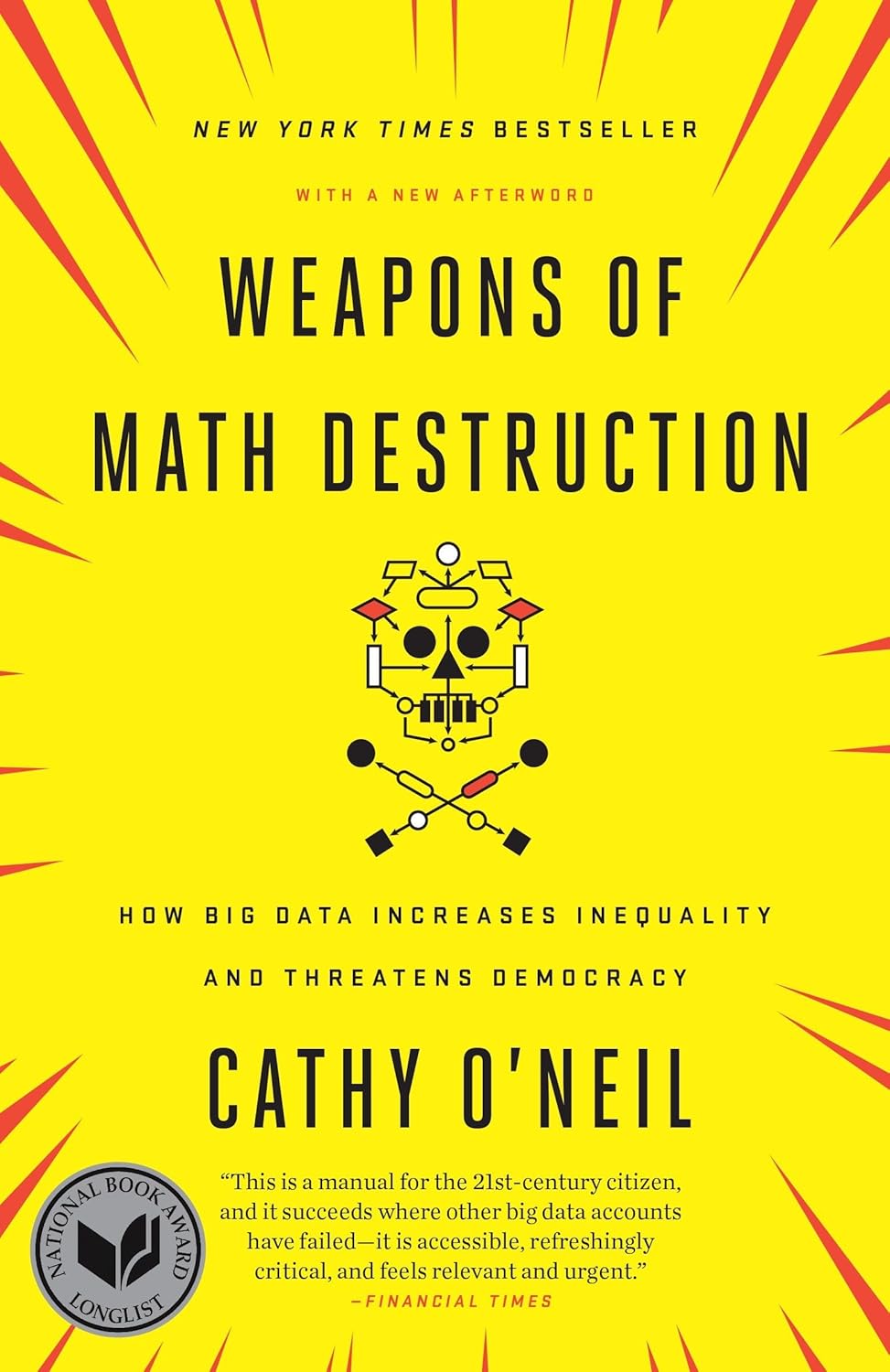
How opaque algorithms decide who gets credit, a job or parole — and why they tend to punish the same people.

The reference manual for building products on top of AI models: prompts, RAG, fine-tuning, agents, evaluation and deployment.
As an Amazon Associate, Zendoric earns from qualifying purchases; the price does not change for you. · all our recommended books →
🔗 Related on Zendoric
- Visa cuts 2,600 jobs from product and tech — the tell isn't the AI framing, it's where the money is going · 2026-09-01
- Visa cuts 2,600 jobs to fund stablecoins — the AI layoff story is reallocation, not simple replacement · 2026-09-02
- Visa cuts 2,600 jobs in product and tech — and the memo says the money is being redeployed, not saved · 2026-09-04