US universities curb AI in the classroom while rolling it out across campus

🕒 Published on Zendoric: September 1, 2026 · 00:48
✨ AI-generated · how it's made
At Sarah Lawrence and the University of Chicago, professors are bringing paper and screen-free debate back to their seminars this fall, just as their institutions expand access to tools like Claude Enterprise: it is not a rejection of AI, but a considered decision about when to use it.
📚 Go deeper
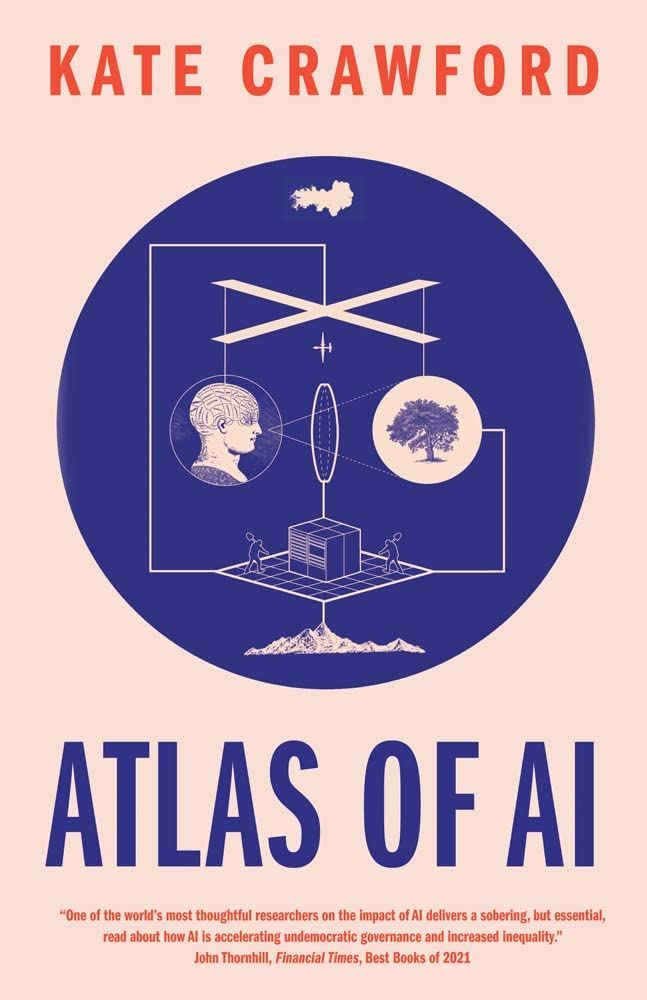
AI as an extractive industry: the lithium, the energy, the underpaid data-labeling work and the bodies behind the cloud.
As an Amazon Associate, Zendoric earns from qualifying purchases; the price does not change for you. · all our recommended books →
By Zendoric · September 1, 2026.
Samuel J. Abrams, a politics professor at Sarah Lawrence College and a nonresident fellow at the American Enterprise Institute, has decided to repeat the bet he made a year ago: his seminars will again do without artificial intelligence unless he expressly asks otherwise. Twelve months ago he thought it would be his "last year without AI", convinced the technology would slip into every classroom before the next academic year. By his own account, he was wrong, and he is glad.
The reason, he explains, is not that the technology has failed to improve -on the contrary, he says he uses it himself to do research and track down quotes- but that his students' appetite for it is smaller than he expected. His students, he writes, are not "Luddites": they know AI, they use it and it does not frighten them. But many have told him they do not want it present in everything they read, write or think, and that they fear what dependence on these tools might do to their ability to learn. Abrams points to national data that, he says, back up that perception -high usage but declining enthusiasm among young people- although the article does not break it down here; it should be treated as the support he himself claims for his classroom experience, not as an independently verified figure.
The case that has most caught his attention, and ours too, is the University of Chicago's. Its Social Sciences Core program has announced that this fall most readings will be done on paper, class discussions will generally be device-free, and AI-assisted writing will be banned unless the professor expressly grants an exception. The stated goal is to teach students first to "read, write and think without depending on AI". What is striking is what is happening in parallel: the University of Chicago itself has announced a partnership with Anthropic giving the entire campus access to Claude Enterprise, the corporate version of the AI assistant, starting this very academic year.
Overall, the debate about AI in US universities has shifted in a year and a half from asking whether it had to be banned to asking which specific parts of learning are worth protecting from it. We already noted that turn when analyzing AI's impact across education sectors: the professor who gains ground is neither the one who avoids AI nor the one who uses it without judgment, but the one who decides when it makes sense to put it in the middle of the process and when to set it aside. Chicago and Sarah Lawrence take that idea to its most explicit form: give access to the most powerful instrument available and, at the same time, reserve deliberate spaces where it is not used.
Our reading is that this is not a contradiction but the sign of a pedagogy that is starting to mature. Giving Claude Enterprise away to an entire campus while banning its use in a specific seminar makes sense if learning is understood as a sequence: first you build the ability to read through difficulty, argue and write without shortcuts; then you learn to direct a tool that can do much of that work in seconds. Without the first phase, the second produces students who know how to ask a model for something but cannot judge whether the answer is any good.
It is worth being honest about the short term, though. What Abrams describes is one professor's experience in small seminars at an elite private university, not a representative study, and the article itself acknowledges as much by pointing to "national data" without detailing it. Moreover, staging a deliberately analog experience -small groups, personalized attention, time to read on paper- is a pedagogical luxury that few institutions with limited resources can afford while also paying for campus-wide corporate AI licenses. If the pattern holds, the short-term risk is not that young people will reject AI, but that only students at the wealthiest universities will have room to learn first without it and then with it, while everyone else faces head-on the fast, no-safety-net version of machine-assisted learning.
In the long run, however, the nuance these cases add fits our underlying thesis: the abundance AI can bring is only put to good use if there are people capable of thinking critically about what the machine offers them. Universities that deliberately protect time for thinking without assistance are not holding back the AI-powered future: they are preparing the people who will know how to steer it.
📚 Go deeper

The only novel on the list, by a Nobel laureate: an artificial friend observes humans with a blend of lucidity and innocence no essay achieves.
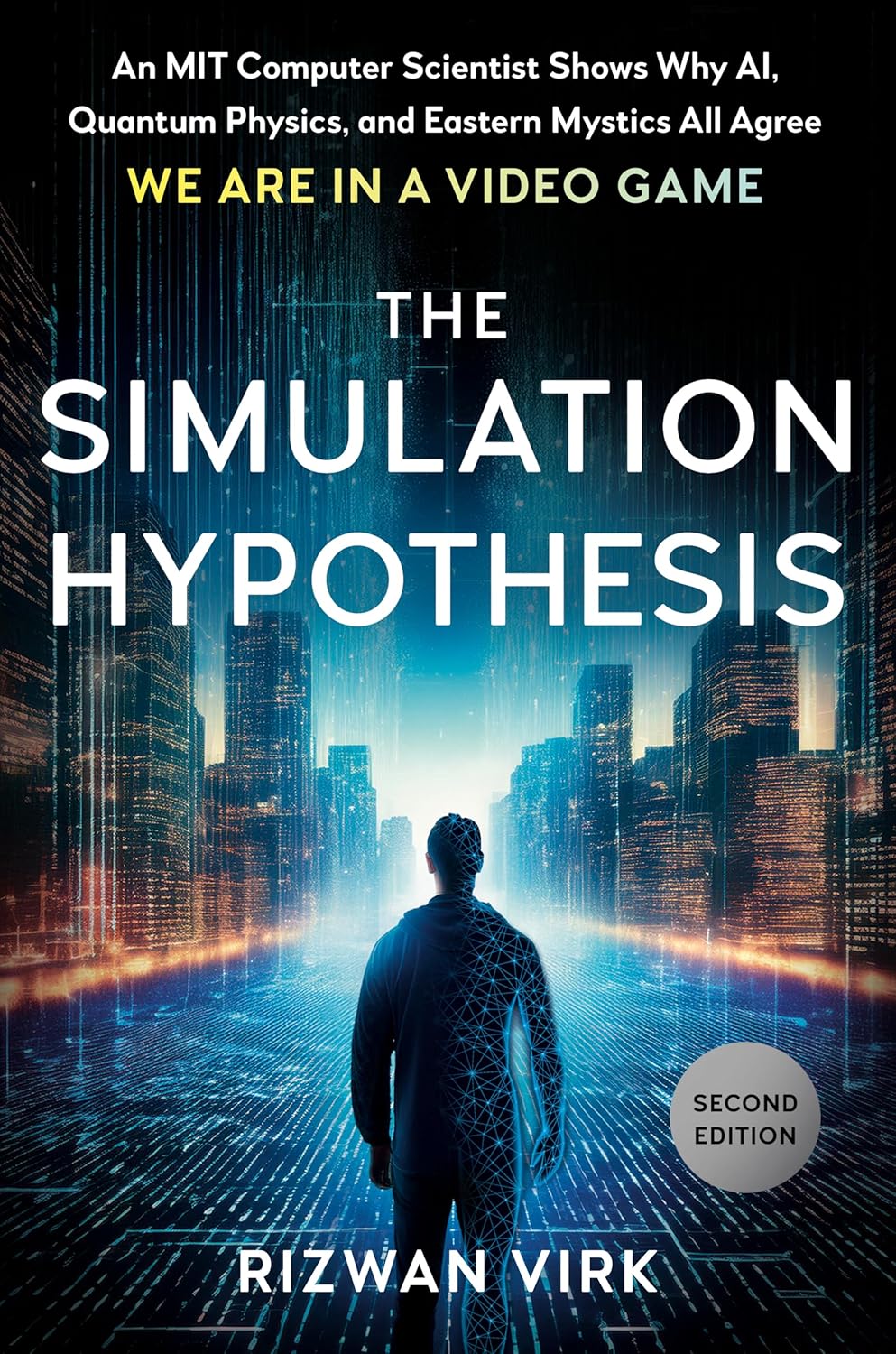
An MIT computer scientist connects AI, quantum physics and video games to take an uncomfortable question seriously: what if we live in a simulation? M
As an Amazon Associate, Zendoric earns from qualifying purchases; the price does not change for you. · all our recommended books →
🔗 Related on Zendoric
- When the state shuts down a model: the Fable 5 case redefines who's in charge of frontier AI · 2026-06-25
- The U.S. lifts the block on Anthropic's Mythos 5 model and releases it to more than 100 selected institutions · 2026-06-30
- Oracle connects AI to its cloud policies: the battle is no longer the model, it's the plumbing · 2026-07-08