Moats in the age of floods: the roadmap to building competitive advantage when AI floods everything

🕒 Published on Zendoric: September 1, 2026 · 00:48
✨ AI-generated · how it's made
In a long thread posted on X, Aatish Nayak offers a direct response to the sector's dominant narrative that the big AI labs — breaking revenue records and absorbing ever more capabilities — are about to "drown" the entire application layer, making it pointless to build…
📚 Go deeper
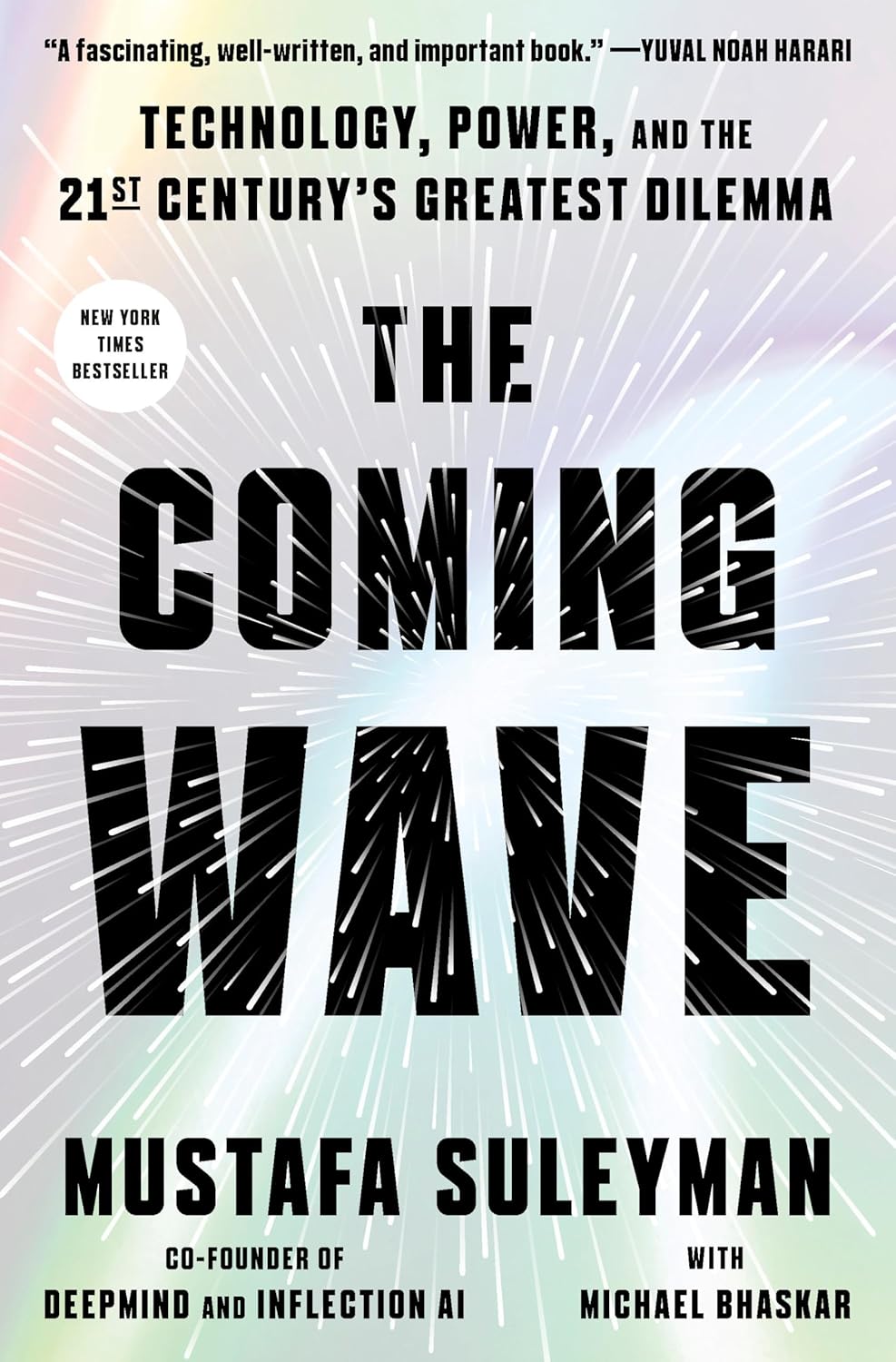
DeepMind co-founder on the dilemma of containing technologies that do not want to be contained.
As an Amazon Associate, Zendoric earns from qualifying purchases; the price does not change for you. · all our recommended books →
In a long thread posted on X, Aatish Nayak offers a direct response to the sector's dominant narrative that the big AI labs —breaking revenue records and absorbing ever more capabilities— are about to "drown" the entire application layer, making it pointless to build competitive advantages ("moats") ahead of the arrival of AGI. His central thesis rests on a hydraulic metaphor: defensive moats are useless against a flood, but the levees and canals that direct that water toward crops, reservoirs and homes that would otherwise never receive it are critical infrastructure. According to Nayak, artificial intelligence is a utility with unlimited demand, and just as with water or electricity, the business opportunity lies not in owning the raw resource but in building the systems that disperse it and turn it into real outcomes. The world, he argues, does not want raw models and agents: it wants problems solved. The value premium will accrue to the companies capable of spreading that intelligence into every corner of civilization, transforming tokens into tangible results, and that work, he maintains, has barely begun.
To support why the mere existence of highly capable models is not enough to transform the economy, the author resorts to a thought experiment: if in 2019 someone had seen a model at the level of GPT-5.5+ or Opus 4.5+, they would have called it AGI and assumed the economy would already be completely transformed. That, he notes, has not happened, and he attributes the gap to two causes. The first is a context problem: real work accumulates more state, more exceptions and more history than fits in any prompt, and often not even the people doing that work can describe it precisely out loud. The second is that the real world is deeply intertwined with the human: incentives, approvals, accountability, edge cases, legacy systems and people coordinating with other people. A country of geniuses locked in a data center, he says, could not run a country; and even as automation improves dramatically, people still prefer to listen to, watch and work with other people (nobody, he recalls, watched Deep Blue play chess). Nayak also appeals to economic history: electricity reached factories in the 1880s, but did not show up in productivity statistics until the 1920s, once factories were redesigned around it. With the internet and AI, he argues, the speed of adoption has been compressed by an order of magnitude, but institutional change still lags behind. That gap between adoption and real transformation is, in his view, the biggest arbitrage available in today's economy, though he warns that the window to exploit it will only be open for a limited time.
From there, the author lays out a roadmap of seven tactics —warning that, given market competition, executing just one is probably not enough and that most of them have to be combined over time— for both AI-native startups and incumbents reinventing themselves.
The first is to orchestrate a multiplayer network. Nayak argues that labs will be incentivized above all to maximize individual productivity ("tokenmaxx"), because that is the easiest thing to scale with a limited set of products; but that, he notes, caps the ceiling for improvement, because a company is worth more than the sum of its employees, and a smaller but better-coordinated organization can beat a bigger one. The opportunity lies in targeting markets where the cost of human coordination is highest and building products that let people and agents collaborate end to end across those workflows, thereby accumulating a coordination graph among individuals, agents, data and organizations that is very hard to displace. As an example he cites Harvey, whose offering orchestrates collaboration between Fortune 500 clients and their law firms.
The second tactic is to accumulate "workflow gravity": becoming the trusted source that accumulates the customer's data —internal documents, communications, institutional knowledge, proprietary sources that generalist models will never see in pretraining— as well as process data, meaning every correction, decision and exception generated by real use of the product. Nayak acknowledges that the labs could also do this, but he bets that the fragmentation of the model ecosystem and companies' need to hedge against a single vendor will end up separating the continuous-learning layer from the models themselves, opening a wedge to build memory and personalization. The more knowledge is accumulated about how a specific slice of the economy actually operates, the harder it becomes for any other player to escape that orbit. He offers as an example Within (@tryklarity), which captures every employee's latent work in order to proactively suggest automation opportunities.
The third is to let customers own their own transformation. Nayak predicts that, starting next year, intelligence will become a resource managed and budgeted as if it were headcount, with returns measured against high-level business metrics; and like any managed resource, customers will want granular control over it. The challenge lies in calibrating that control: give them too little and they never feel ownership; give them too much and they end up coding their own version in-house instead of using the vendor's. The recipe involves deploying teams alongside the customer's, but making sure the customer can keep running the system autonomously once the vendor steps back, invoking the so-called "Ikea effect": people value more what they helped build. He cites as an example Applied Compute, which offers companies a platform to build their own intelligence.
The fourth tactic consists of telling your own version of the future. Faced with the uncertainty created by rapid model releases, global conflicts, new funding rounds and mergers and acquisitions, Nayak maintains that the most valuable thing a company can offer is a specific, credible account of what its sector will look like in five years, combined with a brand identity of its own that permeates hiring, customers, partners, investors and the general public; when every company has access to the same models, singular decisions about product, relationships and narrative generate a brand affinity that cannot easily be substituted. As an example he mentions Parallel, for its vision of the web's "second user" and its retro brand identity.
The fifth is to keep climbing the abstraction layer. Just as programming went from assembly to compiled languages and from there to agents, and soon to orchestrating entire teams and organizations of agents, Nayak anticipates that something similar will happen in non-technical domains, albeit at different speeds depending on how verifiable each task is. The bottom of the capability stack gets devoured by model improvement, and with it everything built specifically for that level; hence he recommends evolving the product to target first middle management, then the VP and finally senior leadership, verticalizing the user experience more and more —for example, building the "command center" from which a manager supervises a fleet of agents the way they would supervise a human team today— and being willing to dismantle your own infrastructure without sentimentality in order to move up a level before the current layer becomes commoditized. He cites the case of Factory, which bet early on the jump from individual coding agents to the "software factory".
The sixth tactic is to sell what was not previously possible. Nayak observes that, until now, the way of valuing AI's impact on the P&L has been tied to the human work it replaces —hence why many AI-native companies still charge per seat— but the real leap in value lies in what was previously constrained by labor, attention or human cognitive capacity, where the second- and third-order effects of extremely cheap intelligence occur. The author predicts that in 2027 the central boardroom conversation will revolve around AI's impact on each business's P&L, as companies are forced to justify a new line item of spending on tokens and AI, which will have to translate into more revenue or lower operating costs. He recommends pricing against indicators the customer already uses to plan —tickets closed, contracts processed, drugs entering trials, claims resolved, cases closed and, above all, new revenue— though he acknowledges this will take time to fully materialize. He offers as an example Armadin, whose swarms of thousands of agents run penetration tests at a scale and frequency no traditional consultancy could match.
The seventh and final tactic, which the author considers the hardest and in fact the sum of all the previous ones, is to become a structural necessity. Since the big labs will focus on general-purpose products with the largest addressable markets —model APIs, corporate "coworkers" and, eventually, mega-markets such as pharmaceuticals— the opportunity for everyone else consists of positioning themselves in what the labs cannot do: offering neutrality among competing options, acting as a trust layer between AI and regulated sectors, or being a counterparty that can be held accountable in a way a mere model API cannot. Capitalism, he argues, pushes for this type of company to exist because the system cannot work without them; the goal is to become one of them. He cites as an example Profound, which is betting that even in a world with multiple consumer AGIs competing against each other, every company will need a neutral layer that measures and modulates its visibility to customers.
The essay closes by clarifying that this is not about denying the power of the big labs: Nayak expects models to keep becoming extraordinarily more capable and both the labs and the chip companies to make enormous amounts of money, probably becoming the world's largest companies, because someone has to charge the cost per token to recoup the capital investments. But he insists that this is not the real debate: platforms become enormous and, even so, value keeps accruing above them, just as the cloud did not stop Stripe, Uber, DoorDash, Salesforce, Workday, ServiceNow or Shopify from becoming generational businesses. Abundant intelligence is, in his formulation, "the mother of all platforms", and an entire ecosystem is forming around its economically useful diffusion: the companies that disseminate it, the infrastructure that serves them, the standards they set for their sectors and the narratives they build. The real debate, he concludes, is who wins inside that ecosystem, a contest that will be fought vertical by vertical, institution by institution, waged mostly by companies that will look nothing like the AI labs. The author himself closes by thanking founders and executives at some twenty "app layer" companies —among them Harvey, Rogo, Profound, OpenEvidence, Ramp, Sierra, Clay, Cognition and Applied Compute— who, he says, are setting the emerging standard in this layer of the AI economy.
📚 Go deeper

The best starting book if you're not technical: a Wharton professor explains how to work WITH AI — when to delegate, when to supervise, when to keep i

The reference manual for building products on top of AI models: prompts, RAG, fine-tuning, agents, evaluation and deployment.
As an Amazon Associate, Zendoric earns from qualifying purchases; the price does not change for you. · all our recommended books →
🔗 Related on Zendoric
- Anthropic versus Alibaba: the 'distillation attack' that tests AI's competitive moat and the sector's trillion-dollar valuation · 2026-06-28
- Anthropic bets 1,700 jobs on Manhattan: AI chooses talent clusters, not tax havens · 2026-07-11
- Claude Science: Anthropic takes aim at the heart of science and health with a dedicated product · 2026-07-01