Mental health and AI: in Tres Arroyos, a neurologist opens the debate tech companies still haven't settled

🕒 Published on Zendoric: July 31, 2026 · 15:01
✨ AI-generated · how it's made
This Friday, neurologist Eduardo Sage headlines an open talk in Tres Arroyos (Argentina) on social media, phones and artificial intelligence and their effect on mental health. There is no study or figure behind it: it is a neighborhood conversation, but it touches on a question the global AI industry still does not answer well.
📚 Go deeper
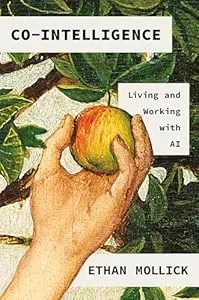
The best starting book if you're not technical: a Wharton professor explains how to work WITH AI — when to delegate, when to supervise, when to keep i
As an Amazon Associate, Zendoric earns from qualifying purchases; the price does not change for you. · all our recommended books →
By Zendoric · July 31, 2026.
The facts are modest and local: this Friday at 7 p.m., neurologist Eduardo Sage will lead an open talk —not a masterclass, as he himself defines it— at Editorial Caravana in Tres Arroyos (province of Buenos Aires, Argentina), on the impact of social media, heavy mobile phone use and artificial intelligence (AI) on mental health. As he explained to Diario3, the goal is for attendees themselves to debate, not to sit through a closed lecture.
Sage argues that heavy social media consumption «shapes a more individualistic personality profile», with isolation from the family environment, excessive screen use and exposure to fake news, which in his view creates learning and relationship difficulties. On AI, his position is nuanced: he describes it as a tool that «can be very useful for many professions», but warns that it «can become a problem if it ends up feeding on or spreading false information». His conclusion, as the article summarizes it, is that «every new technology needs to be understood» before being consumed «indiscriminately». He also notes, a nuance frequently lost in this debate, that disinformation is not only a teenage problem: adults are also victims of campaigns driven from social media.
It is worth being honest about what this piece is and is not. There is no study here, no prevalence figure, no new data: it is the testimony of a local professional, in a community-talk format, reported by a local outlet. That does not diminish the legitimacy of the topic —the relationship between social media, mobile phone use and emotional well-being has been debated for years in the international scientific literature, with no settled consensus on causality— but it does require not treating Sage's claims as verified findings, but as what they are: a neurologist's clinical reading, laid out to open a conversation.
That said, the fact that this debate has reached Tres Arroyos, a city in the interior of Buenos Aires province, is in itself a piece of context worth noting. The discussion about how generative AI saturates our feeds with synthetic content and fake news is no longer a topic exclusive to San Francisco labs or regulatory committees in Brussels: it has come down to neighborhood conversation. That confirms something we at Zendoric have been arguing: the underlying problem is not the technology itself, but the critical-literacy gap with which society absorbs it, and that gap closes —or widens— in spaces exactly like this one, not only in Big Tech's engine rooms.
Our reading is that talks like this, however modest, are the other side of the coin of the long-term optimism with which we analyze AI. We hold that technology can take us to a society of abundance and better health, but that journey is not automatic: it demands, as Sage rightly says, understanding before indiscriminate consumption, and that understanding is built with media literacy, not with the hope that the algorithm will regulate itself. The cost of failing to do so —isolation, disinformation, digital anxiety— is precisely the kind of short-term friction that should not be minimized while the technology matures. That this collective learning is being discussed in an open talk in Tres Arroyos, and not only in an academic paper, is a healthy sign: the conversation about how to live with AI is finally becoming everyone's conversation.
📚 Go deeper
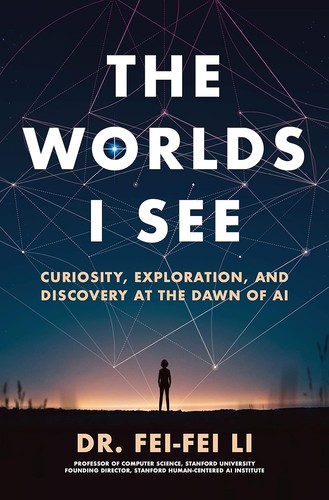
The memoir of the creator of ImageNet, the scientist who made the deep learning revolution in vision possible.
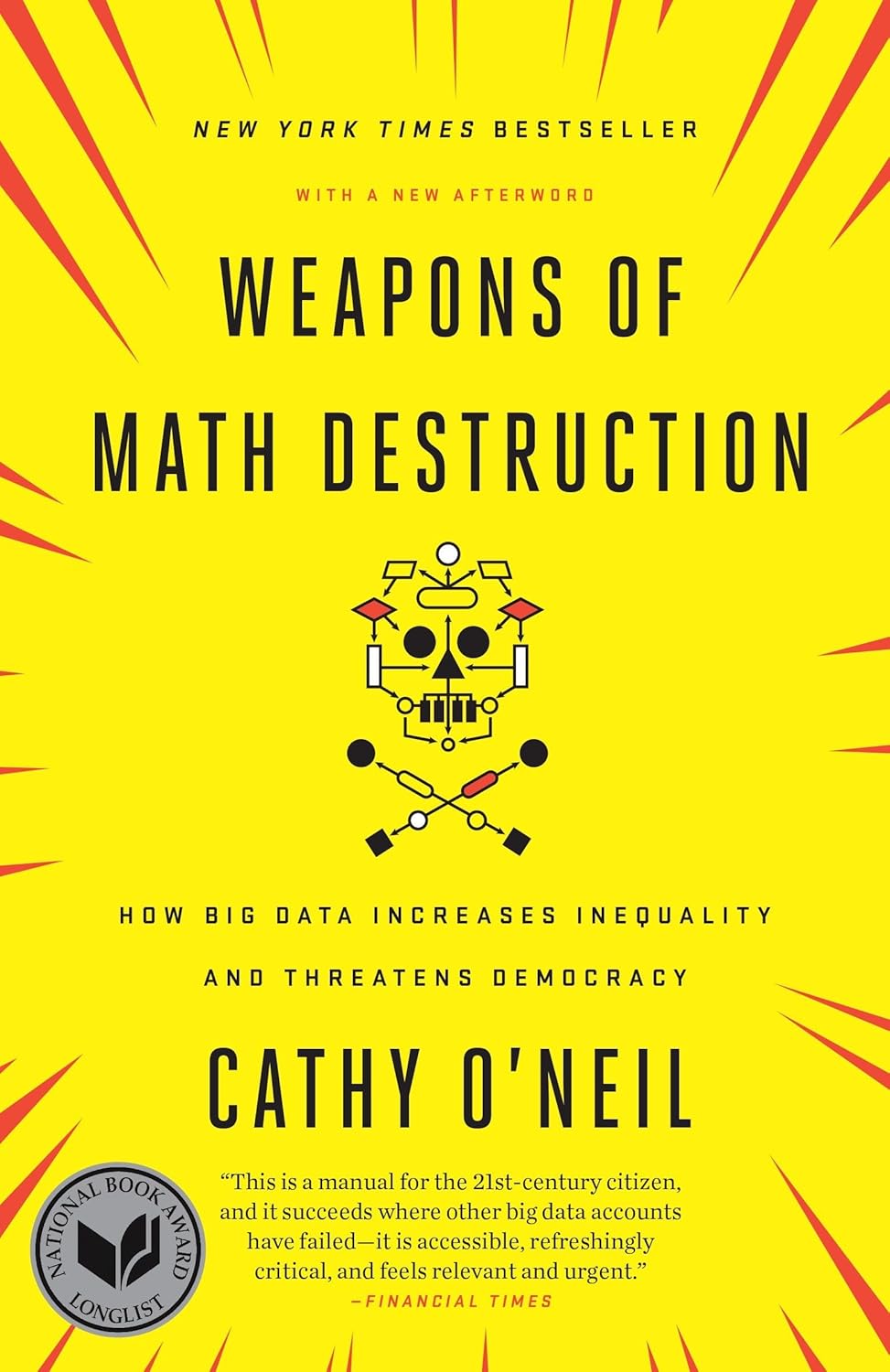
How opaque algorithms decide who gets credit, a job or parole — and why they tend to punish the same people.
As an Amazon Associate, Zendoric earns from qualifying purchases; the price does not change for you. · all our recommended books →
🔗 Related on Zendoric
- Mental health and AI: in Tres Arroyos, a neurologist opens the debate tech companies still haven't settled · 2026-08-31
- Rock Hill takes on AI, social media and enrollment in one package: school governance gets professional · 2026-06-24
- Rock Hill puts its house in order before the school year: why revising AI policy is now a matter of school governance · 2026-06-24