China rewrites the sovereign AI playbook: Moonshot gives away Kimi K3, its top-tier model

🕒 Published on Zendoric: July 31, 2026 · 15:01
✨ AI-generated · how it's made
On July 27, the Alibaba-backed Chinese company Moonshot AI released the software of its Kimi K3 artificial intelligence model openly, allowing any government, company or individual to install and run it on their own servers without paying Moonshot anything.
📚 Go deeper

Semiconductors as the oil of the 21st century: history, espionage, and why an island of 23 million people underpins the entire AI economy.
As an Amazon Associate, Zendoric earns from qualifying purchases; the price does not change for you. · all our recommended books →
On July 27, the Chinese company Moonshot AI — backed by Alibaba — open-sourced the software behind its artificial intelligence model Kimi K3, allowing any government, company or individual to install and run it on their own servers without paying Moonshot anything. Besides being free, the model can be retrained to adapt to local languages and legal frameworks, and it can process images as well as text, meaning it can work with scanned documents, forms and photographs. According to the Rest of World article by Indranil Ghosh, this represents a fundamental shift in the way countries build their 'sovereign AI': artificial intelligence systems that run within their own borders so that citizens' data is not exposed to foreign companies or governments.
Until now, most countries have owned the machines but have had to rent computing power and software from US companies such as Microsoft, Google and Amazon, which count on that rental income for years. Kimi K3 offers those governments an alternative: keep the hardware they have already bought and stop paying software licences on an ongoing basis. Mohammed Soliman, a senior fellow at the Middle East Institute think tank quoted in the article, sums up the new calculus: if a competitive model becomes free, the return on hardware investments rises because governments can reduce or eliminate licensing costs.
Kimi K3's technical standing is no small matter. According to the Artificial Analysis index cited in the article, the model ranks third among the world's best AI systems, behind only Anthropic's Claude Fable 5 and OpenAI's GPT-5.6 Sol Max, both paid products. No free model ranks ahead of Kimi K3: neither DeepSeek (China) nor Llama (Meta) matches its level. A July report by researcher Ryan Fedasiuk, of the American Enterprise Institute, argues that this launch has narrowed China's gap with the best US systems from months to weeks. Vivek Chilukuri, director of the technology and national security program at the Center for a New American Security (CNAS), adds that Chinese open-weight models are gaining popularity as free, customizable alternatives to the closed US frontier, both in cost-sensitive markets and among developer communities running 'from Bangalore to San Francisco'.
The potential savings are greatest precisely in countries that have already invested in physical infrastructure. The article recalls that Microsoft, Google and Amazon have committed to building data centers and cloud services worth more than $30 billion in the Gulf and more than $45 billion in India. India, specifically, signed an agreement with G42 (backed by the United Arab Emirates) to deploy an AI supercomputer made up of 64 US-built systems on Indian soil, while continuing to pay US companies for the software. For India and governments in a similar position, having a model of Kimi K3's caliber opens up the possibility of running top-tier AI on machines inside their own borders, without depending on external licences.
Being free, however, does not guarantee adoption. The article stresses that open Chinese models have been available for more than a year without any government building its national AI project on one of them. According to the Sovereign AI Index, which tracks 139 state-backed AI projects across 56 countries and regions, among governments that disclose which software they use, four in ten chose Llama, Meta's free US model, and none chose DeepSeek or Moonshot's earlier chatbots, despite their being free and well regarded. Pablo Chavez, an adjunct senior fellow at CNAS (which publishes that index), explains that a position in performance rankings does not by itself determine what builders of sovereign projects do: governments choose their base models the way they choose any other infrastructure, looking at documentation, licensing, language coverage, capabilities and, in the case of Chinese models, the distrust associated with surveillance concerns.
The political backdrop is no accident either. Chinese President Xi Jinping urged countries to promote open source during his appearance at the World AI Conference in Shanghai on July 17, and promised AI cooperation centers with the Arab League, the African Union and ASEAN. Since then, Alibaba has announced Qwen 3.8 with a promise to give it away as well, while Nvidia, Google and OpenAI have released their own free models this year, pointing to a broader race toward open models, not one led by China alone.
Even so, the article points to a structural limit that no free model can resolve: hardware. A chatbot the size of Kimi K3 can only run on the most advanced chips, and it is the United States that decides which countries can buy those chips; last year, the US Commerce Department went as far as considering cutting off Chinese AI labs' access to US technology entirely. Chilukuri puts it plainly: US export controls still give Washington enormous leverage, because the world desperately needs cutting-edge AI chips, whether an American or a Chinese model runs on them. China, for now, has not managed to close that gap, since its chipmakers are unable to produce their most advanced processors in sufficient quantities to export them.
Pablo Chavez himself offers the article's most nuanced conclusion: a country that downloads Kimi K3 gets the software and nothing more, while the chips it runs on, the data centers that host it and whatever model comes next remain in other hands. A government can keep a model's weights and still depend on third parties for chips, data centers and future models: open weights solve the risk of losing access to the software, but they do not eliminate the dependencies that exist further up the chain. Taken together, the article portrays Kimi K3 as a genuine leap in the free availability of top-tier AI — and as a deliberate geopolitical play by China — but also as an offer whose impact will hinge on non-technical factors (trust, support, languages, legal framework) and that does not, on its own, resolve nations' underlying dependence on US-controlled hardware.
📚 Go deeper
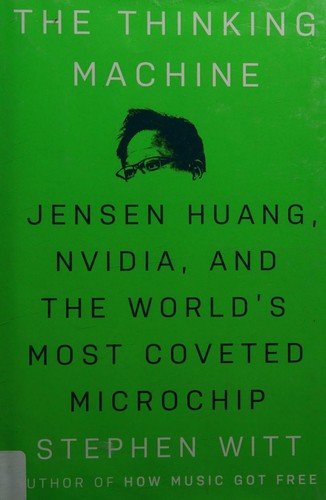
The story of NVIDIA and Jensen Huang: how a video-game card company ended up making the most coveted resource on the planet.
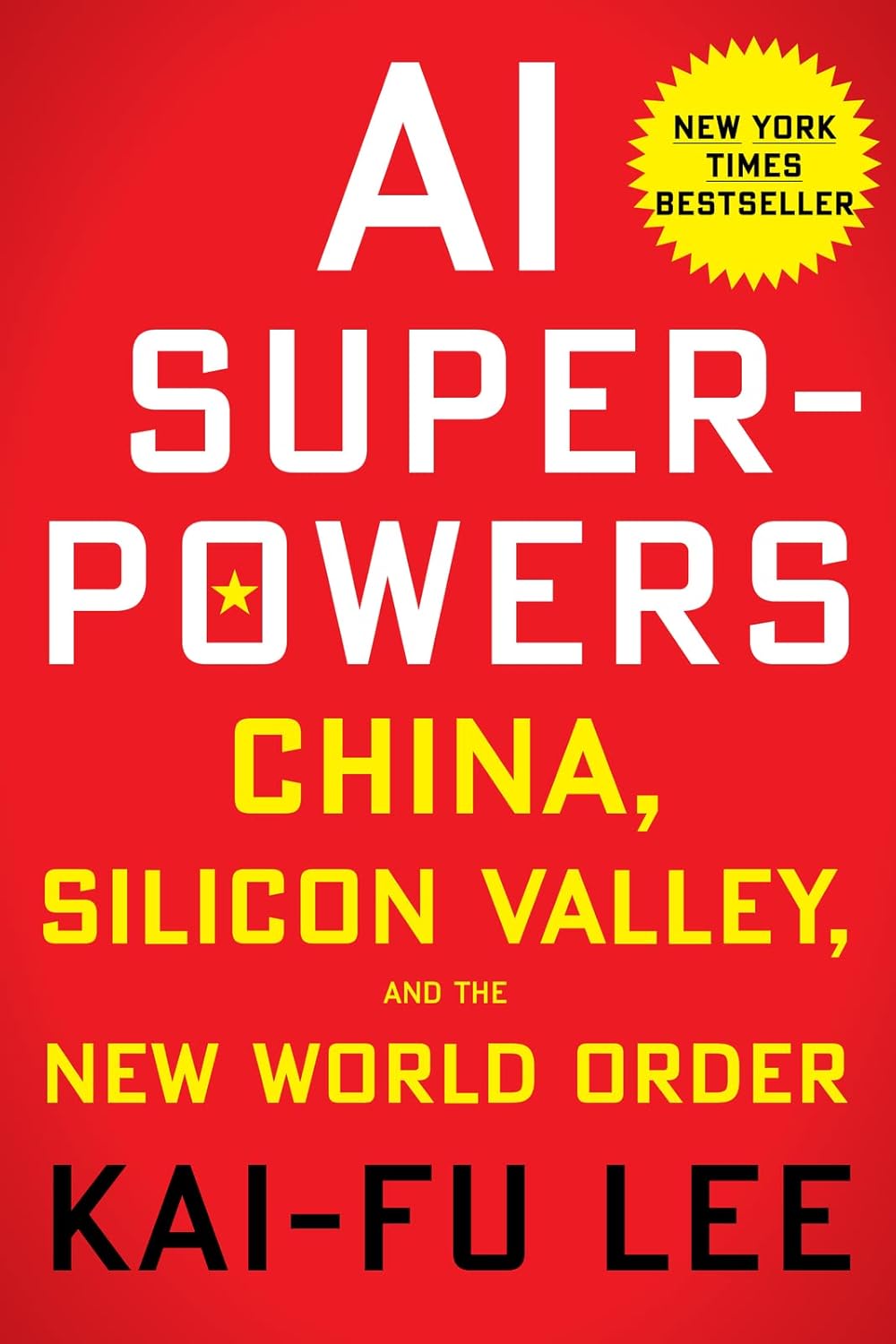
China vs.
As an Amazon Associate, Zendoric earns from qualifying purchases; the price does not change for you. · all our recommended books →
🔗 Related on Zendoric
- China rewrites the sovereign AI playbook: Moonshot gives away Kimi K3, its top-tier model · 2026-08-31
- The U.S. accuses China's Moonshot AI of using banned Nvidia chips to train its Kimi K3 model · 2026-07-25
- U.S. Treasury threatens sanctions against China's Moonshot over alleged distillation of Anthropic's Fable model · 2026-07-24