Anduril and AI warfare: its CEO defends 'supervised' autonomy and builds missiles at Apple speed

🕒 Published on Zendoric: July 31, 2026 · 15:01
✨ AI-generated · how it's made
Anduril CEO Brian Schimpf defends AI weapons 'under human supervision' on CNBC and details a Pentagon contract for 1,000 missiles, manufactured Apple-style: in-house design and a commercial supply chain.
📚 Go deeper
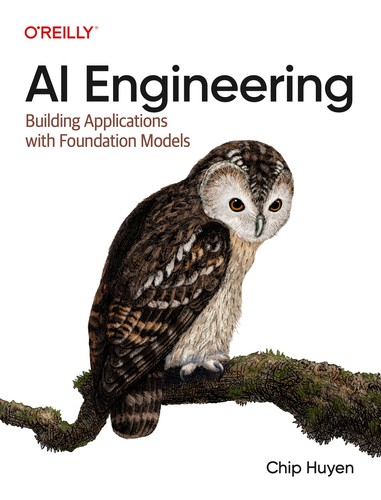
The reference manual for building products on top of AI models: prompts, RAG, fine-tuning, agents, evaluation and deployment.
As an Amazon Associate, Zendoric earns from qualifying purchases; the price does not change for you. · all our recommended books →
By Zendoric · July 31, 2026.
Brian Schimpf, chief executive of Anduril, has given an interview to CNBC's The Tech Download podcast, hosted by Arjun Kharpal, in which he defended the role of artificial intelligence (AI) in autonomous weaponry and detailed the company's industrial shift toward large-scale manufacturing. Anduril is part of a new generation of defense startups —with a tech-industry mindset— aiming to unseat the big traditional contractors, trapped in procurement cycles that, according to the sector itself, can last years or decades.
On autonomous weapons, Schimpf was blunt: «nobody in the military» supports the version without human control that the public tends to imagine, in his words. He noted that autonomous weapons —systems capable of identifying and striking a specific target without a human intervening in every micro-decision— already exist: he cites torpedoes and anti-radiation missiles as examples. His argument, which should be read as the defense of an executive whose company sells these systems, is that rejecting AI in weaponry amounts to preferring «dumber weapons», a stance he describes as «deeply unethical». The company, he insists, operates under a principle of «human oversight of decision-making».
It is a real distinction —precision-guided weaponry theoretically reduces collateral damage compared with saturation weapons— but also a simplification of the underlying debate. The international discussion on lethal autonomous weapons systems (known as LAWS in United Nations forums) is not «AI yes or AI no», but where the line is drawn between a human pulling the trigger and a human merely auditing decisions made by the system at a speed they can no longer supervise in real time. «Human oversight» is a phrase that fits very different levels of actual autonomy, and the article does not specify exactly where on that spectrum Schimpf places Anduril.
The second thread of the conversation is industrial. Schimpf argues that defense companies should exert more control over their own design process, lean on commercial supply chains and manufacture at the pace of the tech industry, instead of depending on the slow networks of specialized suppliers that have characterized the sector for decades. The parallel he uses —and which CNBC reports— is Apple: a company that designs its own chips, its own devices and its own software rather than subcontracting everything. Anduril has signed a contract with the Pentagon to supply 1,000 missiles, forcing the company to scale its production from, in practice, almost zero. «The speed at which we are producing is enabled by having thought so much about supply chain scalability», Schimpf explained.
Broadly speaking, the defense sector is going through a disruption similar to the one software already experienced: startups like Anduril compete with the big historic contractors by offering rapid iteration, vertical integration of design and AI built in from day one, against procurement programs saddled with cost overruns and mile-long timelines. Governments, under pressure from the AI arms race between powers, are willing to buy speed even if that means ceding part of the traditional control over the procurement process to companies with a culture far closer to Silicon Valley than to the classic Pentagon.
Our reading connects with a thread we have been following: dual-use AI. The same capability that lets a model identify a target with precision is the one that, in another context, helps diagnose a disease or optimize a civilian supply chain. The short-term risk is not the science fiction of a weapon that decides on its own —something that, as Schimpf says, practically nobody defends— but the gradual erosion of real human control when the machine's decision speed outpaces the human capacity to audit it, with no common standards on what «oversight» means in practice. In the long run, the same industrial base that today manufactures missiles at startup speed also drives down the cost of sensors, robotics and advanced manufacturing for civilian use: that same know-how, with the right governance, could end up reducing the cost of medical or energy infrastructure. Whether that potential is realized depends less on the technology than on who decides, under what rules, and where the limit of lethal autonomy is set.
📚 Go deeper
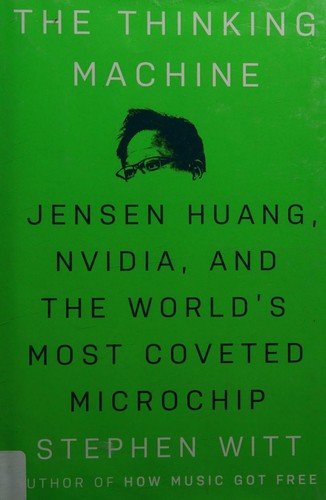
The story of NVIDIA and Jensen Huang: how a video-game card company ended up making the most coveted resource on the planet.
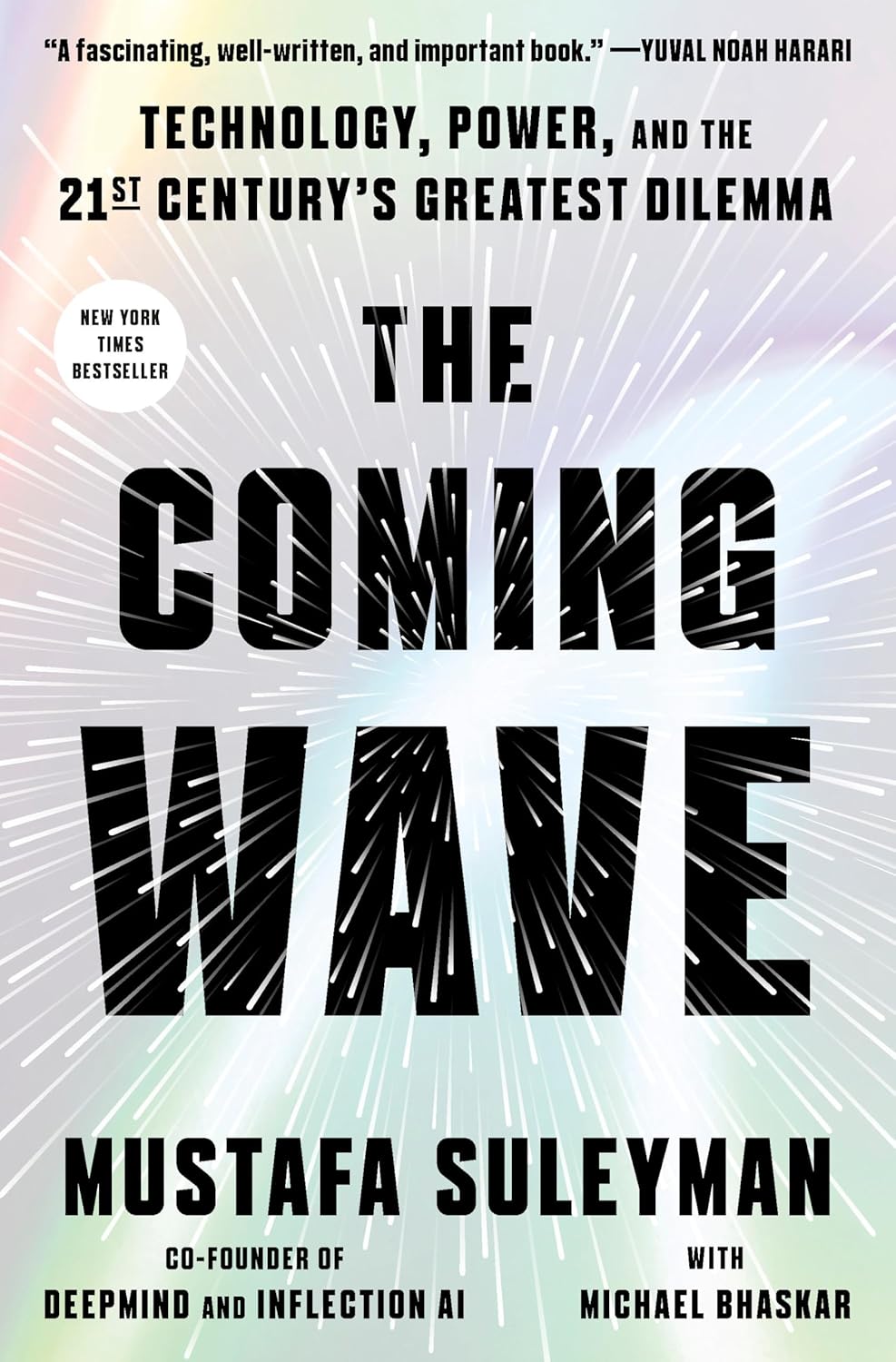
DeepMind co-founder on the dilemma of containing technologies that do not want to be contained.
As an Amazon Associate, Zendoric earns from qualifying purchases; the price does not change for you. · all our recommended books →
🔗 Related on Zendoric
- Anduril and AI warfare: its CEO defends 'supervised' autonomy and builds missiles at Apple speed · 2026-08-31
- The Pentagon Just Priced Safety Guardrails as a Supply-Chain Risk — and Made Its AI Stack Uniform · 2026-09-01
- Anthropic's Two Red Lines Cost It the Pentagon — and Set a Precedent for AI in the Kill Chain · 2026-07-05