A US Christian university says no degree is immune to AI, and bets on teaching judgment, not answers

🕒 Published on Zendoric: July 30, 2026 · 00:20
✨ AI-generated · how it's made
Cornerstone University, a Christian university in Michigan, created an AI Advisory Board and a certificate in applied AI after being featured by Fox News. Its thesis: no degree is 'AI-proof', so the goal becomes shaping judgment and character, not just teaching how to use the tool.
📚 Go deeper
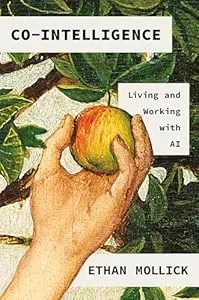
The best starting book if you're not technical: a Wharton professor explains how to work WITH AI — when to delegate, when to supervise, when to keep i
As an Amazon Associate, Zendoric earns from qualifying purchases; the price does not change for you. · all our recommended books →
By Zendoric · July 30, 2026.
Cornerstone University, a Christian university in Grand Rapids, Michigan, has created a Presidential Advisory Board on Artificial Intelligence and launched a Certificate in Applied Artificial Intelligence, a program aimed at students and professionals to incorporate the use of these tools into their training. The institution announced the news on its own website after being featured in a Fox News report on its AI strategy in higher education.
As its president, Gerson Moreno-Riaño, explained to Fox News, in contrast to universities that have chosen to ban AI outright or leave the decision to each professor, Cornerstone has taken a third path: a single strategy for the entire institution, supported by outside experts through that advisory board. It is a useful way of summarizing the current state of higher education in the face of AI: according to the source, some institutions ban the tool and others leave the decision to each instructor's judgment, without a clear institutional stance.
The line most heavily promoted in the report is this one: "AI gives you the right answer, but it robs you of the struggle," Moreno-Riaño said. The underlying idea, attributable to him, is that real learning is forged by making mistakes, asking questions and working things out, not by receiving the solution instantly. And from there he draws a conclusion that goes beyond the classroom: "I don't think there is a safe career, a safe degree. I think every field is going to be significantly transformed," he said, arguing for training graduates who "cannot be replaced" because of their character and their capacity for judgment, rather than because of a supposedly bulletproof professional niche.
It is worth placing this piece in its real context: it is content published by the university's own communications office to amplify a friendly report in a sympathetic outlet, not independent research. The article offers no data on learning outcomes, no specifics about the certificate's content and no enrollment figures tied to this strategy; it is, above all, a piece of brand positioning in a university market where "having an AI strategy" has become a selling point with students and families. The institution also frames its approach in an explicitly Christian perspective —students as "bearers of the image of God"—, a religious conviction we attribute to its president and do not present as verifiable fact, but as part of its differentiating value proposition.
That said, the underlying diagnosis is not far-fetched and connects with something we have already documented in the education sector: the crisis AI brings to classrooms is not so much one of access to technology as of pedagogical design and student motivation. An AI tutor available 24 hours a day is not much use if the assessment system keeps rewarding the quick answer instead of the process of thinking. What Cornerstone proposes —preserving the productive "struggle" of learning even when a machine can skip it— is, at bottom, the same problem faced at every level of education: which part of learning deserves to remain deliberately hard.
Our reading is that cases like this are a good barometer of where higher education is heading in the short term: not toward rejecting AI, nor toward adopting it uncritically, but toward attempts —still clumsy and hard to measure— to redesign what is taught and how it is assessed. We have argued here before that the teaching job that survives is that of the professor who orchestrates AI as a learning tool, not the one who competes with it by transmitting information; this university, in its own way, is betting on the same thing. In the long run, if AI keeps getting better at the mechanical part —from arithmetic to the draft of an essay—, what remains valuable in a university degree will be exactly what is being claimed here: judgment, character and the ability to handle uncertainty, qualities no tool replaces and which are, precisely, the ones that will allow people to devote themselves to what they are passionate about in an economy of abundance. The real challenge is not whether universities say so in a press release, but whether they can prove it with results.
📚 Go deeper
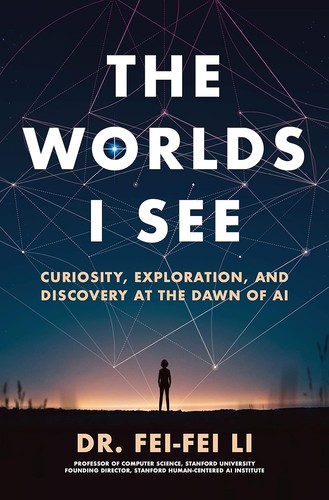
The memoir of the creator of ImageNet, the scientist who made the deep learning revolution in vision possible.
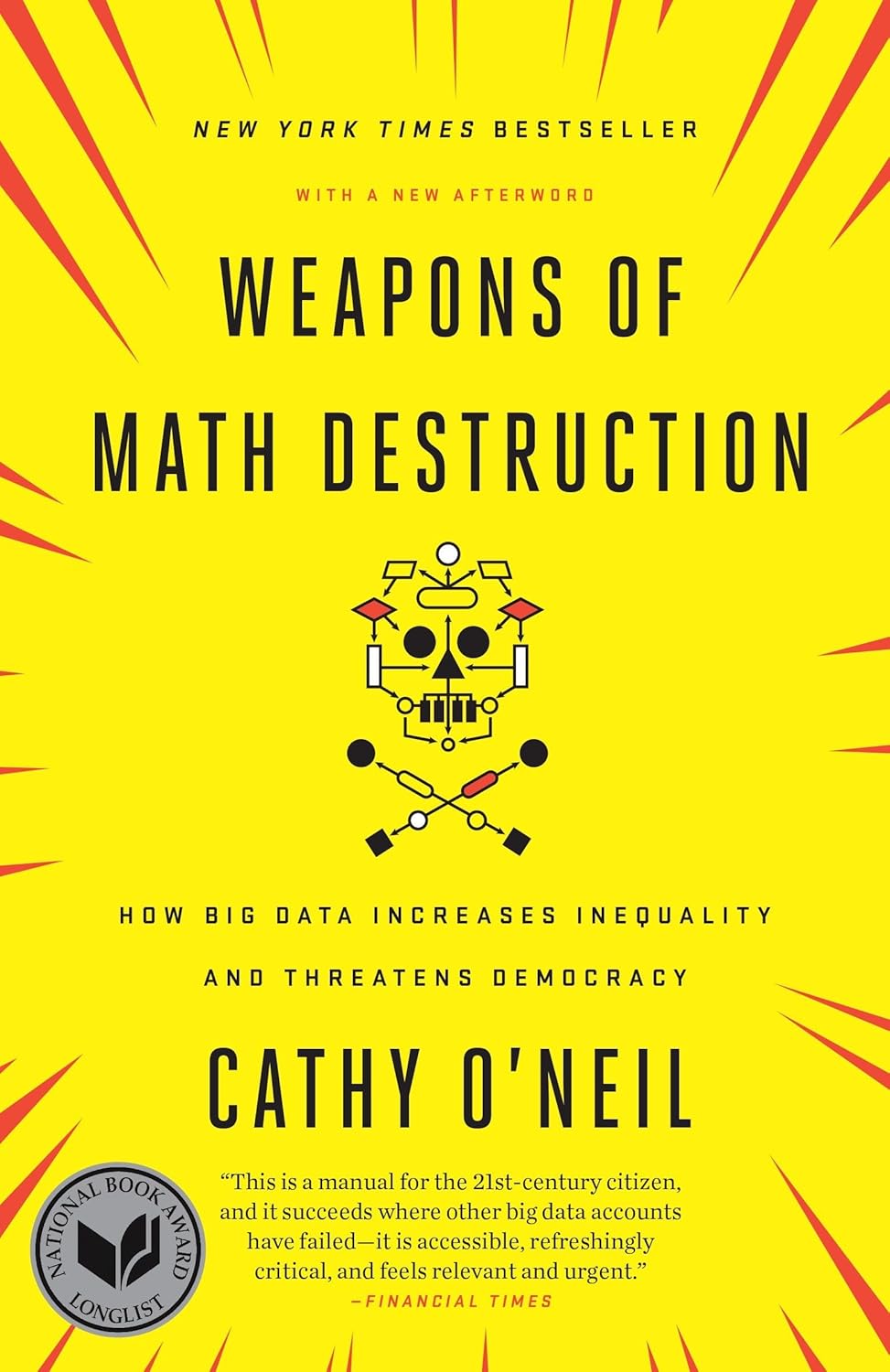
How opaque algorithms decide who gets credit, a job or parole — and why they tend to punish the same people.
As an Amazon Associate, Zendoric earns from qualifying purchases; the price does not change for you. · all our recommended books →
🔗 Related on Zendoric
- Chicago bans laptops for first-year law students: betting that human judgment, not AI, still earns the degree · 2026-07-16
- Genomics plus AI: why the public health of the future is also being decided in Rancagua, not just San Francisco · 2026-07-16
- Alabama wants to teach AI from primary school: the real debate is not whether, but how · 2026-07-25