A hidden phrase caught 32 students using AI — but the real story is an exam design that never adapted

🕒 Published on Zendoric: July 29, 2026 · 00:34
✨ AI-generated · how it's made
A university professor reportedly flagged 32 students by burying an invisible instruction inside an exam prompt, then watching who echoed it back. It's a clever trap, and a cheap one to beat. The lesson isn't about catching cheaters — it's that we're still grading work as if chatbots didn't exist.
📚 Go deeper

THE AI textbook: used by 1,500+ universities.
As an Amazon Associate, Zendoric earns from qualifying purchases; the price does not change for you. · all our recommended books →
The reported facts are thin but specific: a university professor identified 32 students who had used artificial intelligence on an exam by hiding an invisible sentence inside the assignment text, according to the account published this week. Students who pasted the question into a chatbot unknowingly carried the planted instruction with them; their answers gave them away. The source names neither the professor nor the institution and offers no date for the exam, so treat the case as reported rather than documented — the technique, not the anecdote, is what matters here.
Mechanically, this is prompt injection pointed at the student instead of the model. A language model has no way to separate text meant for a human eye from text meant as a command: everything it receives is instruction. Make a sentence invisible to a reader — white type, a zero-width character, a font size of nothing — and it stays fully legible to the machine. The trap works precisely because the model is obedient, not because it is dumb.
Which is also why it is a weak detector. It only catches copy-paste. Retype the question, photograph it, dictate it, or run it through any pipeline that strips formatting, and the trap is gone. What the professor built is a filter for convenience, not a test for AI use — and that asymmetry is uncomfortable, because it punishes the careless rather than the dishonest. There is a due-process question too: a hidden trap that generates evidence students never consented to is a thin foundation for an academic sanction, and any institution adopting the trick should say so in advance rather than after the fact.
Our reading: the number to sit with is 32. When a third of a room reaches for the same tool on the same exam, that is not a discipline problem, it is a design signal. The assessment was answerable by a chatbot — that is the finding. The adversarial arms race that follows (better traps, better evasion, detection software with false-positive rates nobody audits) is a treadmill that education will lose, because the tool keeps improving and the trap does not.
The way out is the one we keep arguing for: assessments that assume AI is present. Oral defence, work shown in process, problems where the student has to critique or repair a model's output, in-person tasks where judgement is visible. That is more work for teachers in the short term, and we should be honest that the transition will be messy and unevenly funded. But it points somewhere good. The version of this story we want in five years isn't a professor laying traps in white text — it's a class where every student has a tutor that never tires, and a teacher whose job is to orchestrate that rather than to police it. The invisible sentence is a symptom of the gap between those two worlds, not a solution to it.
📚 Go deeper

The academic "bible" of deep learning, with a Turing Award winner among its authors, and legally free on the web.
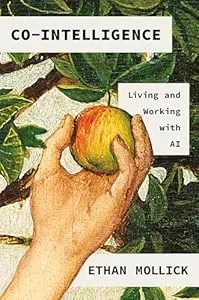
The best starting book if you're not technical: a Wharton professor explains how to work WITH AI — when to delegate, when to supervise, when to keep i
As an Amazon Associate, Zendoric earns from qualifying purchases; the price does not change for you. · all our recommended books →
🔗 Related on Zendoric