The deepfake school: Lancaster Country Day seeks to dismiss its students' lawsuit over AI-faked photos

🕒 Published on Zendoric: July 29, 2026 · 00:34
✨ AI-generated · how it's made
A private Pennsylvania school is asking a federal judge to remove it from the lawsuit over the scandal of AI-generated nude images of more than 50 female students, produced by two 16-year-old classmates already convicted. The families allege the school, a mandated reporter of abuse, ignored an earlier warning and obstructed the investigation.
📚 Go deeper
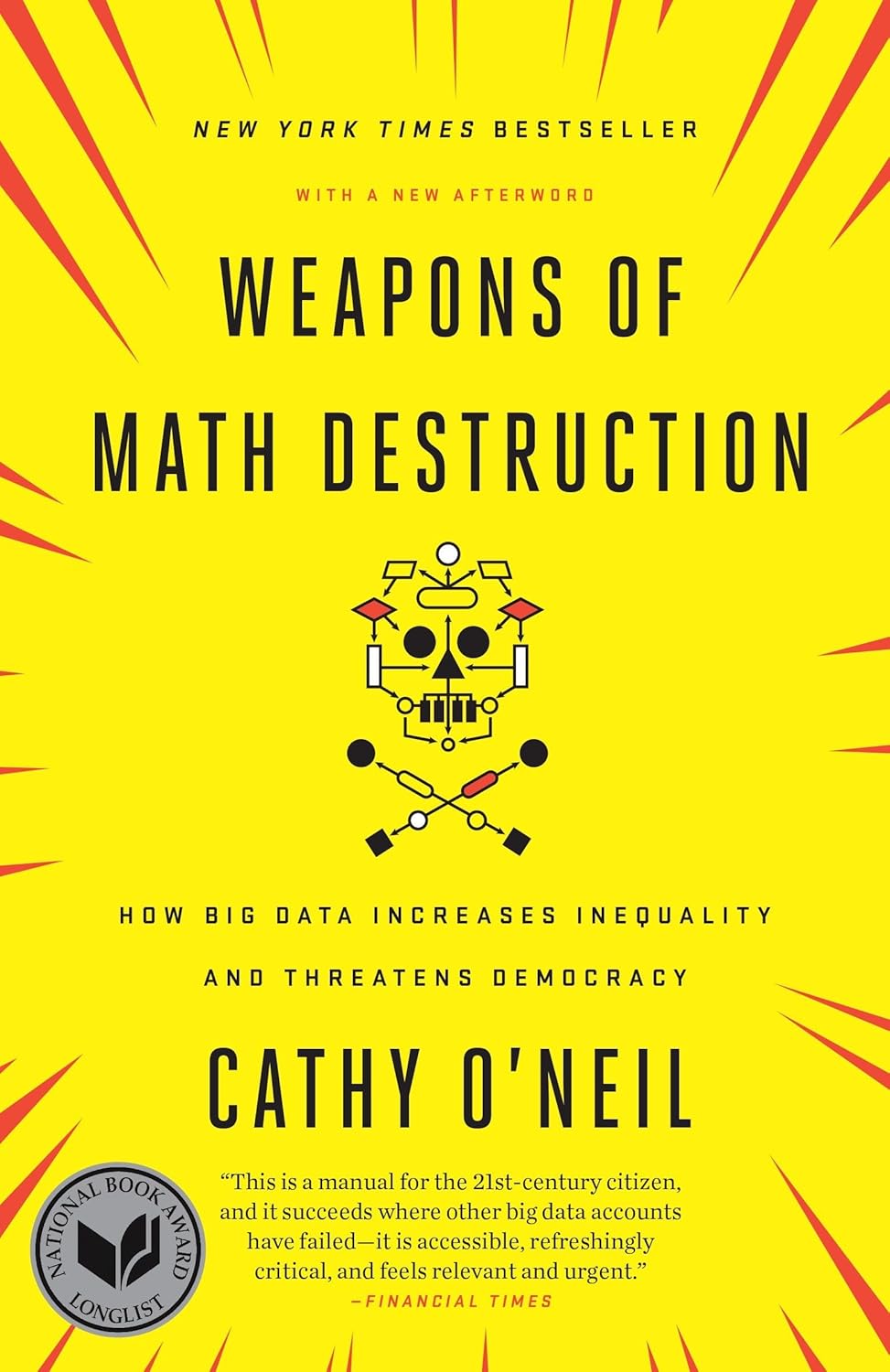
How opaque algorithms decide who gets credit, a job or parole — and why they tend to punish the same people.
As an Amazon Associate, Zendoric earns from qualifying purchases; the price does not change for you. · all our recommended books →
By ABC27 · July 28, 2026. Lancaster Country Day School, a private school in Lancaster County (Pennsylvania), has asked a federal judge to remove it from the lawsuit arising from one of the most serious cases of AI image abuse documented at a U.S. school: two students, then 16 years old, used AI tools to generate fake nude photographs of more than 50 female classmates. The minors were sentenced in March to six months of juvenile probation, ABC27 reports. The school maintains that it is not responsible for the criminal acts of its former students and that it acted in accordance with its legal obligations.
More than a dozen students and their families are jointly suing the school, the two minors and several artificial intelligence companies — not identified in the available information. The lawsuit accuses the school of failing to protect the victims despite being, by law, "mandated reporters" (professionals legally required to report suspected child abuse) and despite having received a tip through Safe2Say, Pennsylvania's state system for anonymously reporting threats and risks in schools. It also alleges that the school obstructed the subsequent investigation. The scandal has already cost the jobs of head of school Matt Micciche and board president Angela Ang-Alhadeff, who stepped down after the case came to light.
Broadly speaking, this type of incident has been repeated at dozens of U.S. high schools over the past two years: free, easily accessible AI "nudify" apps have allowed minors to generate fake sexual images of real classmates in seconds, a phenomenon that has forced several states to legislate quickly and that spurred initiatives in the U.S. Congress such as the DEFIANCE Act, designed to open a civil route for victims of this type of content to sue those who create or distribute it directly. What sets the Lancaster case apart is that it extends liability beyond the direct perpetrators: it also targets the institution that was supposed to protect the victims and, more novel still, the AI companies themselves.
Our take: this litigation is a symptom, not an anecdote. Generative AI has driven the cost of producing sexual image abuse down to almost zero and placed it in the hands of minors with no judgment or supervision; the result is harm on a scale — more than 50 victims at a single school — that would have been almost unthinkable before these tools. In the short term we will keep seeing episodes like this: the technology to cause the harm spreads faster than the legal, technical and educational barriers to contain it, and that is exactly the kind of transition cost that should not be played down. That schools, courts and lawmakers are now forced to spell out what "duty of care" means when the instrument of the crime is an AI model — and to decide whether those who build it share responsibility — is uncomfortable, but it is also the mechanism by which governance eventually catches up with technical capability. Cases like this are the ones that, over the years, set the case law and regulation that ensure the next generation of these tools arrives with safeguards built in from the start — verification, synthetic-content labeling, filters that are optional today and will be mandatory tomorrow — instead of leaving each school to improvise a response after the damage is done.
The court outcome in Lancaster matters less as an isolated case than as a precedent: it will define whether a school can hide behind "we didn't do it" when the harm is produced with tools any teenager can download on a phone, and whether the companies that build them start sharing the bill. It is the kind of legal friction that, however painful for today's victims, is also the price of learning — through rulings, not good intentions — to live with a technology that is not going away.
📚 Go deeper

Algorithms in justice, medicine, cars and art, explained with British humor and mathematical honesty.

The definitive piece of investigative journalism on OpenAI: 260+ interviews, the clash between safety and speed, and the attempted firing of Sam Altma
As an Amazon Associate, Zendoric earns from qualifying purchases; the price does not change for you. · all our recommended books →
🔗 Related on Zendoric
- AI-generated CSAM at an Illinois school: the hardest abuse to detect no longer needs a hidden camera · 2026-07-04
- A teacher accused of creating fake nude images of former students with AI closes his case with a plea deal · 2026-07-08
- The 'liar's dividend': when saying 'that's AI' is enough to erase a massacre · 2026-07-16